



After welcoming the global membership of The Church of Jesus Christ of Latter-day Saints to the faith’s general conference on Saturday, President Dallin H. Oaks also greeted non-Latter-day Saint observers whom he said may be interested in the church’s “remarkable progress.”
President Oaks was subsequently sustained by the raising of hands in his prophetic calling and reaffirmed his “testimony of the Resurrected Lord.”
Rather than “merely a formality,” this practice of “common consent” was described by Elder Patrick Kearon of the Quorum of the Twelve Apostles as a “voluntary personal commitment to support, uphold, and help” the individual called — allowing the community to “sustain each other with our prayers, our love, our patience, and our faith.”
Elder Kearon recalled his own first worship service following his baptism, when the congregation was “invited to raise their hands as a sign of welcome to the ward and to the church.”
Although “an unfamiliar practice,” he said, “I looked into those smiling faces, and I felt as if they were cheering me on, genuinely thrilled that I had discovered faith in Jesus Christ and a desire to follow him.”
Serving, ministering congregations
Elder Kearon described soon after being called to a particular role in the congregation. “I did not have a clue” about what to do, he said. But his new “ward family” supported him compassionately, including one brother who said, “Come on, Patrick, I’ll show you how this works.”
Giving everyone a chance to serve “affords us all the opportunity to pursue Christ and his virtues, such as charity, meekness, forgiveness, and love,” he said. “All with people who may be very different to us.”
Sister Kristin M. Yee, second counselor in the Relief Society general presidency, described a church member ministering to her father patiently for years, and watching him make changes: “He became aware and attentive to the needs of others. He took better care of his health. He began to care about his relationship with God, and subsequently, all the relationships in his life.”
“If you want to feel grounded, gain a sense of divine belonging, and make a real difference in the world, I invite you to follow the Savior and minister in His name,” she taught. “Never was the need greater than now for souls to be lifted, strengthened and healed through the Atonement of Jesus Christ.”
Sister Yee added, “When we offer his love and belonging to others, we will find it ourselves” — citing Jesus’s promise: “Whosoever will lose his life for my sake shall find it.”
A diverse family of faith
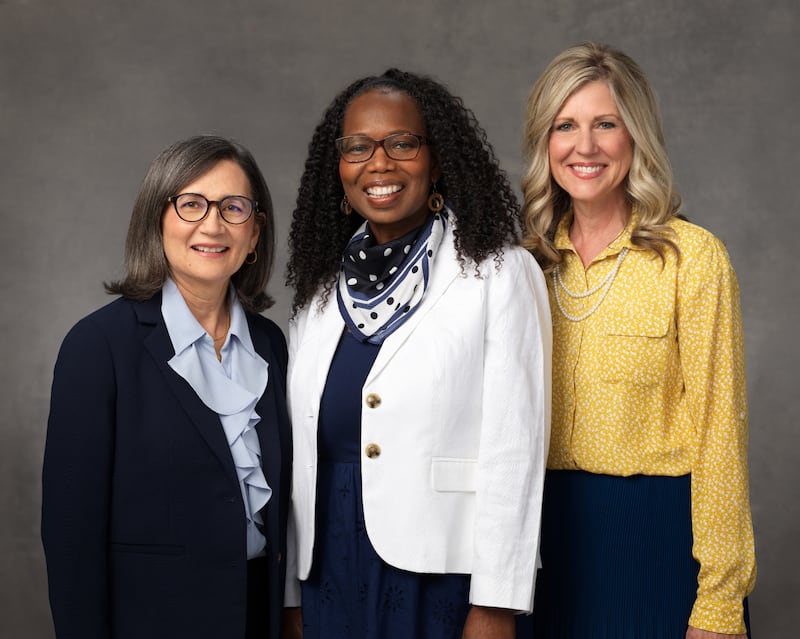
New global leaders for the Primary program overseeing Latter-day Saint youth were also called and sustained, including President Rosemary K. Chibota who was raised in Zimbabwe and a first counselor, Sister Nina M. Garfield, born in Japan.
Elder Jorge T. Becerra of the Seventy described financial challenges as a family after his parents immigrated from Mexico to the United States — before sharing his mother’s faith to pay tithing in anticipation of God’s blessing.
Other speakers hailed from Peru (Eduardo F. Ortega), Botswana (Clement M. Matswagothata), Taiwan (Wan-Liang Wu), the Philippines (Michael John U. Teh), England (Elder Kearon) and France (Elder Gérald Caussé).
“The universe is vast beyond comprehension, yet every soul carries infinite worth in the eyes of our Creator,” taught Elder Caussé of the Quorum of the Twelve Apostles. “Each of us is personally known, remembered, and loved by our Eternal Father and by His Son Jesus Christ.”
That includes vulnerable young people, Elder Gary E. Stevenson of the Quorum of the Twelve Apostles emphasized: “In the perilous times in which we live, the rising generation needs a defense and refuge from the storm.“
He then encouraged parents and teachers to help young people grow up “in light and truth” so “that our children may know to what source they may look for a remission of their sins,” he said, citing Nephi.
In a world of identity confusion and conflict, the apostle also said, “These precious souls are beings of potential beyond measure whose destiny it is to walk through eternity in halls of celestial glory.”
‘Pouring out our souls’
“The world today seems to be in commotion. There are wars and rumors of wars. The economies of whole continents seem to be faltering,” President Henry B. Eyring of the First Presidency said. “Prophesied wickedness seems to be accelerating as the Savior’s return draws nearer.”
Yet across the world, prayers have “flooded heaven,” he said. “Turning to Heavenly Father in fervent prayer when the world seems chaotic is as old as mankind,” President Eyring added, citing “the consoling words” of King David in Psalms about the Lord being a “refuge in times of trouble.”
Referencing Christ’s words in the Sermon on the Mount about “vain repetitions” and “much speaking,” President Eyring reminded listeners, “Opening the windows of heaven through fervent prayer does not require the use of many words or flowery language.” God instead asks us to “pour out our souls” in private places and have our hearts “drawn out in prayer unto him continually.”
Becoming ‘celestial citizens’
Elder Michael John U. Teh described his parents born in the Philippines with Chinese ancestry joining the Church and discovering that “some of our well-loved traditions were not consistent with gospel culture.”
His parents sometimes felt “immense pressure” from family and friends to “hold on to certain traditions even though they were contrary to the gospel,” he said. “I am so grateful that my parents exercised faith and chose to keep their covenants.”
Elder Teh cited President Oaks earlier explanation of repentance as “giving up all of our practices — personal, family, ethnic and national — that are contrary to the commandments of God” — with a purpose “to transform common creatures into celestial citizens.”
Coming home to ‘light, love and joy’
Elder Clark G. Gilbert of the Quorum of the Twelve Apostles referenced William Shakespeare’s Julius Caesar about those whose lives are “bound in shallows and in miseries” after certain actions lead them to miss out on the fortunate “tide in the affairs of men.”
However hurt we may feel by past choices, the newest apostle, quoting President Russell M. Nelson, testified of a Savior who “allows us to change” and a God who “will never tire in his efforts to help us, and we will never exhaust his merciful patience with us.”
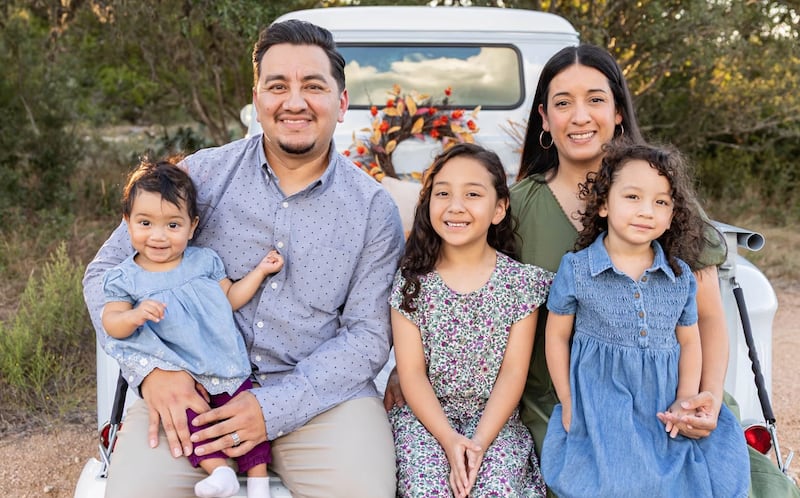
Elder Gilbert described a woman who became restored to the Savior’s “light, love and joy” after being away from the church for 30 years. He also described Andrea Vargas serving as a Primary president in San Antonio, Texas, while her husband, Luis, wasn’t sure he could “measure up” as a baptized member.
“Brother Vargas, you don’t have to be perfect to be in this church. You just have to do your best, and Christ will make up the difference,” Elder Gilbert told him.
Soon after, Luis Vargas turned to his wife and said, “Honey, it’s time I join this church so I can become a better father and a better husband.”
New creatures in Christ
“The Savior’s restored gospel invites us to be spiritually transformed — not merely to improve our behavior,” taught Elder David A. Bednar of the Quorum of the Twelve. “As we align our character, desires, actions, and what we truly love more closely with God’s will, the Savior can bring about a comprehensive and complete change in us.”
“As we follow, love, and serve the Savior,” he said, “we gradually focus less on our own desires and interests and more on understanding and addressing the needs of others.”
In that process, “enduring to the end is not merely a relentless determination to grit our teeth, hold on to the limits of our physical strength and mental capacity, and push through the challenges and adversities of mortal life,” he taught. “It is so much more than that.”
“Enduring to the end is the joyous quest of a lifetime.”