



The recent announcement of the new age-group names for youths in the Young Women organization of The Church of Jesus Christ of Latter-day Saints has become the source of diverse questions and conversations online.
As a former youth in the program and a current Young Women adviser in my local congregation, I had and have questions, too, about the complete impact these new names and changes will have on the young women I serve and others worldwide.
The more I’ve sat with these questions and turned to the words of church leaders, however, the more I’ve come to understand and grow hopeful about why the new names were installed this Monday.
The new names — Builders of Faith, Messengers of Hope and Gatherers of Light — were installed to help young women ages 11-18 develop a more steadfast focus on values that will translate and carry into their lifelong discipleship of Jesus Christ.
They were also designed and installed to increase identity and belonging among young women “in a way that will translate internationally across the church.”
Understanding why the old names were dropped and new ones installed
To understand the recent changes, I first flipped the page to October 2019, when then Young Women General President Bonnie H. Cordon announced the organization would be retiring the long-held class names of Beehive, Mia Maid and Laurel.
“All classes will be referred to by the unifying name of ‘Young Women,’” President Cordon said in the women’s session of October 2019 general conference. “We will retire the names Beehive, Mia Maid and Laurel.”
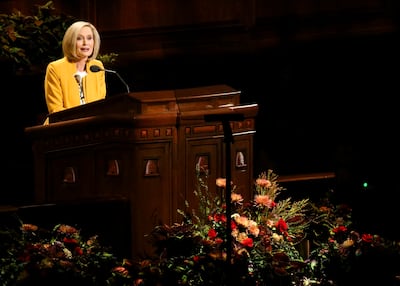
President Cordon announced structural changes to Young Women classes and the release of a new Young Women theme in her same conference address.
The decision to retire the long-held names, which dated back to the 1950s, was made to promote unity, the Church News reported then. It added that the change would “help with translation” in a global church.
Recalling this change and its striving for unity, I then wondered what would prompt the Young Women general presidency today to install new names for the young women.
I soon landed upon the words of current Young Women General President Emily Belle Freeman, who was asked in a panel last year why the old names went away and whether the church would ever reinstall names for Young Women classes.
President Freeman spoke of the church’s priority to build unity internationally. She said one of the greatest desires young women of this generation have is to find identity and said her presidency and general advisory council were very aware of that.
“As we consider what it looks like to help the youth today find that identity, this is something that is a major part of the councils that we have every other Tuesday night,” President Freeman said in the March 2025 panel.
“We are thinking about how to increase identity and a feeling of belonging for the young women in a way that will translate internationally across the church.”
The long-held names of Beehive, Mia Maid and Laurel carried symbolic ties to Utah and early church history, but the names and their meanings were often difficult to translate accurately into various languages.
These previous names were retired in 2019 to promote unity, and new ones were installed this April after church leaders carefully considered how they could increase identity and belonging among young women worldwide.
The new names were installed to “help young women understand their divine place in God’s work, to represent their spiritual dignity as his beloved daughters and to highlight their progression,” Church President Dallin H. Oaks and his counselors wrote in a First Presidency letter dated Monday, April 20.
“It is our hope that these age-group names and the principles they teach will help young women become lifelong disciples of Jesus Christ, prepared to participate in the great work of the Relief Society,” the First Presidency added in a church news release.
Once I was an ‘Abejita’ (ah-beh-HEE-tah)

Having attended Latter-day Saint congregations in both Spanish and English at separate times during my youth, I was able to experience the Young Women program in two separate languages.
In my Spanish-speaking congregation, I learned and weekly recited the Young Women theme in Spanish and formed part of the “Abejita” or “little bee” class, as well as the “Damitas” or “young ladies” class.
When I switched over to my English-speaking congregation, I likewise learned to recite the Young Women theme in English and became a part of the Mia Maid and Laurel classes.
I don’t recall ever really thinking too hard about the names of each class I was a part of. I knew vaguely what each Young Women class name represented, but the connection between each one and my spiritual role/identity was never truly clear or present to me — in Spanish or English.
With some research, I’ve come to better understand the meaning and symbolism behind each past name (this page on ChurchofJesusChrist.org describes each one).
However, in reviewing the translations of each past name into languages other than Spanish, I’ve come to see that the disconnect between each name and its symbolic meaning is even greater in other languages.
In Japanese, for instance, the name Mia Maid reads as “マイアメイド” (my-ah-may-doh) and is only a phonetic spelling or transliteration of the English name, which refers historically to the Mutual Improvement Association — a past youth organization of the church that adopted the emblem of a rose as a symbol of love, faith and purity.
The new names — Builders of Faith, Messengers of Hope and Gatherers of Light — successfully bridge the disconnect between them and a young woman’s spiritual identity.
They more clearly point to and describe young women’s spiritual roles and potential, and do so with words that more easily translate with meaning into the more than 120 languages spoken by Latter-day Saints worldwide.
President Freeman wrote about each of the new names’ spiritual significance and scriptural connections in a digital article published in the For the Strength of Youth magazine.
She said Builders of Faith, ages 11-13, help “build God’s kingdom” through “faith in Christ, steadfast witness, and actions that uplift and encourage others.”
Messengers of Hope, ages 14-15, carry “Christ’s message of hope” to the weary; and Gatherers of Light, ages 16-18, trust “divine guidance” and draw strength from covenants to seek, gather and reflect God’s light, she said.
As young women progress through each name and age group, they prepare to continue their discipleship and join the Relief Society — the world’s largest society of women and a “great society of charity.”
“We hope these names will become a reminder of your faith in Christ (and) your willingness to minister in His name,” President Freeman wrote.
“It is our hope that what you learn from the meaning behind these names will prepare you to become a part of the lifelong sisterhood of Relief Society, where you will stand as a witness of Christ’s charity across the world.”
Young women today embrace change with faith

Most, if not all, of the young women I currently serve with are progressing through a Young Women program that looks quite different from the one I knew as a youth almost seven years ago.
The Young Women theme they recite each week is different, and instead of working through the now-retired Personal Progress program for young women, they set personal goals in various areas guided by the church’s Children and Youth program.
These young women will be among the first to adjust to the church’s new Sunday meeting schedule come September, and they are already pioneering the new Young Women age-group names announced Monday, April 20.
In hearing from a few of the young women I currently serve with and others in a nearby Spanish-speaking congregation, I was both strengthened and astonished by their hopeful perspectives.
“In a world filled with anxiety and fear, I can feel comfort in knowing I am a child of God,” said Emmeline Luck, a 12-year-old young woman from my congregation.
“The new names take this a step further,” she told me. “They remind me of elect women from the scriptures. ... As a Builder of Faith, I can share my testimony and build those up around me.”
Elizabeth Gonzalez from a Spanish-speaking ward in Utah County shared that as a 16-year-old Messenger of Hope or “Mensajera de Esperanza,” she is happy with the new names.
“I feel they reflect very well the type of person we always want to be: someone who helps, encourages, provides relief, and above all, someone who reflects Jesus Christ,” she said.
Brianna Wells, a 17-year-old Gatherer of Light from the same Spanish-speaking congregation, shared the new names give her comfort and purpose.
“As I’ve grown, I have seen and heard many things that make me wonder what my purpose to Christ was,” she said. “These new names can serve as a reminder to all the young women that we have a purpose to God.
“As a Gatherer of Light, I am going to set goals focusing on how I can share the light of Christ with others and help bring them closer to God.”
Fellow Gatherers of Light Mary Stoner and Ámbar Martinez likewise shared their excitement and hope for the new names.
“I’m excited to see how (the names) will give more direction and purpose” to the Young Women, Stoner told me.
Martinez said that as the oldest young woman in her congregation, she feels inspired to become a gatherer and protector of her fellow young women and “be someone in whom they can trust.”

The power of a name
It is strengthening to hear young women embrace a change that might require some adjusting to, but that is already adding to their spiritual identity, purpose and belonging.
Reflecting on the change myself, I have also been strengthened by recalling and recognizing the blessings I’ve seen in embracing past changes and prophetic direction.
The impact of former Church President Russell M. Nelson’s charge to focus on and use the correct name of the church, even The Church of Jesus Christ of Latter-day Saints, was not all the way clear in October 2018, when he issued the charge.
Years later, Elder Neil L. Andersen of the Quorum of the Twelve Apostles delivered a talk highlighting some of the blessings Latter-day Saints worldwide had begun seeing as they followed President Nelson’s direction, which the Lord had impressed upon his mind.
“When we willingly follow the counsel of the Lord as revealed through his living prophet — especially if it runs counter to our initial thinking, requiring humility and sacrifice — the Lord blesses us with additional spiritual power and sends his angels to support us and stand by us,” Elder Andersen said in October 2021.
Now, more than seven years after President Nelson emphasized the correct name of the church, I can still see the impact of his counsel almost daily. Every work day as I report on the church, I write the church’s complete and correct name at least once a day.
Sometimes it’s easier than others to type out the church’s entire name without a sentence feeling too long or clunky. But deliberately accepting the challenge, day in and day out, has enabled me to grow familiar with the church’s correct name and capitalization.
Using the church’s correct name has enabled me to grow a witness of the name of The Church of Jesus Christ of Latter-day Saints, which was revealed by the Lord through the prophet Joseph Smith.
The new names of Young Women age-groups may not carry the same weight as the correct name of the Church of Jesus Christ.
However, I do believe that just as Elder Andersen said President Nelson’s counsel to use the church’s correct name was revealed at its “appropriate time,” these new names were also revealed to current church leaders to meet youths’ needs at their appropriate time.

‘You are named’
Young women recognize their ultimate identity each time they recite the Young Women theme, which begins with: “I am a beloved daughter of heavenly parents, with a divine nature and eternal destiny.”
The new Young Women age-group names, in my perspective, add to that identity by enabling young women to say: I am a Builder of Faith, a Messenger of Hope and a Gatherer of Light.
Names for Young Women classes and varying age groups have changed before to meet youths’ needs throughout the more than 150-year history of the Young Women organization. (A chart available on the Church Historian’s Press’ website tracks each change up to 2019.)
The newly installed names were prayerfully composed with the young women of this generation in mind and with the hope that their message would “translate internationally across the church.”
“Maybe you wonder if you are seen by God. Remembered. Known,” President Freeman wrote to Latter-day Saint young women worldwide in her recent digital article.
“Always remember this,” she also wrote, “you are seen by God. You are known. You are named. You are beloved. … You are His.”
President Freeman taught that God’s plan of salvation “depends on the heroic actions of valiant women.”
She said each of the new Young Women age-group names carry “meaning and responsibility for God’s precious daughters” and that the names are “foundational” to the Young Women organization.
The names “reflect the strength of women captured in each verse of ‘As Sisters in Zion,’” she wrote.
“Founded in scripture, each name points to Jesus Christ and His attributes.”