
This article was first published in the State of Faith newsletter. Sign up to receive the newsletter in your inbox each Monday night.
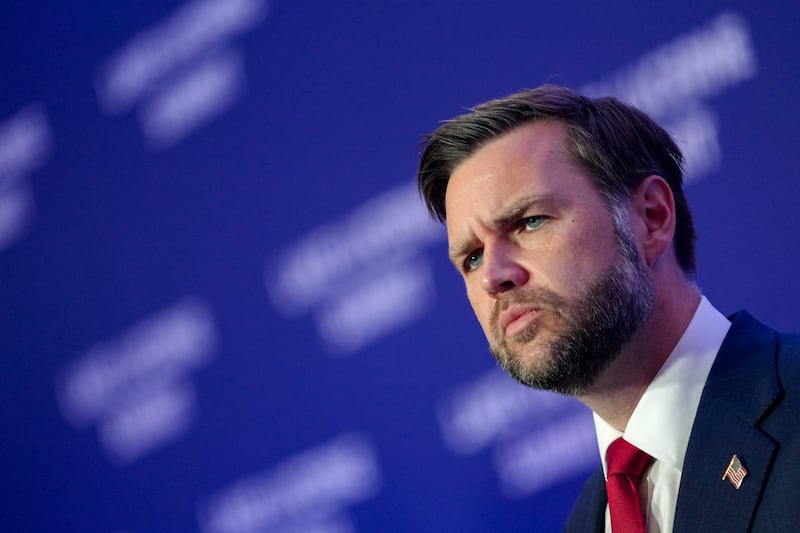
In his new memoir “Communion,” JD Vance explores an internal tension that has shaped much of his life: the pull of his ambition for elite success — what he describes as the “arrogant desire to rise above others” — against the growing realization that a life of virtue and meaning is not about achievement and striving, but more about family and God.
After a sporadic childhood in Protestant churches and a period of atheism in his youth, Vance returned to Christianity and eventually converted to Catholicism. His faith journey was, at least initially, an attempt to reorient his life around a higher set of values and to temper his careerist and meritocratic impulses. Vance, of course, has not abandoned his ambition and political aspirations, but he is candid in the book that he has come to see the danger of being consumed by them.
Faith, fatherhood and the rhythms of sacramental life have become for him a way of disciplining his more worldly goals and finding the goodness and stability he lacked in his childhood. At one point, Vance recounts that his wife, Usha, who was raised Hindu, noted that while therapy didn’t work for him, church did.
The question for me remains how Vance reconciles his pursuit of political power and influence with the moral and Christian vision he lays out in the memoir, especially in the Trump administration.
As I read the book, I found myself searching for moments that revealed the real person behind the theatrics of politics.
The parts of the book where Vance appeared especially genuine to me were his reflections about the two women who shaped his faith: his grandmother Bonnie Blanton Vance, or “Mamaw,” as he calls her throughout the book, and his wife, Usha, who despite not being Christian herself helped catalyze Vance’s return to faith.
Amid Vance’s tumultuous upbringing, marked by addiction and poverty in his family, his grandmother, Mamaw, was an anchor of stability. She is also prominently featured in Vance’s 2016 bestselling memoir, “Hillbilly Elegy,” which also became a film.
Although Mamaw herself didn’t like going to church, she nudged Vance to live out Christian values in his encounters. Her practical, lived faith planted a seed that eventually gave way to Vance’s personal conversion.
He writes that Mamaw was “the woman whose life had taught me the most about Christian love and virtue.” Her death was deeply destabilizing to Vance. He writes, “I had only ever allowed myself to be vulnerable around one person — Mamaw — and now she was gone.”
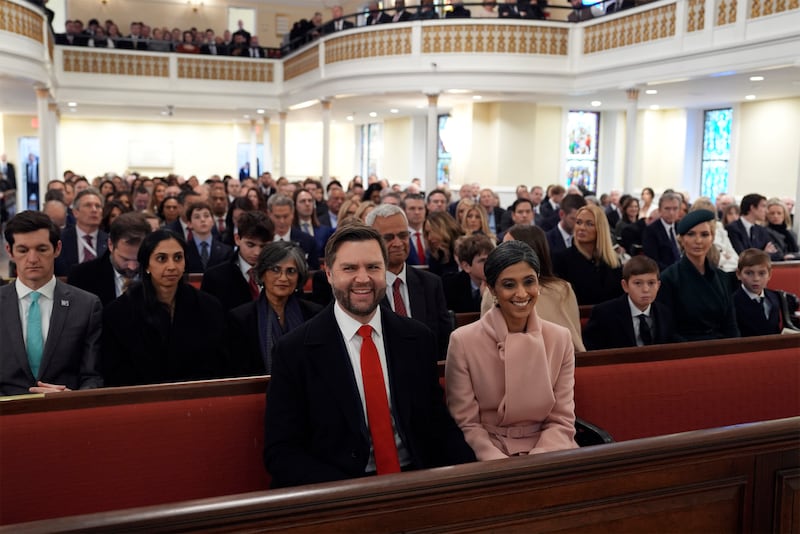
Vance found a similar pillar of stability in Usha, who embodied the goodness and depth that Vance strived for. She was brilliant and “intense,” but he recognized that, unlike him, Usha wasn’t ambitious for ambition’s sake. “She was truer and purer and more just and lovelier than anyone,” Vance wrote.
He writes about her attention to beauty and her fascination with underexamined questions like the origin of ketchup. “I began to realize that, of all the influences Usha had on me, the most important was that she always encouraged me to keep searching for deeper truths,” he writes.
Usha cared little about Vance’s credentials — instead, “she wanted me to be a good person, a good husband, and a good father (eventually).” Vance worried that the wounds of his childhood would prevent him from becoming those things, but he found that Christianity offered a path for redemption and grace.
News headlines make it difficult to interpret Vance outside of the context of President Donald Trump. And while this book is sufficiently steeped in politics, it reveals a man who at least says he is aspiring to live a moral life. (By the way, Vance acknowledges in the memoir that the “childless cat ladies” comment was “one of the dumbest things I ever said.”)
Reading about Mamaw and Usha also made me think that our faith stories are rarely entirely our own. They are shaped by people who love, challenge and inspire us.
Fresh off the press
- The positive story about religion that is ‘hardly ever told.’
- Dennis Rodman and ‘spiritual fathering’ as an ancient Christian practice.
What do Americans think about Pope Leo?
The Pew Research Center asked Americans what they thought about Pope Leo XIV — the survey was conducted in the wake of the tense exchange between Trump and the pope — from May 26 and June 1.
Here’s what the survey found:
- Americans are divided on Pope Leo’s stance toward the Trump administration. About 19% believe he has been overly critical of the administration and 35% think he is hitting the right note. Nearly 50% of the Catholics believe Trump has been too harsh toward the pope.
- Most Catholics like Pope Leo. About 85% of weekly Mass attendees have a positive view of the pope.
- The survey found a sharp partisan divide among Catholics. Seven in 10 Catholic Democrats believe Trump has been overly critical of Pope Leo, while only 3% think the pope has been overly critical of Trump.
- Catholic Republicans are more evenly split on this question: about one-third (32%) say Trump has been too critical of Pope Leo, while 39% believe Pope Leo has been too critical of Trump.
Faith in the news
- More on Vance and his book: the vice president is making the media rounds. He sat down with Ross Douthat and Allie Beth Stuckey.
- Pew Research Center released a report with an interactive feature showing religious restrictions in nearly 200 countries in 2023, the latest year with available data. That year, 55 out of 198 nations experienced heightened (high or very high) levels of religion-related social hostilities. That’s 10 countries more than the year before, although back in 2007, the number of countries with high restrictions was 65. The six nations that registered the most severe social hostilities tied to religion in 2023 were Nigeria, India, Israel, Syria, Bangladesh and Pakistan. — Pew Research Center
- Shrinking congregations are reimagining their buildings as affordable housing: “There has been a push in the past decade ... to recognize that ‘if you’re not using your building more than an hour a week, you’re wasting your resources.’” — The Washington Post
- On June 10, the Southern Baptist Convention, the nation’s largest Protestant denomination, voted to prohibit women pastors from preaching on Sundays. The decision sparked pushback, and one historic church in Gainesville, Florida, even announced that it’s leaving the ranks of the denomination. — RNS
End note
I’m writing this newsletter from Gates Mills, Ohio, a stop on a cross-country road trip with my family from Boston to Salt Lake City. We left on Friday and have been taking it relatively slow — a few hours of driving every day. This has allowed us to stop at various sites and show our children the parts of the country they hadn’t seen.
So far, the highlights have been the excellent fried fish in Skaneateles, New York; walking through the thick woods of Palmyra; and getting soaking wet on a boat in Niagara Falls. “This is incredible,” one of my kids said. Here’s the proof: