



Every year, a group of Hare Krishna devotees gathers in the Austrian countryside for a two-week retreat. My grandmother Maya has made it her annual pilgrimage for the last four years and asked me to join this time around.
Maya, typically accompanied by her son, takes a flight from New Delhi, India, to Vienna, Austria, before hopping on a train for five or six hours until she reaches Lake Weissensee.
Once she’s there, at the Strandhotel, a 4-star wellness resort property, Maya eases in.
My husband and I arrived a few hours before my grandmother. We finished our “Beyond Burger” and an organic Coca-Cola when we saw Maya walk in. She said hello and went to lay down on the loungers next to the vegan burger bistro. The New Delhi air doesn’t agree with her and her arthritis flares up during long travel days. After she took a breath, she told us what to expect during the week we were in Weissensee. Clean food, prayer time, and many swims in the lake.
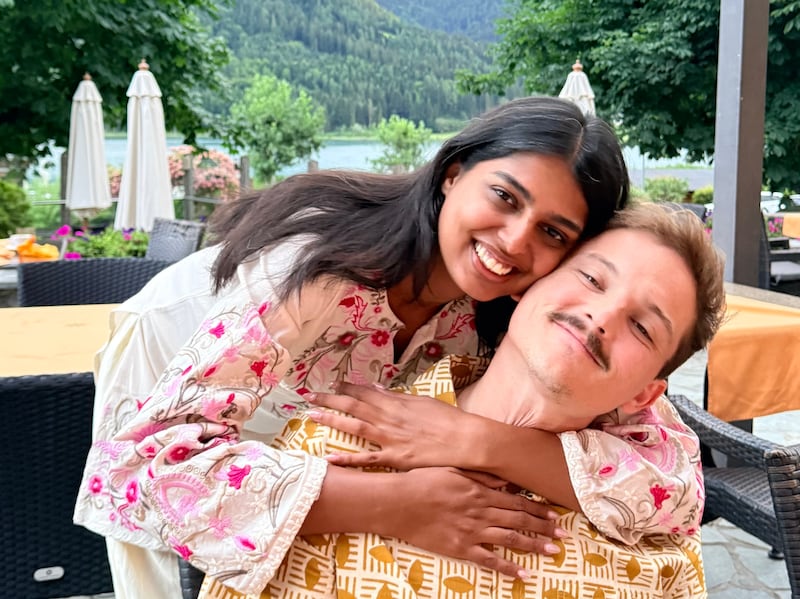
Although I didn’t grow up around the Hare Krishna movement, originally founded in New York in 1966, their Salt Lake City temple became my safe haven during my time living in Utah. I occasionally visited the much larger temple in Spanish Fork, especially during Holi, the festival of colors. My husband, who grew up Christian, would accompany me, often participating from a distance.
Hare Krishna is a branch of Hinduism. Its religious philosophy is based on the Bhagavad Gita, but it is monotheistic through intense devotion to Krishna, a major Hindu deity who is the eighth incarnation of Vishnu, the Supreme God.
Before arriving at Weissensee, I decided to try my best to immerse myself in the Hare Krishna way of living.
The day-to-day life at a spiritual retreat
The Strandhotel resort has a vegan kitchen. The menu changes each day, featuring different cuisines, from Russian and Austrian to Indian. But the idea remains the same: They served Sattvic or pure plant-based foods that are fresh, easy to digest, and include fresh fruits, vegetables, whole grains, and nuts and seeds. This diet features seasonal foods, while eggs, fish, meat and alcohol are avoided, as are overly spicy or salty meals.
This kind of simple diet isn’t routine for me. At the beginning of the retreat, I could hear my stomach growl loudly two hours after a big breakfast that featured watermelon slices, strawberries, baked tomatoes, sautéed mushrooms and peppers, radishes, and a toast with vegan butter. But as my body adjusted, I could feel my energy levels increase.

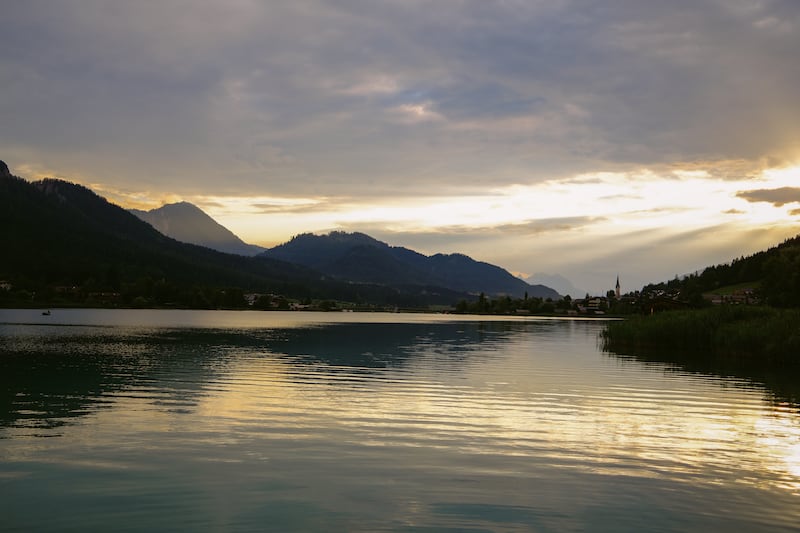
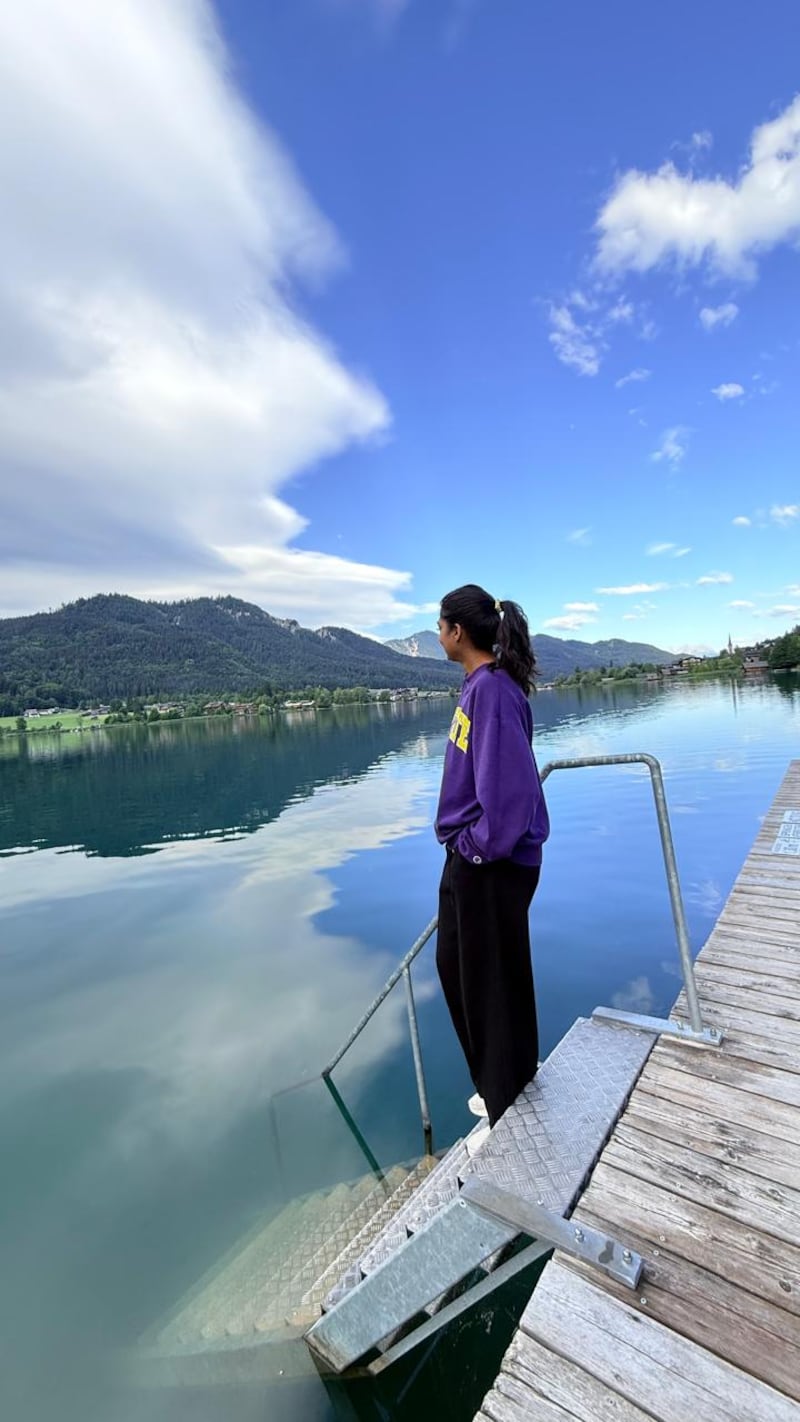
Daytime allowed us to explore the landscape around us. Most days, I would muster up the courage to take a dip in the cold lake and then warm up in the saunas, repeating this process until my husband and grandmother would ask me, almost in unison, whether I was ready to go to the apartment and change. I felt like a kid, unwilling to shake off the giddiness from the cold water, the mountainscape and the warm sun.
Known as contrast therapy or the Nordic cycle, the hot sauna and the cold lake reset the nervous system and lower stress.
At the retreat, the sauna became a place for many brief but unexpected conversations. In one instance, I overheard three men talk about one of the devotee’s rosaries. Some gurus count the creases of their fingers; others tie knots on a thread, one of the men in the back noted. As the devotee moved the beads through his index finger and thumb, whispering mantras under his breath, he nodded along to the unfolding conversation.
“At the end of the day, it’s just you and the Lord’s name,” another chimed in.
The 108 beads on the rosary are to guide chanting a mantra 108 times, a number that is believed to help align a person’s energy with the universe. In Catholicism, a 59-bead rosary also helps guide the sequence of prayers like Our Father and the Hail Mary.
In the evenings after dinner, everyone would gather for the kirtan, a chanting circle featuring violins, tabla or drum players, and singers, who repeatedly sang the Hare Krishna mantra.
During my first kirtan, as I chanted “Hare Krishna, Hare Krishna, Krishna Krishna, Hare Hare, Hare Rama, Hare Rama, Rama Rama, Hare Hare” along with everyone else in the room, taking cues from the musicians singing into the mic, time slipped away as I fell in sync with those around me.
When I got back to the hotel room after a two-hour kirtan on my second night, I couldn’t stay awake. My voice sounded a little hoarse and all my energy was spent singing the mantra.
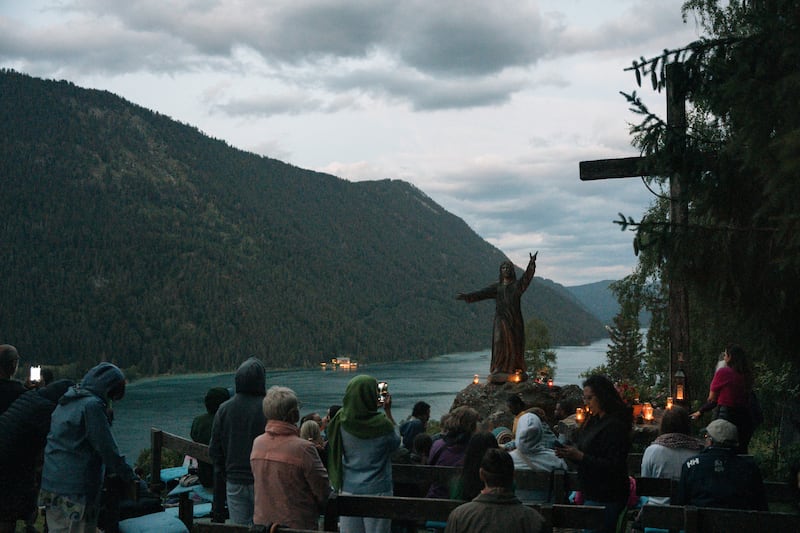
One kirtan took us to the Church of Hope, situated on a hilltop overlooking the lake. This open-air chapel is a beautiful nondenominational spiritual space that has an altar, a cross and a statue of Jesus Christ standing beside the altar.
A phrase is inscribed at the entrance of this church. It says, “I have a thirst.”
“Obviously, it is not the material thirst, but a spiritual thirst,” said Sham Naam, the host of the retreat. She stood next to her husband, Christian, the CEO of Healy, a holistic health company.
“The garden of encounter and this sacred space is dedicated to the spirit of compassion that Jesus embodied,” she told the attendees during the Kirtan.
“With one hand, he is receiving the sacred divine energy, with the other hand he distributes it to everyone,” she said of his statue. “Unifying both in spirit and offering hope, trust and love to all who visit regardless of their beliefs.”
‘A flexible but strong spine’

Although that routine was typical, some attendees also offered their expertise to the group. My grandmother and I attended a yoga class led by Ananda Bihari, a 38-year-old born in Moldova and living in Vienna, Austria.
On one side sat the mountains and on the other, the lake. My grandmother grabbed a chair for herself as I sat crisscrossed on a blue towel that I brought with me.
Bihari warned us not to push our bodies too much and to do what we can.
We began by chanting “Om Shanti,” a sacred Sanskrit mantra used to ground the body before or after the practice, and set our intentions for the hour and the day.
Bihari takes care of the Vedic Center. He is also an illustrator and a Hatha Yoga teacher who considers his practice a way to connect with the divine while staying in tune with science.
After stretching our limbs, we transitioned to the Surya Namaskar, or the sun salutations. It’s a sequence of yoga poses that utilize the breath and body to create a flow. Although it’s traditionally practiced at sunrise, the sun had been up for hours as we eagerly waited for it to peak out from behind the mountains.

After we stretched our backs, transitioning from the cobra pose to the downward-facing dog, Bihari remarked on the importance of a flexible but strong spine, literally and metaphorically.
“Yoga in the mornings can be healing,” he said, adding, “It’s relaxing at night.” After some reflection, I agreed with Bihari’s analysis. Although I enjoy a quick yoga stretch before bedtime to unwind in my day-to-day life, the morning’s practice left me energized, setting a positive outlook for the rest of the day.
After coming back stateside, I messaged Bihari on social media, asking him about the Hare Krishna way of life.
“Beyond different religions and traditions, we all share the same search for happiness, meaning, and love,” he said. “For me, the essence of spirituality isn’t about labels or belonging to a particular tradition. It begins in the heart.”
“Every tradition offers its own language and practices, but their deeper purpose is to help us become more compassionate, more peaceful, and more connected with ourselves, with others, and with the Divine,” he said.
This was his second time attending the retreat. “We live in a world where everything moves very fast,” said Bihari. “People are constantly connected online, but often feel disconnected from themselves and from each other.”
“Whether someone is deeply spiritual or just curious, everyone can benefit from taking a break from everyday life and reconnecting with what really matters,” he added.
As I pondered Bihari’s words, I couldn’t help but think about the many nationalities of the people who gathered at the retreat. Although Hindu practices were at the heart of the day-to-day practices, the attendees came from England, Germany, Moldova, the United States and more, with only a handful of Indians. Bihari was right. People are seeking antidotes to modern burnout. In a world of digital distractions and processed foods, practices like mindfulness, yoga and meditation offer sustainable ways to find grounding and inner peace.
After I left the retreat, I breathed better, through my belly as you are supposed to. I stopped daydreaming and admired the trees and the leaves and the sound of birds. The present felt joyful enough as I felt my chest rise in exuberance. That’s the thing about nature: It shows you divinity is always in your reach. It’s up to you to see it.