

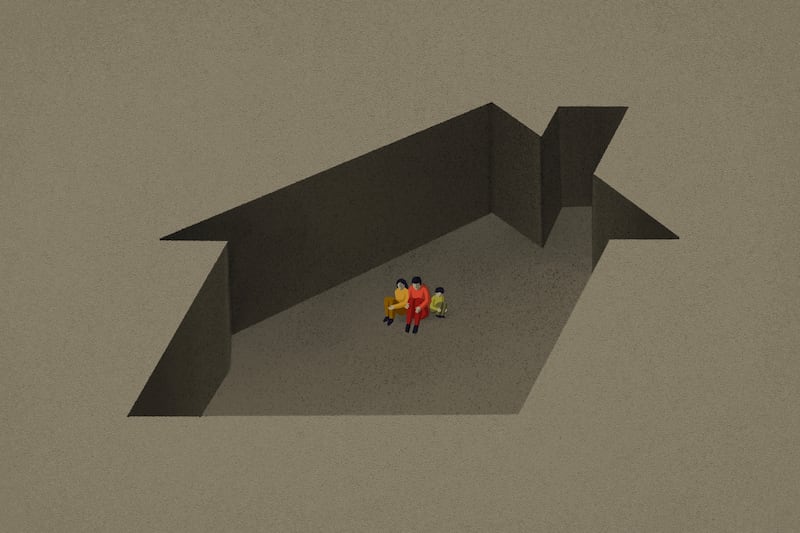

Two days after Christmas, my father and I sat in the living room of my Boston apartment, tracking the barrage of missiles Russia unleashed on Ukraine on Friday night. It was about 2 a.m. in Kyiv and nearly 500 drones and dozens of missiles flew in the direction of the city where I grew up, and where my parents were set to return this week after a monthslong visit to the United States.
“The sky looks like it’s daylight,” my father said, peering at the images of explosions on his iPad. “A huge attack is underway.” I scrolled the news, a familiar dark wave washing over. A part of me, though, felt relief: My parents were not there. For now, they were far from their apartment in Kyiv — safe, at least temporarily.
The morning after the attack, powdery snow blanketed our neighborhood. In Kyiv, debris and glass covered the streets. We learned that more than 30 people were injured in the massive attack, including two children. A 71-year-old man died. A third of the city lost heat, affecting roughly 4,000 residential buildings. Missiles struck a home for the elderly — in one video, first responders carried mattresses with elderly residents, setting them down on wet and snow-soaked ground. Another hit left a gaping hole in a student dormitory.
Nearly four years since the full-scale invasion, and after repeated rounds of peace talks, the war’s end remains elusive. On Sunday, President Volodymyr Zelensky visited Mar-a-Lago, where he presented President Donald J. Trump with a 20-point peace plan shaped in part by Trump’s previous proposal.
The talks showed some signs of hope: Two leaders agreed to 90% of the proposed plan, which included the security guarantees from the U.S. and Ukraine’s future European Union membership, while the questions about land stayed unresolved.
Tomorrow, my parents will embark on a three-day journey home. They will fly to Warsaw, then take a 15-hour bus ride to Kyiv, assuming there are no delays at the border. If the power is out when they arrive, they will have to climb 11 flights of stairs in the dark, leaving their suitcases behind until the electricity returns.
And although it isn’t the first goodbye, this one feels heavier. Their tourist visas are nearing expiration; the path toward permanent U.S. residency is tangled in shifting immigration rules.
Saying goodbye means returning to a familiar state of suspension: scrolling through photos of damaged buildings to see if one of them is ours and sending the same message again and again: Are you OK?
War echoes during holidays
The war’s toll has become etched into the daily life of Ukrainians: shattered power grids and rolling blackouts and constant nerve-fraying thrum of air-raid sirens. Living in Ukraine is to be governed by survival math of power-outage schedules, curfews, brief lulls between air raids. For many, there is a constant calculation of whether to run to a shelter in the middle of the night, whether to leave the country at all, and for those already abroad, whether or when to return.
According to a United Nations report, civilian deaths in Ukraine during the first 11 months of 2025 were 26% higher than in 2024, and 70% higher than in 2023. Journalists at The Kyiv Independent described the year as one that will be remembered “less by politics than by terror from the sky.”
They wrote: “Russian missiles and drones tore into Ukrainian cities with relentless precision. People were killed in their beds. Children died on playgrounds. Summer nights in Kyiv were broken by sirens, explosions, and smoke.”
The holidays, too, carry complicated emotions for Ukrainians. Some wait for sons, husbands and fathers to be released from Russian captivity. Others mourn loved ones who died on the front lines. Last week, in the center of Stryi, a town in the Lviv region, an installation captured this grief: a Christmas table set with empty seats and uniforms representing those missing in the war.
The echoes of the war follow Ukrainians wherever they are. For Christmas, my parents asked for gifts that are tools of survival: a fleece-lined balaclava to stay warm, a powerful flashlight for sometimes eight-hour long stretches without power.
During our holiday dinner, we recorded a video message for a friend serving in the army on the front lines, a man who had once been a bishop in our branch of The Church of Jesus Christ of Latter-day Saints.
In April 2022, two months after the war started, I wrote about persuading my parents to leave Kyiv and the surreal, unfamiliar fears brought on by the invasion. In a strange reversal, a foreign country now offered respite and safety to my family and millions of Ukrainians living abroad, while home has become a place of endurance and survival.
This refuge has become more precarious after changes to the U.S. immigration program for Ukrainians, leaving many who arrived on humanitarian programs in limbo as they wait for their status to be renewed.
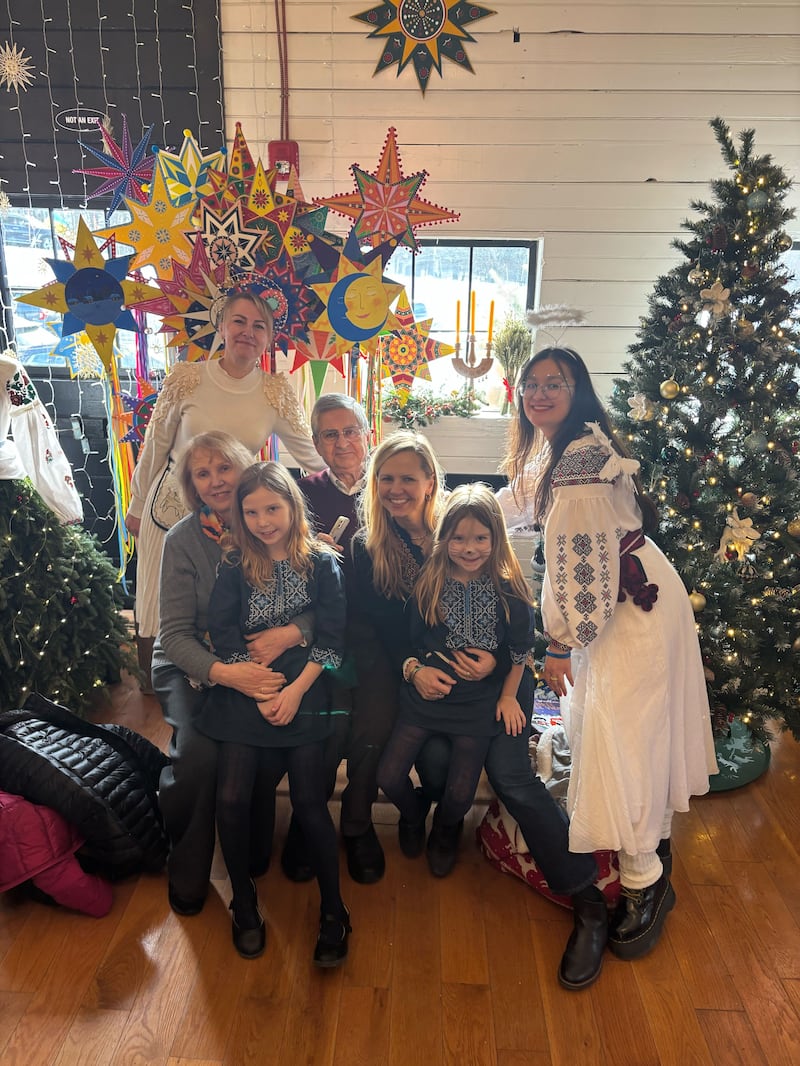
Since the invasion, the two-bedroom apartment I share with my husband and children became a kind of shelter whenever they stayed with us for three to four months. For them, it was a reprieve from power outages and air raids, replaced instead by the rowdy chaos of their grandchildren.
For us too, their visits became an anticipated reprieve.
Each other’s reprieve
These extended visits began more than a decade ago, when my husband and I were new parents and desperate for help. After long nights of feeding, my mother swept in at 5 a.m., lifting my son from my bed so I could sleep. She washed our laundry, cooked our meals and took care of everything that needed doing. She did the same when my two daughters were born.
Friends chalked it up to the stereotype of an Eastern European grandmother. But I think it was simply who my mother has always been — selflessness to the core, always in service of her family.
My father took on transportation tasks of pushing the stroller along the Charles River while my son napped for hours. As he and his sisters got older, he drove them to school. He vacuumed the carpets and secured our bookshelves.
Unlike typical grandparent visits, my parents stayed with us for months. The journey from Ukraine was long and arduous (though since the war, it now seems like a piece of cake.) They were retired and had no other children to care for. I was their only child; my three kids — their only grandchildren. We are their entire world.
Our year came to be shaped by their arrivals, which expanded our household into a multigenerational, multicultural one. Sleeping arrangements and mealtimes were renegotiated; rules set for sharing the single bathroom. It was crowded and imperfect, but our home brimmed with life.
This living arrangement gave us tired parents a break from the relentless demands of raising three small children. We found time to read, to write, and to remember who we were outside of parenthood.
That’s not to say multigenerational living came without challenges.
Lessons from living in a multigenerational household
Each visit was accompanied by a version of musical chairs — only with beds. My husband and I gave up our bedroom to my parents and moved into the attic, where my now-teenage son usually slept, while he squeezed into a room with his two sisters. The laundry room doubled as my closet.
Living with parents as a grown woman also meant confronting my own childhood status, despite my efforts to outgrow it. In my parents’ eyes, I remained their daughter, mothered, cared for and instructed on how to do things better. Rather than softening with time, our personalities often felt more sharply defined in close quarters.
But this physical proximity has brought unexpected gifts. Family stories often surfaced spontaneously like, when after noticing newly delivered kitchen cabinet parts stacked in the middle of the room, my father told a story of his own mother hosting a jubilant holiday gathering in her new apartment, guests squeezing around unopened boxes from the move. “The boxes just made it more charming,” he said. In earlier visits, I took advantage of time together to interview my father about our family history.
For my children, living with their grandparents has deepened relationships that are harder to sustain over FaceTime alone. They’ve adopted small rituals, like drinking tea in the evenings, and have grown to understand their grandparents more fully — both their language and the distinctive ways they express love.
Living with others, and especially with family, has been an education in self-restraint, patience and consensus-building. I’ve learned to hold back a critical remark, to offer an extra “thank you” or sometimes just sit together in silence.
Some of it is motivated by the desire to be good to the people you love. And some of it is just practical: It’s a lot more pleasant to live together, when you get along.
I often think of something my friend Danielle Leavitt said about living through this war. “There is no single or ‘correct’ way to live through a war,” she said. “Some people stay. Some leave. Some resist. Some survive quietly.”
For my family, this war has been punctuated by a series of reunions and goodbyes. Soon, I will take my parents to the airport and say another goodbye.
Then, I will get in the car and say a prayer for our next reunion, and for peace to finally abide in Ukraine.