
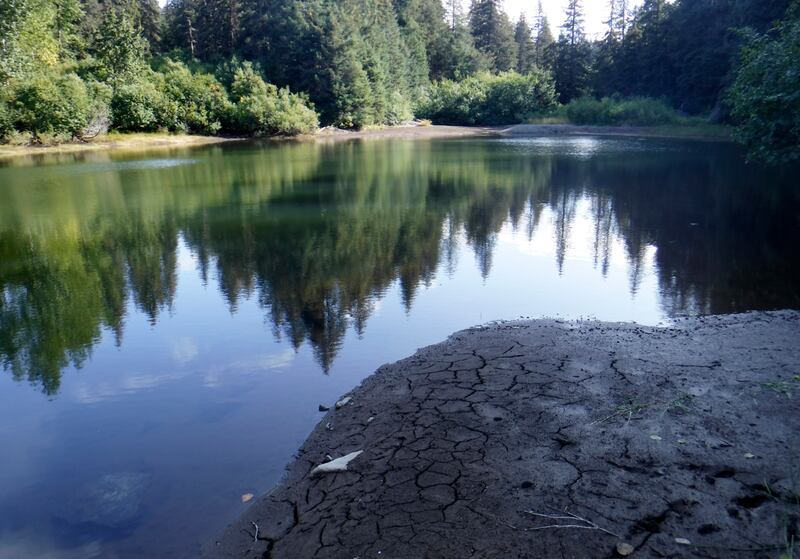

According to a recent study published in the journal Communications: Earth & Environment, 75 clear streams in northern Alaska have turned orange.
The occurrence isn’t new. According to Smithsonian Magazine, the change of color in Alaskan rivers and streams has been confirmed over the past several years, with satellite footage picking up the orange hue back in 2008.
Is there cause for alarm? Here is what scientists say.
Why are Alaska’s rivers turning orange?
Warming climate could be the culprit behind the orange waters, according to CNN. Metals like iron, nickel, copper and lead are contributing to the discoloration of the waterways — a result of thawing permafrost. Some of the metals and minerals are toxic to the ecosystem of the streams.
“Arctic soils contain large amounts of organic carbon, nutrients, mercury and other metals,” says the study, “much of which are stored in perennially frozen ground, or permafrost. Warming and increased snowfall is causing widespread permafrost thaw.”
Jon O’Donnell, lead author of the study, visited Alaska with a team of scientists to take samples from 75 different sources of orange water, per CBS News. He first noticed the change in water back in 2018.
“The more we flew around, we started noticing more and more orange rivers and streams,” O’Donnell said in a press release. “There are certain sites that look almost like a milky orange juice.”
According to CNN, research shows that the Arctic is warming four times faster than the rest of the planet.
How does this affect people and wildlife?
Experts are concerned about how the orange water will affect the ecosystem. The study published in Communications: Earth & Environment predicts that toxic metals could affect the health of the water and habitat.
Brett Poulin, another author of the study, noted the danger the orange streams pose to species in the area. “Our data suggests that when the river turned orange, we saw a significant decrease in macroinvertebrates and biofilm on the bottom of the stream, which is essentially the base of the food web,” Poulin told The Guardian. “It could be changing where fish are going to be able to live.”
According to the study, two species of fish were completely lost within a year of the 2018 orange water phenomenon — the slimy sculpin and the dolly varden.
According to CBS News, the metal-rich water could also impact local drinking water. “Researchers said that, at a minimum, they could impact the water’s taste, requiring rural communities to enhance their water filtration.”
The current plan is to study whether the orange streams and rivers will return to normal.