

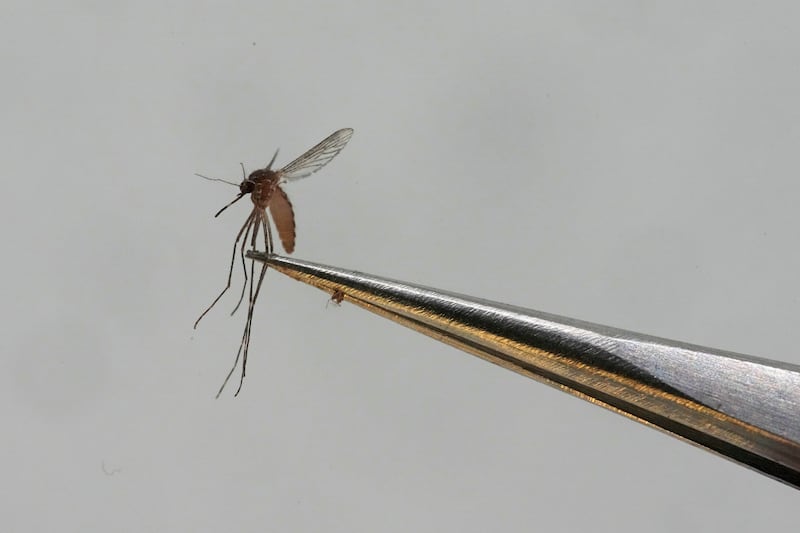

- The Salt Lake County Health Department detected the St. Louis encephalitis virus in mosquito pools.
- St. Louis encephalitis previously emerged in Utah, but this is the first time in Salt Lake County.
- Serious forms of the illness can cause confusion, paralysis and even death.
The Salt Lake County Health Department has found St. Louis encephalitis virus (SLEV) in several mosquito pools in Salt Lake County for the first time. That adds to the mosquito-borne illness risk, since West Nile virus was earlier detected.
For those in the area who’ve been sloppy about taking preventive measures, it’s time to take avoiding mosquito bites seriously. Per the county health department’s announcement, “Because mosquitoes can travel several miles, everyone in the region should take precautions against mosquito bites to avoid exposure to this and other mosquito-borne viruses.”
The symptoms and transmission of the two viruses are similar, but West Nile is much more common. While SLEV has been found before in the state, this is the first time it’s been seen in mosquito pools in northern Utah, according to department spokesman Nicholas Rupp.
About SLEV
Most people diagnosed with the St. Louis encephalitis virus won’t develop any symptoms. But it has the potential to make someone very ill. Symptoms can include fever, headache, nausea, vomiting and fatigue. As with West Nile, there’s also a neuroinvasive form that can create more serious illness. Symptoms of that can include high fever, neck stiffness and neurological symptoms such as tremors, confusion and paralysis. In extreme cases, the illness can cause long-term disability or even kill.
Rupp said the warning was being issued not only to encourage people to take precautions against mosquito bites, but also to let local health care providers know that this virus should be considered if patients show up with particular symptoms.
“Now that we’ve confirmed St. Louis encephalitis virus is in our local mosquito population, Salt Lake County health care providers should consider it in the differential diagnosis for patients presenting with compatible symptoms,” said Mary Hill, Salt Lake County Health Department epidemiology bureau manager.
Like West Nile, this virus circulates in birds and when mosquitoes feed on them, they can be infected. Those mosquitoes can then transmit the virus to people through mosquito bites. It can only rarely be transmitted person-to-person and then only through blood transfusions.
There’s no vaccine and treatment consists of managing symptoms. So prevention is key.
Avoiding dangerous mosquito bites
Per the county’s news release, the three mosquito abatement districts will continue to trap and test mosquitoes for viruses as well as practice mosquito-control efforts to reduce risk. But it’s up to people to protect themselves until the first hard freeze eliminates the risk. It’s also worth noting that both viruses are typically carried by mosquitoes that are most active from dusk to dawn.
Salt Lake County Health recommends that folks:
- Use an EPA-registered mosquito repellent with DEET, picaridin or other active ingredient recommended by EPA.
- After dusk, wear long sleeves and pants.
- Drain standing water in yards.
- Keep roof gutters clear.
- Clean and stock garden ponds with mosquito-eating fish or mosquito dunks. If you need help, contact the local mosquito abatement district.
- Make sure door and window screens are in good shape to keep mosquitoes outside.
- Cut weeds and tall grass short. During the day’s hot hours, mosquitoes like to languish there.
It’s not the first time that the encephalitic virus has been found in mosquitoes in Utah. “SLEV was detected in mosquitoes in southwestern Utah in 2022 and 2023, in mosquitoes in Millard County in 2024 and in birds in Utah County in 2005. This year is the first time SLEV has been confirmed by the U.S. Centers for Disease Control and Prevention (CDC) to be in northern Utah mosquitoes or animals since record-keeping of mosquito-borne viruses began in 2003,” per the department’s news release.
The notice added that “a Salt Lake County resident was infected with SLEV in 2016, but the source of that infection was never determined.”