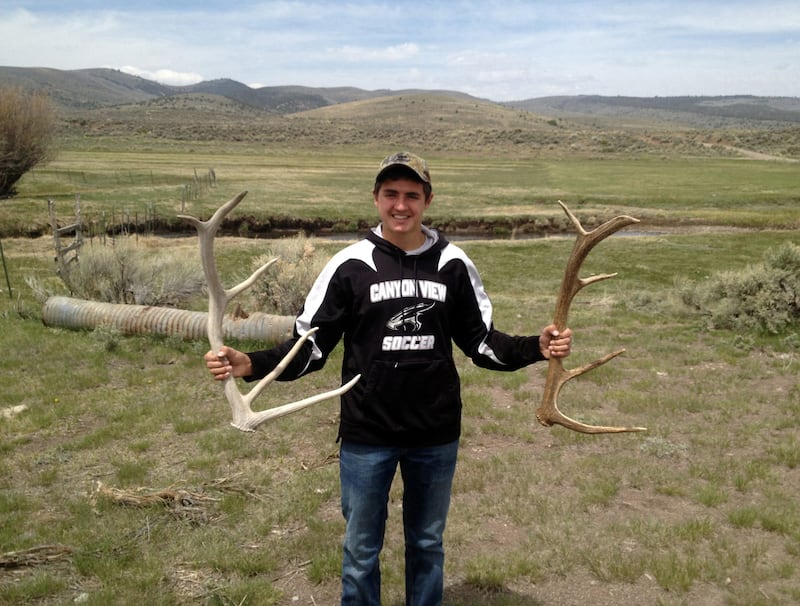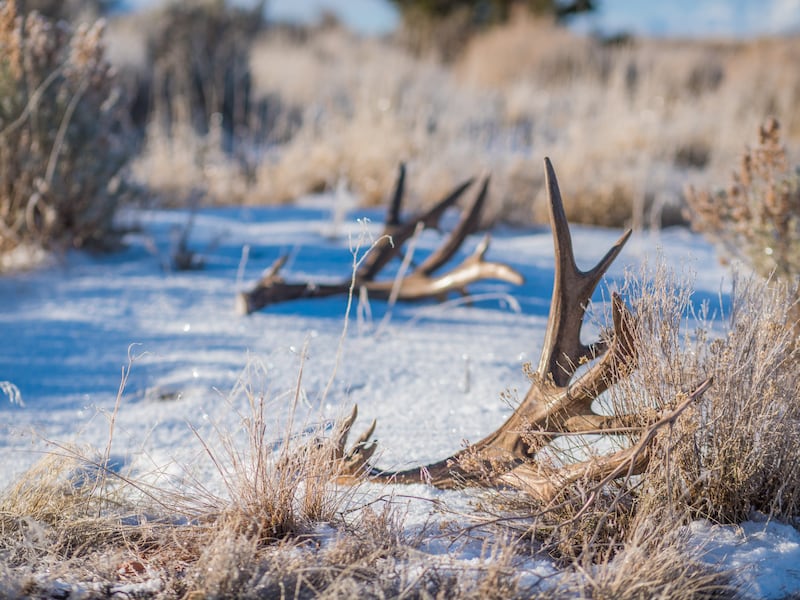

- Shed hunting season opens on New Year's Day and will run through May 31 in Utah.
- Hunters are required to take an ethics course before heading out to find antlers.
- The DWR wants shed hunters know how to ethically navigate deer, elk and moose habitats.
Every winter, male deer, elk, moose and other ungulates “shed” their antlers after the mating rut. Over the spring and summer, their antlers grow back, but collecting those dropped points strewn across public lands has become a popular pastime for many in Utah and others across the West.
The Utah season of shed hunting begins soon, opening on New Year’s Day and running through May 31. However, before anyone wanders out looking for antlers, the Utah Division of Wildlife Resources sent out a public reminder this week of the requirements to do so.
Shed hunters have to complete a mandatory ethics class before collecting the naturally shed antlers or horns.
That’s right. Shed hunters have to take the Antler Gathering Ethics course before venturing out onto public lands. An average of about 20,000 people across the state take the 23-question course online every year.
“Shed antler hunting is an engaging and rewarding outdoor recreation opportunity for many, but it can have unintended consequences on mule deer populations,” reads a shed hunting fact sheet compiled by the Western Association of Fish and Wildlife Agencies.
“Certainly the negative consequences of shed antler hunting can, and should, be reduced ... Education is needed to help ensure the public engages in this activity in an ethical, safe and compatible fashion.”
What are the ethics of shed hunting?
The shed hunting ethics course is one of many annual educational programs required by the DWR in Utah. While not all mandatory courses cover ethics, per se, shed hunting, dedicated hunters licenses and archery licenses have the word “ethics” in the course description.
Among several ethical considerations, the state emphasizes the health of the wildlife that lives in the areas where shed hunters are looking for dropped antlers.
For the animals, human interaction causes them to move more than they would otherwise and to endure the stress of the potential threats posed by folks in their habitats. Both of which, in aggregate, can prove fatal.
“Late winter and early spring are tough times of the year for deer, elk and moose,” reads the release from the DWR. “Which is why the free, educational ethics course is required if you want to go ‘shed hunting.’”
This period of the year is so tough because winter is the hardest time for all big game, especially deer, to eat enough nutritional food. Often, wildlife will survive due to the fat reserves that they’ve built up prior to the winter season.
“If the animals receive constant pressure from people and repeatedly have to run or move, they can use up the fat reserves and energy they need to make it through the winter,“ Rusty Robinson, the Utah DWR once-in-a-lifetime species coordinator, said in a statement. ”Being disturbed briefly once or twice isn’t too significant, but we have over 20,000 people who routinely shed hunt in Utah each year, so ongoing, repeated disturbances can be detrimental to deer.”
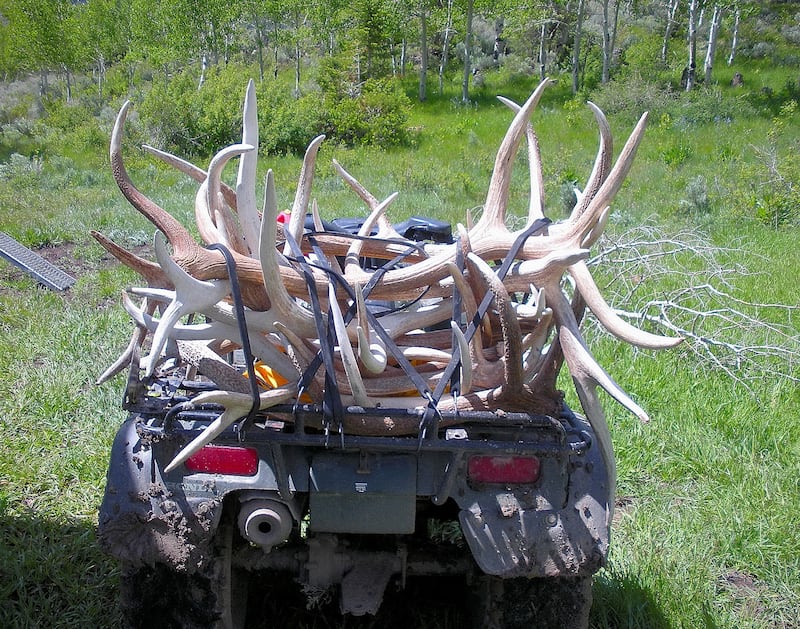
What’s in the shed hunting course?
The majority of the course consists of a series of questions and answers that a user interacts with like an online quiz. The questions are mostly in the form of multiple choice or true/false, and are preceded by educational blurbs.
Some examples of questions are:
“You should check the wildlife.utah.gov website before any antler gathering trips to check for area closures. True or False?"
“As winter severity increases, the survival of deer fawns and elk calves may decrease. True or False?”
“Antler gathering regulations apply only to public land in the state of Utah. True or False?”
Upon completion, shed hunters have to keep a copy of it on their person while they are out in the field. They can do that either on their DWR Hunting and Fishing app on a personal phone or by printing out a copy and carrying it with them.
Where can and can’t shed hunters go?
Bureau of Land Management and U.S. Forest Service land are open to shed hunting, however, there are some notable restrictions.
National parks, Native American lands and most national monuments do not allow shed hunters to collect antlers.
Also, some BLM and Forest Service regions classified as “wildlife management areas” are off limits. Many, the DWR notes in its release, are already closed during the winter and spring months so that the animals and their habitats are protected. A list of those can be found on the DWR’s website.
Private property is also not open to shed hunters. If someone is hunting on private property, advanced written permission is required. And while that may be obvious to some, the DWR makes sure to address it in the release as well as in the ethics course.
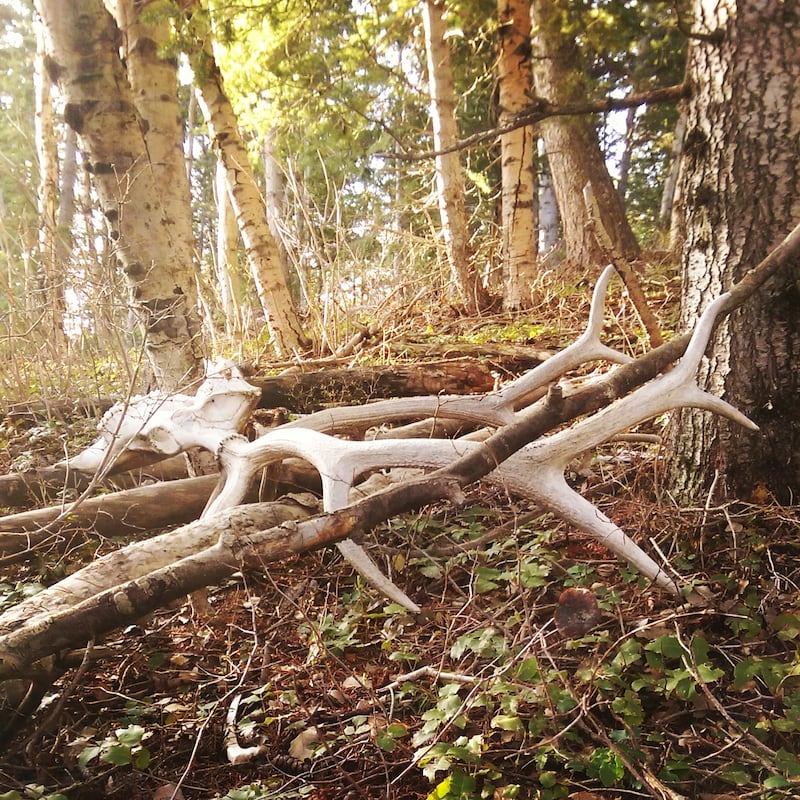
Can antlers be bought and sold?
A new law approved by the Utah Wildlife Board last year allows antlers that are legally collected to be bought or sold at any time.
However, the law requires a “certificate of registration” for “commercial” antler buyers. The state defines them as “an individual or entity that buys shed antlers or horns to resell them for financial gain.”
If someone finds antlers still attached to the skull of an animal — referred to as a “deadhead” — DWR calls for a specific series of events as it could be the result of poaching.
Hunters are asked not to move the skull or disturb the scene and to report what they found. DWR has a dedicated app for such instances, called the Utah Deadhead Reporter app, which asks that hunters send their DWR customer ID, a GPS location of what is found, photos and other relevant details.
In general, the person who found the antlers and skull are allowed to keep it should the natural resource officers determine that the death does not require further investigation.
The blurb for the last question of the course reads, “Protecting and monitoring big game animals on their winter ranges has become a growing problem with the increasing number of people who want to gather antlers ... Be a good witness.”
The question?
“Those who are caught violating wildlife laws may lose their permit and license privileges. True or false?”