- Celebrity chef and DACA recipient Byron Gomez is speaking out in support of the Dignity Act.
- The proposed legislation would be the first major immigration reform in nearly 40 years.
- The bipartisan bill addresses border security and way for immigrants to contribute to America.
In January 2017, the New York City restaurant Eleven Madison Park was nearing the apex of its meteoric rise. Though it had already won most significant accolades available to a restaurant — three Michelin stars, several James Beard awards, a drawer full of AAA five-diamond plaques — it was only a few months away from earning the one it most coveted.
Come April, it was named “the world’s best restaurant.”
To reach that goal, every day was a manic sprint for the staff. The hundred or so employees completed thousands of tasks, each requiring absolute precision. Anything that didn’t meet the standard was trashed or done again. The next day, as it does for Sisyphus, the grind started over.
For Byron Gomez, an aspiring chef originally from Costa Rica who just started that month, his daily preparation took place in obscurity. He spent his days isolated, a floor away from the rest of the team in a freezing cold walk-in refrigerator off a distant kitchen. I was the restaurant’s service director at the time, and we’d only see Gomez when he shuttled ingredients and tools up in the morning and the finished product back down in the evening.

Bundled up under oversized chef’s jackets due to the cold, Gomez — now a former Top Chef contestant, Food Network personality and chef of Brutø, a Michelin-starred restaurant in Denver — spent all his working hours that winter on a single dish. It was a chilled pate made from duck liver called a foie gras torchon.
The cold ensured the foie — as we affectionately referred to it — did not melt as Gomez cured, softened and shaped it. He formed the liver paste into perfect discs that were later filled with maple syrup. That surprise molten center was only revealed once guests cut into the torchon.
Gomez worked hard to earn that spot on the team. His career started at Burger King, then hotels and other storied NYC kitchens before arriving at Eleven Madison Park. His efforts were not only directed toward culinary aspirations though. Just to be allowed to pursue his goals, Gomez had to first navigate the intimidating, complicated bureaucracy of American immigration law.

Gomez arrived in the U.S. when he was 8 years old. He traveled with his parents, who were factory workers on 10-year work visas. When they lapsed on the yearly requirement to return home, the family’s legal status lapsed, too.
Now Gomez is a “dreamer,” the colloquial term for recipients of Deferred Action for Childhood Arrivals. DACA, as the 2012 policy is known, does not provide a path to citizenship, but allows the children of undocumented parents to gain legal status for two-year windows.
Today, amid America’s broad immigration crackdown, DACA is in limbo. Gomez and the more than 500,000 current recipients can reapply for their status, but no new applications are being processed due to various court decisions and the Trump administration’s immigration policies. Though he’s legally allowed to be in the U.S., Gomez has been counseled not to leave the country as his dreamer status may not be solid enough for him to return.
That uncertainty and fear isn’t just felt by dreamers, either. For the approximately 10 million hard-working, law-abiding immigrants who do not fit the “murderer,” “rapist” and criminal descriptions commonly invoked by the current presidential administration, there’s no legal pathway to keep contributing to the society that they’re already paying taxes toward and integrated into.

It’s in this environment that Gomez, the chef once sequestered to an upstairs refrigerator, has become an outspoken proponent for actual, lasting reforms to America’s immigration system. He opposes open borders, believes the U.S. should protect itself from criminals and freeloaders but says it’s paramount that the government create options for those that play by the rules.
“(Immigration) affects me on a personal level, but now its effects are at a community level,” Gomez said. “I’ve been in this country for over 28 years, and yet there hasn’t been any pathway to a better, more sustainable solution of my immigration status.”
It’s why he traveled to Capitol Hill this fall in support of the Dignity Act, a bill sponsored by Rep. María Elvira Salazar, D-Fla., and Rep. Gabe Evans, R-Colo., that is drawing bipartisan support.
What is the Dignity Act?
“The Dignity Act is a revolutionary bill that offers the solution to our immigration crisis: secure the border, stop illegal immigration, and provide an earned opportunity for long-term immigrants to stay here and work,” Salazar said in a statement. “No amnesty. No handouts. No citizenship. Just accountability and a path to stability for our economy and our future.”
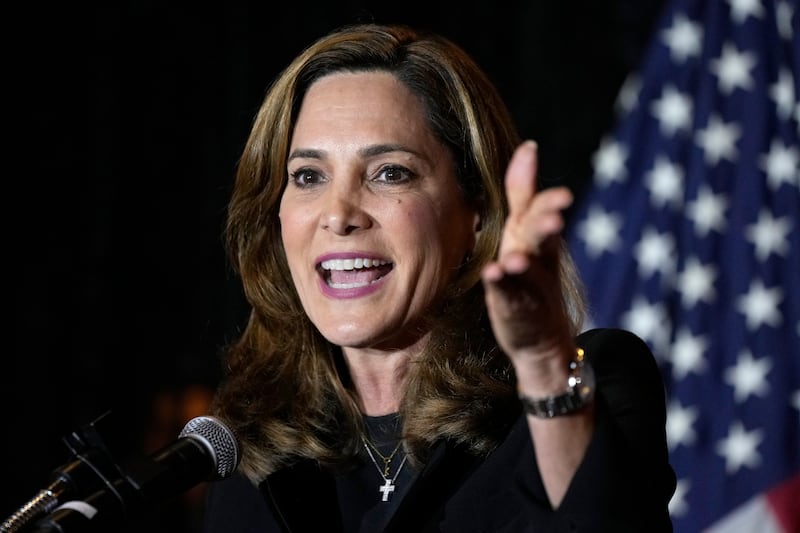
The bill addresses both sides of the immigration debate. Not only does it fund border security and greater internal enforcement, it also provides opportunities for the millions of long-term immigrants that are integral to the economy and communities of the U.S. to stay in the country.
“If you’re a freeloader, you’re a criminal, you’re a bad guy, you’re a cartel, you’re one of these 13,000 convicted murderers? No, absolutely not, not a chance. Get out,” Evans told the Deseret News. “But if you’ve been here for years, you’ve never been in trouble, you’re working hard, you came here as a kid — how do we have some sort of actually viable pathway forward for individuals like that?"
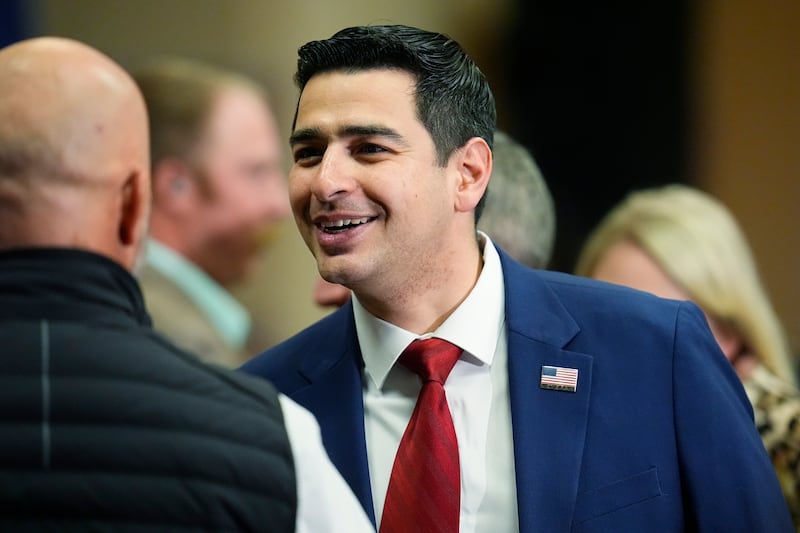
Evans said he believes the Dignity Act is the best way forward. Though hawkish on immigration, he’s the only Latino in the Colorado delegation and the grandson of Mexican immigrants. His first civics lesson was learning how his grandfather earned his citizenship by fighting for General Patton in World War II.
Discussing that heritage of service to your chosen country, he reminded me how all American coins are stamped with the Latin phrase “E Pluribus Unum.”
“We’re a nation of immigrants,” he said. “Out of many one.”
Is there a way for dreamers to stay in the country?
The language of the bill isn’t finalized and the draft will change substantially, Evans said, if and when it reaches the House floor. Even more changes will follow in the Senate. For now, sponsors and supporters have outlined its primary objectives.
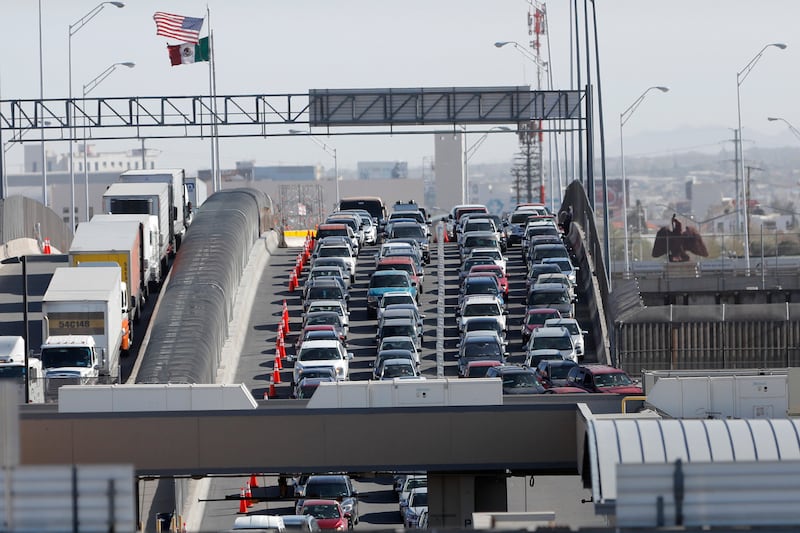
The measure would bolster border security, funding the federal government’s complete operational control of the border. It requires employers to comply with immigration laws, mandating the use of E-Verify, the Department of Homeland Security’s program that confirms employment eligibility.
Then there’s the “Dignity Program,” which does not offer a pathway to citizenship, but creates a viable system for dreamers and other long-term immigrants with clean histories to stay for seven years.
The application is tough. People need to have been in the U.S. since before 2020, to have never received welfare benefits, and be up to date on their taxes. They’ll go through a thorough background check, which includes both a U.S. criminal history review as well as a security check extending to their home countries. There’ll be repercussions, too, for those that aren’t accepted.
“If you can’t enter the program within a certain amount of time, then it’s presumed that you’re not qualified or you didn’t try hard enough to enter the program, so you have to self-deport,” Evans said.
Once approved, recipients would pay $1,000 annually as restitution. That amounts to $7,000 paid to the federal government each application window in addition to their regular tax burden.
“This is truly a work permit overhaul piece of legislation so that those folks who have been here for years-to-decades, working hard, not causing problems, have ... second chances,” Evans said. “I’m a cop. I’m all about accountability, but I’m all about second chances for people who honestly deserve (one).”
Evans said those that employ illegal workers also have a large role to play in correcting the U.S. immigration issue.
“We’ve got to flip that script. We have to reward the people that do it the right way, and we have to hold accountable the people that do it the wrong way,” Evans said.
“The Dignity Act is looking to cut through the 40 years of mess that we’ve had in this space — where trying to do it the right way gets you bogged down in bureaucracy for decades, and doing it the wrong way gets you a job immediately under the table in cash.”
Do we need immigration reform?
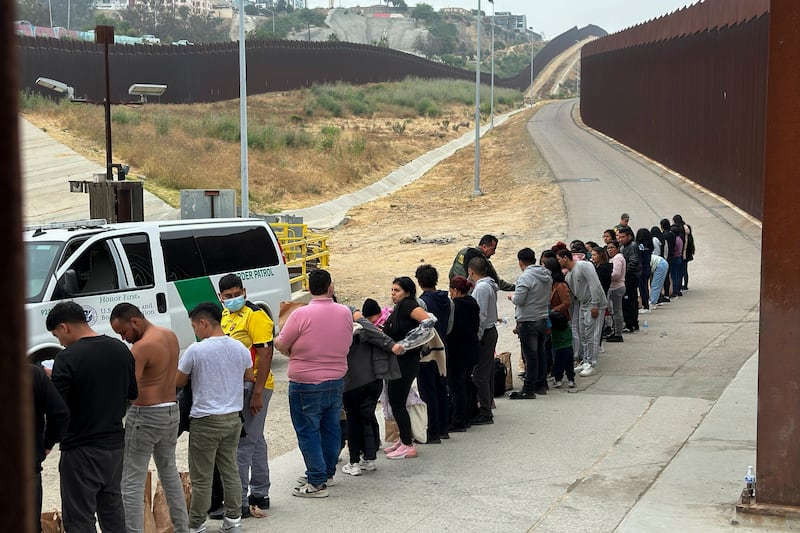
The last time Congress enacted any kind of immigration reform was 1986, with the Immigration Reform and Control Act. Sen. Alan Simpson, R-Wyo. and Sen. Romano “Ron” Mazzoli, D-Ky., worked across the aisle in a genuine bipartisan effort to get the bill signed by President Ronald Reagan.
Among a few changes it made, the bill is most remembered for something hard to imagine from the vantage of the last few years of American culture: The bill legalized the status for some 2 million undocumented people who had entered the country illegally.
There have been many federal and state actions taken since that time to try and steer the country’s immigration policies, but nothing by Congress. That inaction, Gomez said, allowed an already big issue to fester and become too large to ignore.
“The situation about immigration here in this country has gone on for decades,” Gomez said. “And every administration — and everybody in every industry — has just swept it underneath the rug and said, ‘We won’t deal with this right now because there have been other pressing issues.’”
Derek Miller, CEO of the Salt Lake Chamber, shares that perspective.
“We often hear people on both sides of the aisle acknowledge that our immigration system is broken. I actually think that does not fully explain how bad the system is,” he said. “I like to say it’s upside down and backwards. It’s worse than broken.”
It has been clear for a long time that the immigration system needs to be overhauled, Miller said. That’s why he and several other religious, academic, and business leaders in Utah wrote and published the Utah Compact on Immigration in 2019.
The compact requested elected officials to do what they could to create lasting immigration practices in the state and support larger federal reforms. And, in the meantime, it detailed five principles that Utah’s leaders should prioritize with regards to immigration.
Those include a recognition that immigration is a federal policy issue, not a state issue; that supporting families should come ahead of policies that separate them; that Utah’s economy is dependent on immigrants as workers and taxpayers; and that Utah is, ultimately, a free society.
It’s a document steeped in the same kind of decency that the authors of the Dignity Act are trying to bring to America’s immigration policy.
Miller points out, however, that addressing the issue of immigration required a secure border, and he understood why people were frustrated when there was no end in sight. That frustration made unemotional, intelligent action on immigration all but impossible, he said.
But now that the border is much more secure, he said that he believes Americans’ sentiment toward reform will change too.
“Because people in America, they know these people as their neighbors, their friends ... and then it becomes real, and it’s not just something they see on the nightly news,” Miller said. “I really do have faith in the American people that they’ll say, ‘We need a solution for this, and the solution is not just to round everybody up and quote unquote, send them back.’”
How can policy changes impact the labor force?

Evans agreed that America could not consider reform before it admitted it had a problem. Now, there’s finally room for consideration.
Aside from Evans’ civics lesson that the country is rooted in people willing to sacrifice all to participate in the American experiment, there’re more tangible benefits from reform like increased economic activity and a larger workforce.
One stark example of America’s economic reliance on immigration is the agriculture industry. While there are many sectors that rely on immigrant labor — like Gomez’s business of restaurants — Evans cited a USDA study that found over 40% of U.S. agriculture workers are undocumented.
If those workers are pulled out, Evans said, then the American farmer is broken overnight.
“So when we start talking about all these other big national priorities we have, how are we gonna have energy dominance? How are we gonna fix the economy? How are we gonna have national security? All of that stuff comes back to food,” Evans said.
“If you don’t have food security, you can’t do any of the other stuff ... I wish that wasn’t the hand we were dealt, but ... we gotta find a way to solve that issue.”
As for immigrants taking Americans’ jobs, Evans highlighted how certain sectors are struggling to find workers. The CEO of Ford recently said that it has 5,000 openings for mechanic jobs that pay six-figure salaries.
“We’re not talking about them taking American jobs. We’re talking about we need more, we can’t fill the jobs we have,” Evans said, “Even the jobs we have are insufficient. We need to be creating even more jobs.”
Can reform honor those who honored the system?

Gomez has never thought that DACA was a perfect solution for his immigration status. He also did not think DACA was passed in a fair way, but without it he would have never had the opportunity to keep working in kitchens, let alone having personal aspirations.
“After being told ‘no’ by the system throughout my entire life, that was the only branch that I saw that was being handed out to me and I was willing to take it so I could start building my life,” Gomez said.
“I got a Social Security number. Therefore, I’m able to get a bank account. Therefore, I’m able to build credit. Therefore, I’m able to get a license. Therefore, I’m able to travel within the country. Therefore, I don’t have this kind of fear of being integrated in society and contributing to this country.”
Removing that fear allowed him to pursue his dreams — ones that I’ve witnessed take Gomez far. He was a contestant on national television, received a Michelin star, and — more substantially — employed legal Americans in three Colorado cities, paid personal and payroll taxes and subsequently fed thousands of people over the years.
“I have the platform that I have right now because of DACA,” he said.
Gomez does not think that the Dignity Act is a perfect solution, either. “It can still be kicked down the road. It could get pulled out from under you at any point still — especially in this administration,“ Gomez said.
But it is, Gomez said, another step in the right direction.
And while he is not in control of that direction, he gets comfort from his faith in God — he grew up Baptist and Evangelical, but now is a member of a nondenominational church in Denver — and can trust what has become a very long process, full of uncertainty.

No immigrant wants to be here illegally, he said. Knowing that there is a need for the labor and an economic and social benefit, it’s frustrating to him that there’s such an appetite to hunt people down and kick them out rather than find a way to fix the system.
Which is why he’s on board with Evans and supporters of the Dignity Act. Evans called the bill “a very thoughtful, far-reaching piece of legislation,” and Gomez agrees.
As an immigrant living his entire life as an American, having the country reach back out to him in any tangible way really means a lot — imperfect as it may be.
“I have the faith and the hope that eventually they’re going to honor those that have honored this system, that have honored this community, this country,” Gomez said.
“At the end of the day, I have faith that cases like myself will be honored and we’ll see what it looks like on the other side of the road.”