

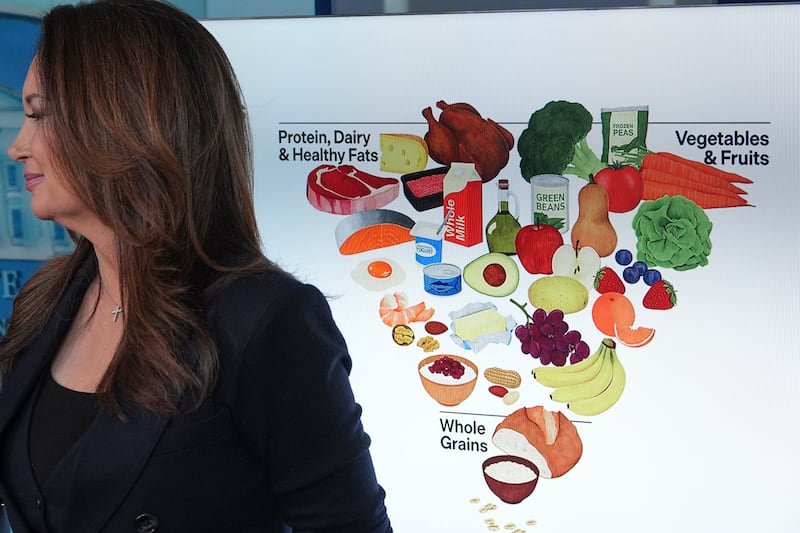

- New food guidelines emphasize whole, nutrient-dense foods for improved public health.
- Proteins and healthy fats are encouraged, while refined carbohydrates are discouraged.
- Alcohol consumption advice now suggests moderation without specific limits based on gender.
U.S. healthy food guidance got its expected makeover Wednesday, with significant changes to what Americans have been told about food for many decades.
Red meat and dairy are in. Saturated fats came off the naughty list. Grains were somewhat de-emphasized. And not surprisingly, ultra-processed foods and refined carbohydrates got a big thumbs down.
Meanwhile, specific limitations on alcohol consumption were removed in the “2025-30 Dietary Guidelines for Americans,” with advice to drink less generally.
Secretary of Health and Human Services Robert F. Kennedy Jr. said that the new standards shift U.S. food policy away from “corporate-driven assumptions to scientific integrity.” He noted that “proteins and healthy fats are essential” and have been “wrongly discouraged.” With the new guidelines, he said the administration is “declaring war on added sugars.”
The new guidelines were introduced by Kennedy and Agriculture secretary Brooke Rollins during White House spokeswoman Karoline Leavitt’s press briefing Wednesday. Rollins said the two secretaries were sworn in the same day and have been working on revamping food policy “since day one.” The resulting pyramid will prioritize whole foods and improve access to healthy food nationwide, she added.
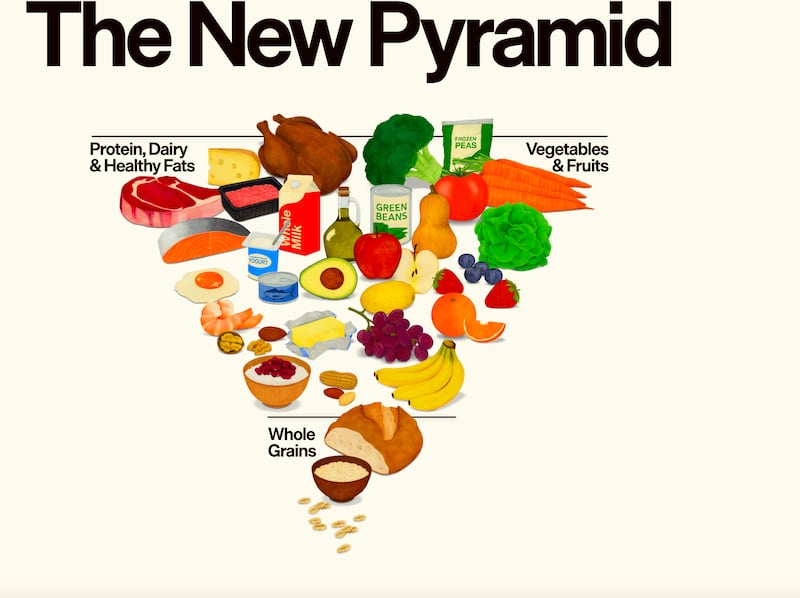
Nutrient-rich, real food
Leavitt said the new guidelines emphasize “whole, nutrient-dense foods” over the ultra-processed kind, with a goal of cutting chronic diseases and their resulting health care costs. While some people will look at the new pyramid and say “it’s upside down,” Leavitt said, “it was actually upside down before and we just righted it.”
How Americans eat has “jacked up health care costs,” she said.
Rollins said the U.S. is in “the worst chronic health crisis in our nation’s history.” She said more than 40% of the roughly 73 million U.S. children have at least one chronic health condition, and nearly 90% of dollars spent on health care are aimed to address chronic disease. The administration estimates 7 in 10 adults are overweight or obese, and a third of adolescents have pre-diabetes.
Officials also lament that “diet-driven chronic disease now disqualifies many young Americans from military service, threatening national readiness and limiting opportunity,” as Health and Human Services put it in a news release.
But “for decades under both Republicans and Democrats, federal incentives have promoted low-quality, highly processed foods and pharmaceutical interventions instead of prevention. As a result, nutrient-dense whole foods grown by American farmers and ranchers have increasingly been displaced,” Rollins said at the briefing.
Leavitt said the guidelines, if followed, will save American households thousands of dollars and will form the basis for future school lunches, military meals and federal food programs like Women, Infants and Children and the Supplemental Nutrition Assistance Program. Meals on Wheels and other programs that receive federal funding would also be impacted.
Kennedy said the new standards will affect 45 million school lunches every day, as well as 9 million meals veterans consume in VA hospitals and what 1.3 million active-duty military members eat daily. He also noted that medical groups are partnering with the administration on promoting good nutrition.
Specifics of the guidelines
The guidelines say protein belongs in every meal and full-fat dairy should be consumed without added sugars. People should eat lots of whole fruits and vegetables daily, whether fresh, canned or frozen.
Healthy fats from whole foods including meat, seafood, eggs, nuts, seeds, olives and avocados are encouraged.
Whole grains are good, but refined carbohydrates should be reduced.
The big three to drop are ultra-processed foods, added sugars and artificial additives, per the guidelines.
The amounts are not specified as they were in the past. “Eat the right amount for you, based on age, sex, size and activity level,” per the department news release.
For hydration, people should choose water and unsweetened beverages. The advice on alcohol is to “limit” consumption for better overall health.
The guidelines also have recommendations for infants, children, adolescents, pregnant and nursing women, older adults, those with chronic disease, vegetarians and vegans.
Making good food available
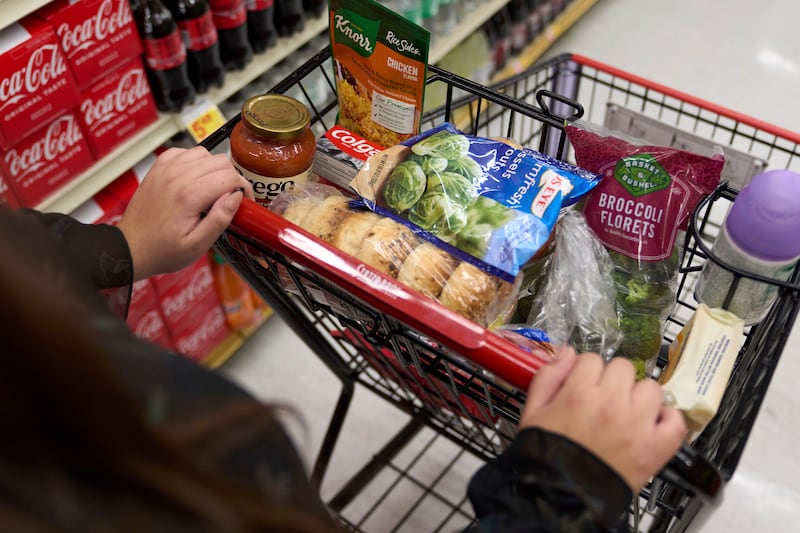
Among changes, the quarter-million retailers who are allowed to accept SNAP benefits will be required to double the amount of healthy staple foods they stock, to bolster access to those foods, officials said.
The officials promised an education program will be developed to guide American families in how to create meals that are both affordable and healthy.
The solution is simple, per Rollins and Kennedy: “Eat real food.”
“That means more protein, more dairy, more healthy fats, more whole grains, more fruits and vegetables, whether they are fresh, frozen, canned or dry. We are finally putting real food back at the center of the American diet, real food that nourishes the body, restores health, fuels energy and builds strength,” Rollins said.
She also noted that real food like pork, eggs and ground beef are becoming more affordable, and said a meal containing the items touted on the food guidance could cost as little as $3.
The U.S. has one of the highest diabetes and obesity rates in the world, according to Kennedy, who noted that 20% of young adults have nonalcoholic fatty liver disease. The high cost of dealing with chronic disease cripples the economy, weakens U.S. financial security and “it’s shocking that our own government helped to drive these cataclysmic changes in our diet,” he said.
What about alcohol?
The new guidelines eliminate the advice to have no more than one alcoholic beverage a day for women and two for men. Instead, it suggests adults “consume less to be healthier” with advice to reduce consumption generally. Some, including pregnant women, should not drink, per the guidelines.
Asked why, given well-publicized international evidence that there’s no safe level of alcohol consumption, the guidelines aren’t more negative toward alcohol, Dr. Mehmet Oz, administrator of the Centers for Medicare and Medicaid Services, said the specificity of former advice was not backed by science.
Oz called alcohol a “social lubricant that brings people together. In the best-case scenario, I don’t think you should drink alcohol, but it does allow people an excuse to bond and socialize. And there’s probably nothing healthier than having a good time with friends in a safe way.”
Oz noted that in Blue Zones, the places globally where people live the longest, “alcohol is sometimes part of their diet. Again, small amounts taken very judiciously and usually in a celebratory fashion. So there is alcohol in these dietary guidelines. But the implication is, don’t have it for breakfast.”
During the Biden administration, the U.S. surgeon general, Dr. Vivek Murthy, pushed to have cancer warnings placed on beverages containing alcohol. Numerous studies have linked alcohol consumption to increased risk of seven types of cancer.