


- President Trump started to remove the U.S. from the World Health Organization in his first term.
- U.S. officials ordered the CDC to cease communications with the WHO.
- Trump cited the WHO's mishandling of pandemic responses as justification for withdrawal.
The U.S. and the World Health Organization have divorced, ending a 77-year relationship.
But Politico is reporting that “the race is on to convince President Donald Trump he should rejoin. The key to a potential return is who becomes the leader of the WHO next year and whether Trump likes them.”
Stretching clear back to his first term, the president has said that the international health giant hid the fact that China caused the COVID-19 pandemic. And he’s also lambasted the group over the share of dues the U.S. pays for membership in the global health group.
World Health Organization Director-General Tedros Adhanom Ghebreyesus denies the accusations about China and has said other countries are being urged to pay more.
Tedros’ term ends next year. So experts are predicting the situation could change and the U.S. could rejoin — as long as Trump likes Tedros’ successor.
Politico in a separate article said the beef between the U.S. president and the director-general is personal. “Trump has long charged that WHO Director-General Tedros Adhanom Ghebreyesus covered up China’s responsibility for the COVID pandemic, and also aided Democrats who called Trump’s own move to shut the border to Chinese travelers racist.”
Terms of the divorce
The WHO has — or had until this week — 194 member countries, now 193. This seems to be the first divorce.
And the administration has already ordered the Centers for Disease Control and Prevention to stop working with or communicating with the WHO.
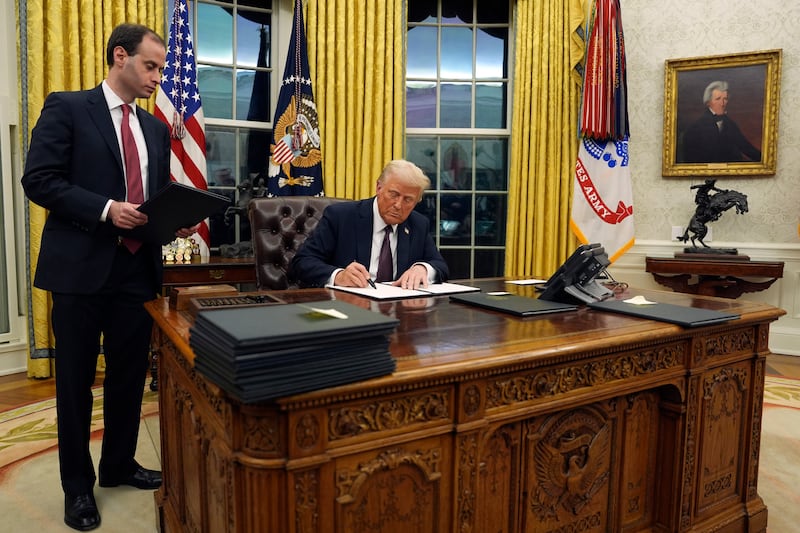
The divorce began a year ago, according to NPR, when Trump signed an executive order— on his inauguration night — that said he wanted to leave the WHO. Among the listed gripes, he said The WHO mishandled the pandemic in regards to China, but also other global health crises. He said it needed reforms it hadn’t made and cited “inability to demonstrate independence from the inappropriate political influence of WHO member states.”
In his first term, in 2020, Trump started to pull the U.S. out of WHO, but Joe Biden reversed the action when he took office.
Leaving the WHO requires one year notice, which means the withdrawal would be today, Jan. 22. The other requirement is the U.S. paying its back dues. NPR said the U.S. owes WHO $278 million for the 2024-25 membership fee and there are no plans to pay it.
“The United States will not be making any payments to the WHO before our withdrawal,” the State Department told NPR in a statement. “The cost borne by the U.S. taxpayer and U.S. economy after the WHO’s failure during the COVID pandemic — and since — has been too high as it is.”
In the same statement, the State Department added: “The opinions out of the WHO do not constrain or have an impact on U.S. actions. Those meaningless opinions only serve to generate similarly meaningless headlines for news clicks.”
WHO could still allow the U.S. to participate in forums and some public health events. But the State Department statement to NPR said the U.S. is not interested.
What does the WHO do?

Johns Hopkins University School of Public Health describes WHO’s many roles in global public health. They include surveillance for diseases and contagious events on a global level; gathering information and trying to stay ahead on trends and where illnesses are headed; setting standards and creating guidelines for countries to improve health and avoid threats to health; helping to supply vaccines and drugs as needed and helping with humanitarian response to illness.
WHO has benefited from U.S. contributions, estimated at 12% to 15% in 2022-23. Per the Johns Hopkins report, “The WHO is already struggling financially, and the U.S.’s withdrawal will likely lead to a loss of jobs, reduction of work, and less ability to do the functions we just talked about.”
The report adds: “But if we think it’s expensive to be part of the WHO, just wait until we aren’t part of the WHO.”
The article suggests the cost will be financial in terms of managing diseases and preparedness, but also in terms of reputation. The U.S., per the article, is known for helping others and being a leader in a larger community.
It’s also possible the withdrawal will hamper disease surveillance, they said.
Others disagree. In a video message to the WHO assembly in May, Health and Human Services Secretary Robert F. Kennedy Jr. said, “Like many legacy institutions, the WHO has become mired in bureaucratic bloat, entrenched paradigms, conflicts of interest and international power politics.”
The WHO’s executive board is meeting in February and the U.S. withdrawal is expected to be a big topic of conversation.