

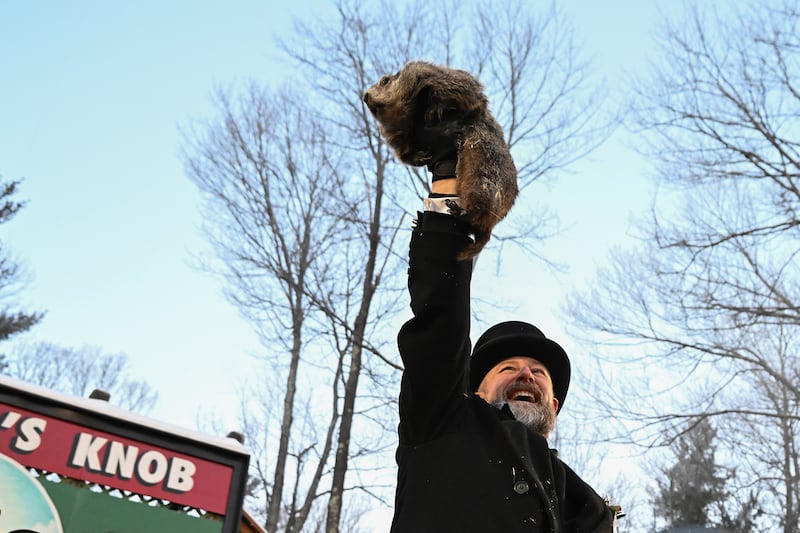

For residents of the East Coast, Punxsutawney Phil’s latest prediction may be a disappointment, but for those out West, especially in Utah, the groundhog’s shadow is a welcome sight, promising six much-needed weeks of more winter.
Phil emerged from his burrow Monday morning at Gobbler’s Knob in Punxsutawney, Pennsylvania, to find his shadow, signaling that winter isn’t going anywhere just yet.
Spectators at the scene were excited for the groundhog’s latest prediction, “In Phil we trust,” read one sign.
According to folklore, if Phil doesn’t see his shadow, the country is in for an early spring, if he does see his shadow, winter can be expected for another six weeks. Since Groundhog Day records began in 1887, Phil has seen his shadow 110 times.
This is the fifth time in the last six years Phil has seen his shadow, and the 20th time since 2000, according to The Weather Channel.
How often is Phil’s prediction correct?
How much trust should observers actually place in the rodent’s prediction? According to the National Centers for Environmental Information, Phil’s track record is hit-or-miss. Over the last decade, he has been accurate only 30% of the time.
Last year in 2025, Phil’s prediction for a long winter was not accurate. Instead, much of the U.S. saw above-average temperatures in the six weeks following his prediction, proving him incorrect, according to NCEI.
While his debut forecast in the late 19th century was considered accurate for some regions, his reliability is still debated.
There is no localized data on his success in Utah.
Why do we celebrate Groundhog Day?
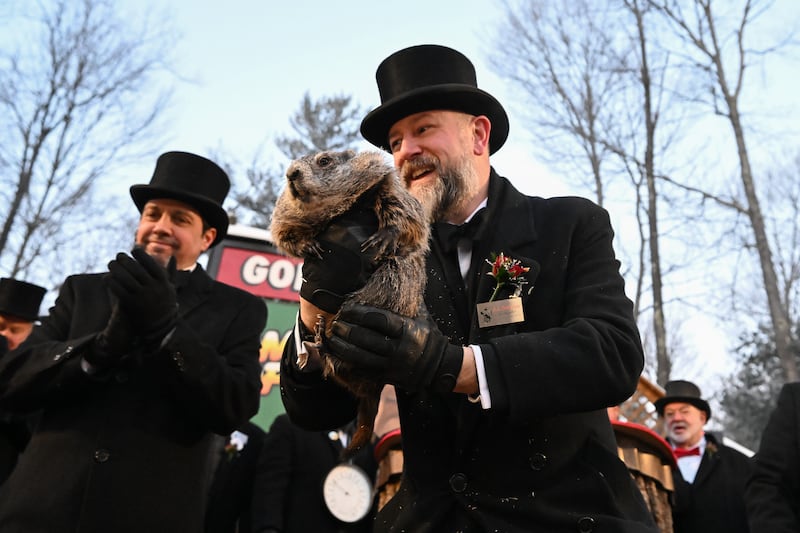
According to legend, Groundhog Day is celebrated annually on Feb. 2. While it isn’t considered a federal holiday, it remains an American tradition with European roots.
According to the Old Farmers’ Almanac, Europeans originally looked to bears and badgers for signs of spring, but when German immigrants first came to Pennsylvania, the tradition evolved to using groundhogs instead to make the prediction.
Beyond the forecast, it is a community event that many look forward to participating in and view it as a unifying force, according to interviews done by ABC News.
“I think it’s just fun — folks having a good time," said Rick Siger, Pennsylvania’s secretary of community and economic development. “It brings people together at a challenging time. It is a unifying force that showcases the best of Pennsylvania, the best of Punxsutawney, this area.”
Another spectator added, “Oh man, it just breaks up the doldrums of winter. It’s like Halloween and New Year’s Eve all wrapped into one holiday.”
Phil might be the most famous but is he the only one?
While Phil is the most famous groundhog, he is not the only one making weather predictions in North America. Others emerge from their burrows with their own crowds in Ohio, Georgia, Wisconsin, New York and Nova Scotia, Canada.