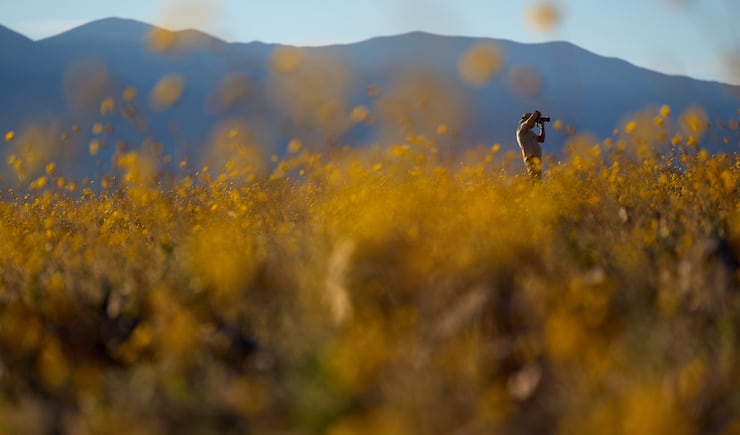
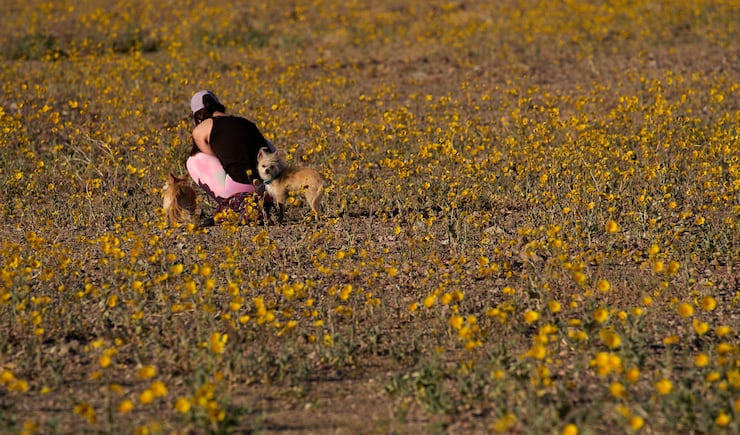
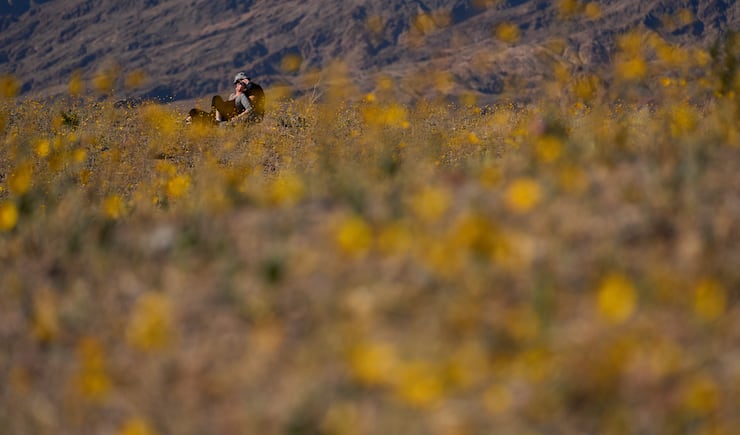
Normally when you think of a desert, you think of extreme heat and a dry, barren and lifeless landscape — except for a few cacti and lizards, of course. However, right now, there’s one desert land in the West that is breaking those norms.
But not for long.
It’s common for wildflowers to bloom across Nevada and Southern California, some years forming “superblooms” that are visible from space.
This year, Death Valley National Park’s floor has been transformed from a desert brown to a blanket of color.
“This landscape that sometimes people think of as desolate or devoid of life is coming alive right now with this really beautiful palette of colors,” park ranger Matthew Lamar told The Associated Press.
Unprecedented rainfall
Since October, the park has received more than a year’s worth of rain, with 1.76 inches in November, setting a new record for the month.
“From November through early January, we had about 2½ inches of rain, so we had more than our annual average in just 2½ months,” Abby Wines, acting deputy superintendent at Death Valley National Park, said to NBC News.
The rain allowed dormant seeds long buried in the ground to sprout in the hottest location on Earth.
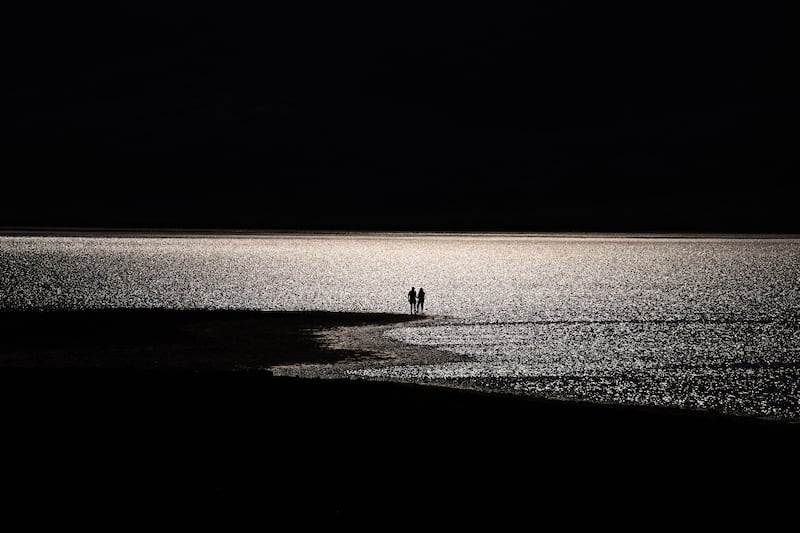
“It’s a good reminder that even in the face of all this adversity, that they can still thrive,” said Las Vegas resident Jackie Gilbert, who visited specifically to see the superbloom.
According to news reports, the last time Death Valley showed its vibrant colors was in 2016, when the area experienced an above average rainfall like it has in recent months.
Life after all
The superbloom shuts down the misconception that there is little life in the desert land. Even in years without any visible evidence, plant ecologist Loralee Larios says a lot of life still happens.

“The plants and the animals have developed really amazing strategies to be able to persist, and especially in a system like Death Valley that’s really sort of characterized by extremes,” she told AP.
The stunning landscape shift only occurs when conditions are right, often going decades without water. If enough rainfall occurs, the moisture washes off the seeds protective coating, triggering the seeds to sprout, BBC reported. Record rainfall in the fall triggered the seeds, and a dramatically wetter winter allowed for root development. These perfect conditions allowed the seeds to rise above ground to release seeds and start the cycle over again.
This once-a-decade event has only occurred four times since 1998 (2026, 2016, 2005 and 1998).
Short lifespan
The short time these wildflowers spend above ground is expected to end in mid-to-late March, depending on weather. For higher elevations, blossoms will be seen April through June, according to the National Park Service.
If you plan to see the desert ground dressed in beautiful colors, be sure to stick to designated trails to avoid stomping on the wildflowers. Picking the flowers is also prohibited, since any flower picked means fewer seeds for future generations.
“I think it’s a great time to come to Death Valley and have that unique experience because who knows when the next one will happen?” Lamar said.
More information can be found on the park’s website here.