


- Hantavirus typically spreads through rodent contact, but human transmission is possible.
- Three deaths on the MV Hondius cruise ship may have resulted from human transmissions.
- Initial exposure seems to have occurred prior to embarking on the cruise ship.
While hantavirus typically doesn’t spread from one person to another, at least one strain can. And health officials are looking at that as a possible cause for the hantavirus outbreak on the MV Hondius cruise ship, operated by Oceanwide Expeditions.
Three people have died and several others have become sick. While hantavirus typically spreads through inhaling urine, droppings or saliva from infected rodents, the Andes strain, which is native to South America — especially Argentina and Chile — is known to have spread occasionally from close personal contact.
Two of those who died were a married couple on the cruise. Another individual died and at least four others on board have become sick, according to the Global Virus Network, which reported that other passengers and crew are “under observation.”
“Preliminary epidemiologic assessments indicate that initial exposure likely occurred prior to boarding, with the possibility of limited onboard secondary transmission under close-contact conditions,” the announcement said. Importantly, global health authorities emphasize that the overall risk to the traveling public remains low.
The article said that direct human transmission “has been documented for the Andes virus under conditions of prolonged close contact. The Andes virus is endemic to Argentina, where the cruise ship departed three weeks ago.”
“This incident is not indicative of a widespread travel risk, but it is a clear example of how zoonotic viruses that come from wildlife exposure can surface in confined or connected settings,” Scott C. Weaver, a network Center for Excellence director and chair in Human Infections and Immunity at the University of Texas Medical Branch, said in the network article. “Hantavirus is primarily an environmental infection, and even in rare cases of human-to-human spread, it does not behave like highly transmissible respiratory viruses. The priority is vigilance, early identification, and clear, evidence-based communication.”
What’s next for the ship’s passengers and crew?
The Hondius was slated for a weekslong polar cruise and left from Argentina en route to Antarctica and other islands in the South Atlantic, as the Associated Press reported. That article noted that none of the passengers had any symptoms of illness when the ship set sail, according to health officials in Argentina.
The ship is likely sailing to the Canary Islands, according to the World Health Organization. But it will depend on what Spanish officials find when the vessel is inspected by disease experts, as the New York Times reported.
The destination is likely, but could change. Ultimately, ill passengers will be transported to The Netherlands for treatment.
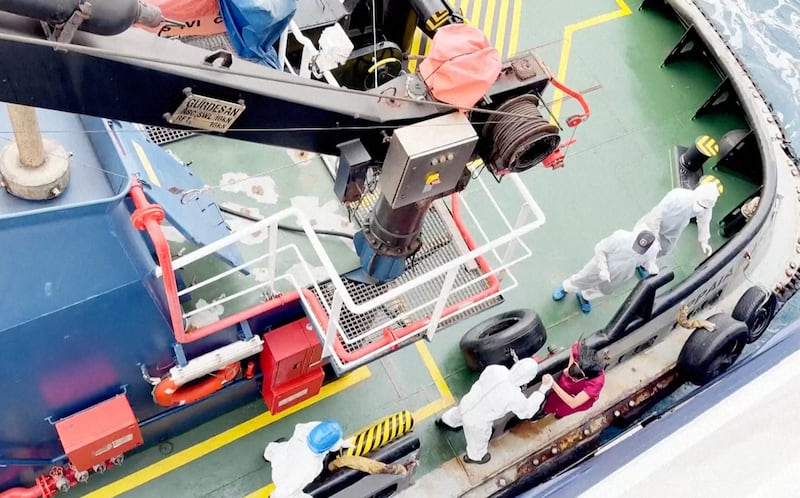
AP reported, “Authorities in Cape Verde have said they sent teams of doctors, surgeons, nurses and laboratory specialists to the Hondius. They were seen in (a passenger’s) video footage — wearing white overalls, boots and face masks as they disembarked to a smaller vessel."
“In South Africa, authorities said they have started contact tracing— another practice used extensively in the coronavirus pandemic. But officials have emphasized that the chance of a major public health threat is low," per AP.
Since the outbreak began, the ship has been moored off the coast of Cape Verde, in the Atlantic Ocean off West Africa. Officially, there are two confirmed cases and the other five are suspected to result from hantavirus.
Passengers are reportedly social distancing and wearing masks.
At a news conference the WHO held in Geneva, Dr. Maria Van Kerkhove, the group’s head of epidemic and pandemic preparedness and prevention, said that “we do know that some of the cases had very close contact with each other and certainly human-to-human transmission can’t be ruled out.”
The Times reported that the couple, who were Dutch, had been traveling in South America before joining the cruise.
About hantavirus
Hantavirus is actually a family of viruses that can make someone ill to varying degrees and may even kill. Per the Centers for Disease Control and Prevention, the viruses cause diseases including hantavirus pulmonary syndrome that impacts the lungs primarily and hemorrhagic fever with renal syndrome which can attack the kidneys. All hantavirus infections begin with rodents that are infected.
Early symptoms of the pulmonary syndrome may include fever, fatigue and muscle aches, somewhat similar to the flu. About half of those who are ill also have headaches, dizziness, chills and gastrointestinal problems.
Within a few days to about 10 days, late pulmonary symptoms can appear, such as shortness of breath or coughing. Lungs can fill with fluid.
The pulmonary form can be devastating and as many as 40% of those who contract it can die.
The form that impacts kidneys may show up between one and even eight weeks after exposure. That long lag is pretty rare.
Symptoms can include terrible headaches, severe back and stomach pain, fever and chills, blurred vision, nausea, a flushed face, swollen, red eyes and rash. The low blood pressure, kidney failure and other challenges can also be features.
While the symptoms can be severe, actual death is less common, with estimates between 5% and 15%, per the CDC.