

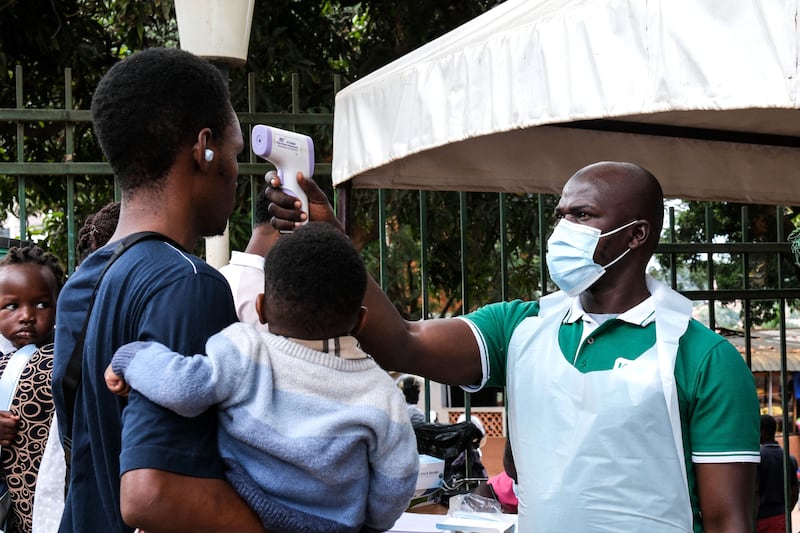

- The WHO admits significant uncertainties about Ebola spread and case complexities.
- Ebola from the Bundibugyo virus has no available vaccine, increasing the outbreak risk.
- Spread occurs through contact with bodily fluids of infected individuals.
As more cases of Ebola disease are diagnosed in the Democratic Republic of the Congo and Uganda, U.S. public health leaders are calling it an “evolving situation.” The World Health Organization, on the other hand, sees the epidemic as a “public health emergency of international concern.”
Here’s what people should know about Ebola.
What is Ebola?
Ebola is actually a disease that in people can arise from four different orthoebola viruses. The current outbreak is from the Bundibugyo virus, for which there is no vaccine, according to the Centers for Disease Control and Prevention.
“Dry symptoms” like fever, aches, pain and fatigue come first, but as the illness progresses, “wet symptoms” typically occur, including diarrhea, vomiting and what the CDC describes as “unexplained bleeding.” The latter includes nosebleeds and sometimes vomiting blood.
After exposure, it can take as long as three weeks to develop symptoms, though the average is eight to 10 days. In some cases, Ebola begins to manifest in a couple of days.
Healthcare providers and family members are most at risk, often from caring for someone who is ill with Ebola without proper infection control methods, per the CDC.
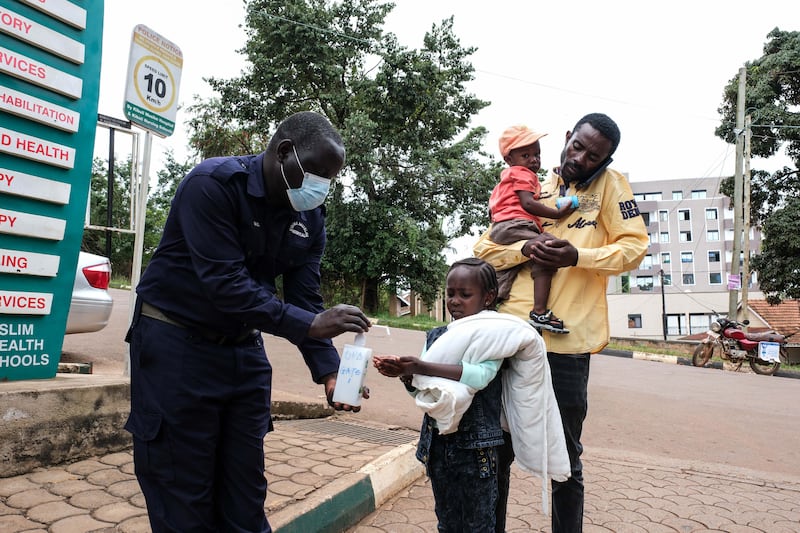
The disease spreads through contact with body fluids of an infected person or a person who died of Ebola. It can even spread from handling their linens.
Typically, between a quarter and almost half of those who get Ebola from the Bundibugyo virus die.
The situation in the Congo
As of May 17, there were 10 confirmed cases of Ebola and 336 suspected in the Democratic Republic of the Congo. The count included 88 deaths so far. There were also two confirmed cases, including a death, in Uganda, among people who had been in the DRC. No further spread has been reported.
The CDC reported most of the cases are in women and that they have also typically been in people between 20 and 39 years old. That may just reflect, however, the fact that it has been largely among caregivers.
The CDC has issued travel notices for both the DRC and Uganda to coach Americans planning to travel to either country soon on how to stay protected from Ebola. Per the agency, “CDC is also supporting U.S. government interagency efforts to coordinate the safe withdrawal of a small number of Americans who are directly affected in outbreak areas.”
CNN noted that the two cases in Uganda were people with no known connection to each other, “which is often a warning sign that the outbreak in the DRC is larger than health authorities can currently see,” per Adrian Esterman, a professor and chairman of biostatistics at Adelaide University.
The U.S. embassy in Kampala said it is temporarily not issuing visas because of the outbreak.
The CDC sent staffers already in the impacted area to help with surveillance, contact tracing and laboratory testing. The agency also plans to provide more support from its headquarters in the U.S.
Unknowns raise alarms for the WHO
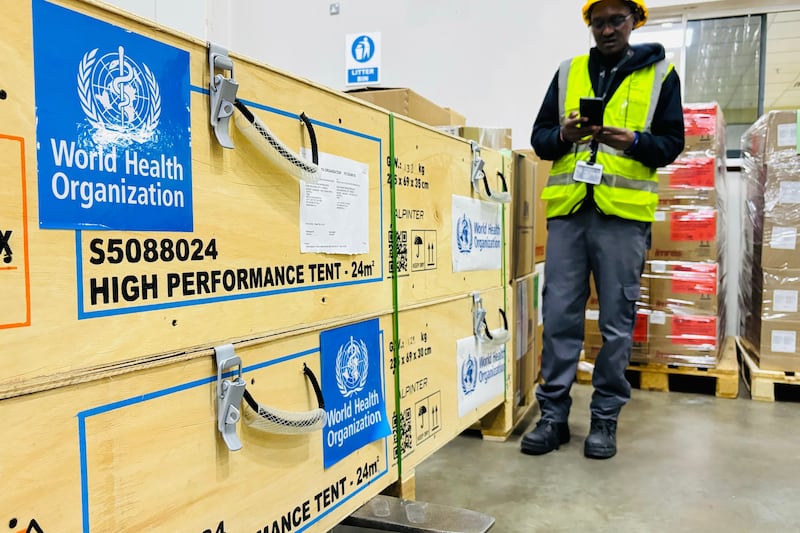
The World Health Organization has noted “significant uncertainties” about how many people have been infected and how far geographically the Ebola disease has spread. The international health giant also reported that “there is limited understanding of the epidemiological links with known of suspected cases.”
The WHO said that the outbreak doesn’t qualify as a pandemic emergency, which earns its highest alert. But international travel and the disease incubation time also increases the concern.
According to The New York Times, “The U.S. Agency for International Development has played a major role in containing previous outbreaks, but last year it was shuttered by the Trump administration. It is unclear how that might have affected the response to this outbreak. The administration also cut funding for the CDC, the leading public health agency in the country. It also withdrew in January from the WHO."
Officials have said they’re not sure exactly how the Bundibugyo virus is spreading Ebola. As NPR reported, this type of Ebola “is less well understood and standard rapid field tests often miss it.”

Preventing exposure
There are no approved vaccines or even treatments for the Bundibugyo strain of Ebola. Because of Ebola’s high rate of spread, healthcare workers are being told to wear head coverings, goggles, masks, gloves, gowns and even rubber boots, NPR reported.
“We know that transmission and community spread of the virus was probably happening for weeks before this was recognized,” Dr. Boghuma Titanji, an infectious disease specialist at Emory University, told NPR. “So the virus is already a few steps ahead of the response and we’re already playing catch up.”
Doctors Without Borders said it plans to scale up its medical response in Congo quickly.