

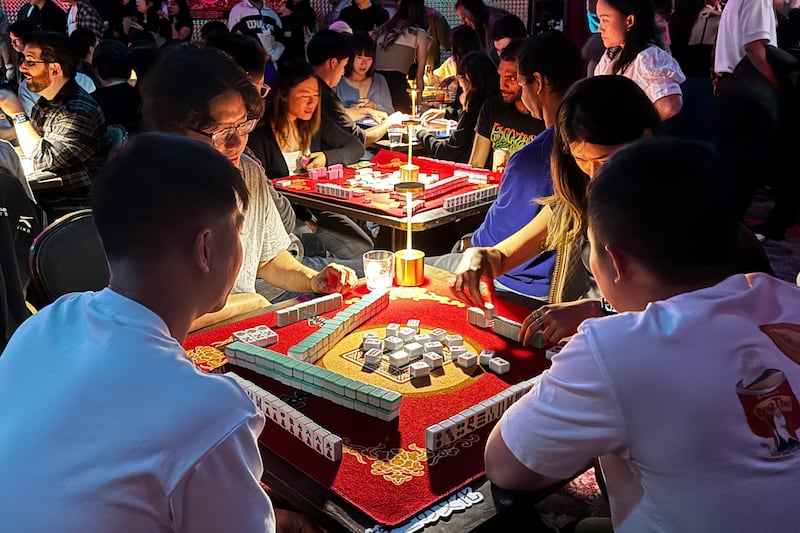

Late last year, a neighbor invited my wife to join a few others in learning to play mahjong. Up to that point, it had never even crossed her mind.
“I had heard about mahjong, but knew absolutely nothing about it,” Stephanie told me. “I also thought they might have some good snacks and wanted to try them,” she said later.
A couple of months later, Stephanie was hooked. All she wanted for Christmas was her own set of mahjong tiles, a mat and cards. Nothing else.
Finally, Christmas shopping was easy.
My wife got what she wanted and has never looked back. Now, she plays mahjong once a week with a group of friends and comes home excited to tell me what happened.
“I’m not just playing mahjong — I’m fully immersed in it,” she told me recently. “Another player even told me that she feels like the old days of multilevel marketing, when there was almost a frenzy about a new product or device. Mahjong is more than trendy; it is a phenomenon!”
It is indeed. In fact, between 2023 and 2024 alone, Eventbrite reported a whopping 179% increase in sponsored mahjong events nationwide and a 365% increase in mahjong-related searches across all of their platforms. Because groups and clubs form informally, it is difficult to estimate the number of players in the country, but newspapers like the San Francisco Chronicle and magazines like Good Housekeeping have also noted its increasing popularity.
Playing mahjong has multiple benefits. Studies suggest that regular mahjong play can improve executive functioning and even delay cognitive decline. By engaging the brain’s frontal and temporal lobes, the game helps maintain neuroplasticity, the brain’s ability to form new neural connections even later in life.
Unlike games based purely on luck or chance, mahjong requires a complex blend of reasoning powers. Playing can improve short-term memory, enhance pattern recognition and boost overall brain power. But most of all, players say, they enjoy getting together and doing something that requires thinking and effort.
“I like doing something productive when getting together with others,” said Laurie Terry, an experienced online mahjong player and local coach in southern Utah. “Mahjong is both fun and stimulating. And I get to do it with like-minded friends. I like that combination.”

Players also say there is a tactile benefit that comes from playing a game with tiles. “I like the feel of tiles in my hand and the clickity-click of tiles on racks,” said Wendy Bliss, who started playing six months ago and now plays at least once a week. “There is something both mesmerizing and at the same time deeply satisfying about playing with racks and tiles on a mahjong board.”
There’s something to be said for this enhanced hand and eye coordination. A round of mahjong supports all five senses by creating a “fully immersive experience,” therapist Laura Somerset Pratt said.
While mahjong has been seen as an “old person’s game,” millennials and Gen Z are now embracing it as a trendy alternative to screen time. Even kids as young as 5 or 6 can learn to play with simplified rules.
After noticing how many people were getting into mahjong and looking for places to play, the Aster Wedding and Event venue in Washington, Utah, is now planning to sponsor mahjong activities for families, friends and newcomers. They have found that newcomers and longtime residents alike are looking for venues that promote open play and social events.
Mahjong was created in mid-to-late 19th century China, dating back to early card and domino games in the country. The game came to the United States in the 1920s when Joseph Babcock, an employee of Standard Oil (now ExxonMobil), brought the game home after an assignment in Suzhou, China. He wrote a manual simplifying the rules for the game. In 1937, a group of women in New York City further refined the rules and promoted the game through clubs and associations.
While it has other benefits, mahjong has always been a way to promote social interaction and build community, writes Annelise Heinz, historian and author of “Mahjong: A Chinese Game and the Making of Modern American Culture.” Heinz notes the game has evolved over time but retains its essential mix of awareness about other players’ plans and tactics while promoting camaraderie in the process.
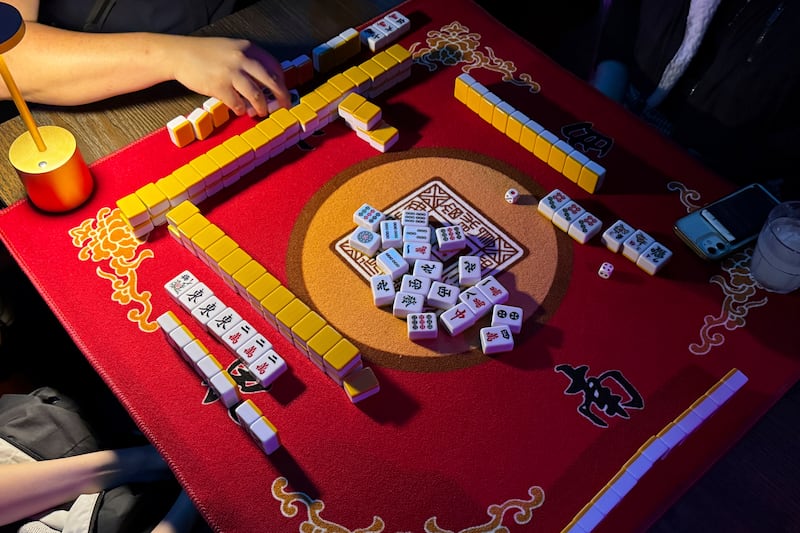
A standard game requires four players, creating an inherent need for community. The “table talk” that occurs between turns provides a safe, structured environment for interaction.
For my wife and her friends, the weekly mahjong game has become a fixed point in her calendar, fostering a sense of belonging with like-minded women.
Mahjong isn’t just about winning, by the way — players can play a perfect strategic game and still lose due to the luck of the draw. Participants can have a poor hand and still find satisfaction in the game.
“Mahjong is a good example of how the process matters, not just the outcome,” Laurie said. “Even if you don’t win, you can see how close you were and feel good about that.”
Every year, new cards that determine winning hands are issued.
“Someone may have learned to get winning hands one year, but they need to learn a new set of cards that determine winning hands the next year,” Laurie, the mahjong coach, points out. “It keeps the game fresh from year to year.”
In an era where digital entertainment often isolates us, mahjong remains a tactile, face-to-face bridge between people. It is a rare activity in that it manages to be both relaxing and exhilarating.
Whether played in a community center or around a kitchen table, the “game of a hundred intelligences” proves that the best way to protect our future selves is to keep playing, keep calculating, and — most importantly — keep connecting. For avid players, the 144 tiles are not just pieces of a game; they are steps to a more vibrant, engaged and joyously resilient life.