

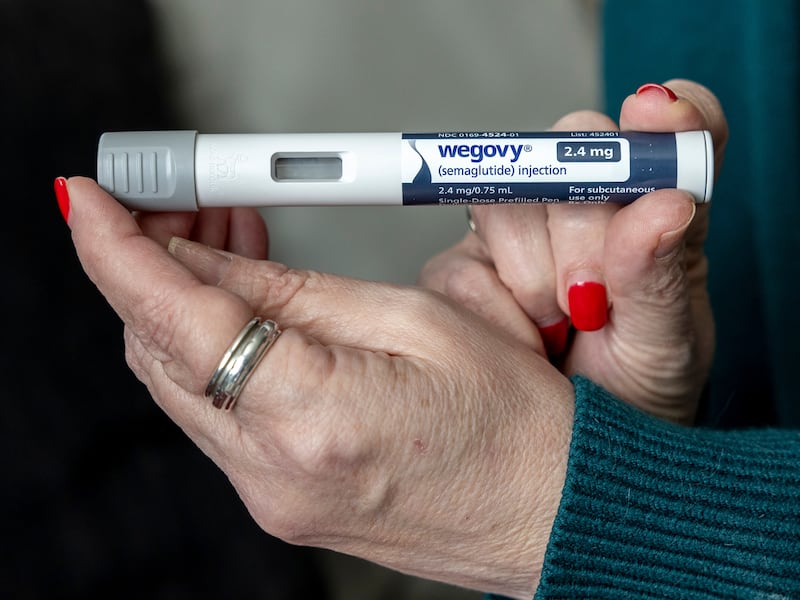

- While semaglutide may significantly reduce asthma attacks and COPD flares, experts say it's not a good idea to self-prescribe to get those benefits; more study needed.
- GLP-1 drugs like Ozempic and Wegovy have been linked to fewer psychiatric hospitalizations, depression and anxiety and better bone and cardiovascular health.
- There are downsides, though, including lower physical activity and rare "eye stroke."
Add another potential win to Wegovy and Ozempic, semaglutide injections hailed for their beneficial impact on diabetes and on weight. They also reduced asthma attacks by as much as 40% in research just presented to the European Respiratory Society Congress in Barcelona, Spain.
While studies have shown that the drugs could have anti-inflammatory effects that improve lung function, possible impacts on chronic obstructive pulmonary disease and asthma were not studied as endpoints in the GLP-1 drug trials, according to Professor Chloe Bloom, clinical associate professor in respiratory epidemiology at the National Heart & Lung Institute at Imperial College London, UK, who led the research.
In study background material, she said the research centered on whether those who had either lung condition had fewer acute respiratory attacks.

To find out, the team used UK electronic medical records, conducting four “parallel studies that each looked at between 20,00 and 22,000 people who started taking any type of GLP-1 treatment or another type of diabetes medication called sulfonylureas.”
They also tried other GLP-1 drugs, but semaglutide seemed to have the strongest impact. As Deseret News has earlier reported, “GLP-1 stands for glucagon-like peptide-1, which is a natural hormone the body releases to help control blood sugar and appetite. GLP-1 helps the pancreas release insulin, slows down digestion and signals your brain that you’re full.”
In the comparison, those on the GLP-1 drugs had fewer asthma and COPD flareups than those on other diabetes medicines.
Said Bloom in the release, “The effect was strongest with semaglutide especially in people with asthma, where use of semaglutide appears to be associated with nearly 40% reduction in asthma attacks. Semaglutide also led to a 20% reduction in COPD flare ups.”
In patients prescribed the GLP-1 receptor agonists to reduce weight or help manage type 2 diabetes, she said respiratory benefits may also be found.
But she warned they are not enough to drive treatment decisions on their own and said people with one of the two lung conditions should not start taking the semaglutide solely for those conditions, outside current prescribing guidance, which addresses weight loss and diabetes control. Clinical trials are needed to confirm the findings.
The connection is not unexpected. “Obesity and metabolic dysfunction are common in airways disease and are often under-recognized as problems that can and should be addressed,” said Dr. Alexander Mathioudakis, chair of the European Respiratory Society’s group on Airway Pharmacology and Treatment and a senior lecturer in respiratory medicine at the University of Manchester, UK. He was not involved in the research.
He said the findings emphasize the need to think about metabolic health as part of respiratory care. “It also supports the case for including respiratory outcomes such as asthma attacks and COPD exacerbations in future trials of metabolic therapies,” he added.
Other potential uses for the drugs
Science Daily noted a number of studies that suggest different benefits for semaglutide-based Wegovy and Ozempic. A study involving nearly 15,000 people in Sweden who were diagnosed with bipolar disorder noted use of the drug was linked to a 21% lower risk of psychiatric hospitalization, possibly due to reduced inflammation.
The article noted that other GLP-1 drugs did not have the same apparent effect. The findings were published in the international journal Acta Psychiatrica Scandinavica.
The Endocrine Society in June reported that three semaglutide drugs — Ozempic, Wegovy and Rybelsus — may help those with type 2 diabetes by preventing bone fractures while they lose weight. The study of close to 60,000 people found those taking semaglutide had 15% fewer fractures than those on other weight-loss medications.
Among other possible pluses, those taking semaglutide drugs seemed to have less depression and anxiety risk, per a study from the University of Eastern Finland, that looked at nearly 100,000 people spanning roughly 15 years. The medications were associated with “significantly fewer psychiatric hospital visits and sick days.” That study was published in The Lancet Psychiatry.
And Cleveland Clinic reported that semaglutide reduced cardiovascular events by 20% in adults with overweight or obesity and established heart disease who cid not have diabetes, per the article in the New England Journal of Medicine.
Not all good news, though
Despite encouraging links to a number of positive outcomes, the semaglutides are also linked to a couple of less-than-stellar outcomes.
A study from the Endocrine Society found those taking Ozempic, Wegovy, Mounjaro and Zepbound, which are all popular GLP-1 drugs, are moving less. “Because the drugs reduce muscle mass along with fat, the decline in physical activity raised concerns about preserving strength and long-term health,” per a Science Daily article.
And many drugs have side effects, despite their benefits — and these drugs are no exception. Wegovy has been linked to a rare “eye stroke” that leads to sudden vision loss. That study was published in the British Journal of Ophthalmology, with the risk for Wegovy five times that of Ozempic.