
On the afternoon of March 23, 2005, a bomb fell out of the sky and exploded in Scott and Lori Connors’ backyard in Pleasant Grove, cratering their lawn, sending shrapnel into their living room and shattering their shed.
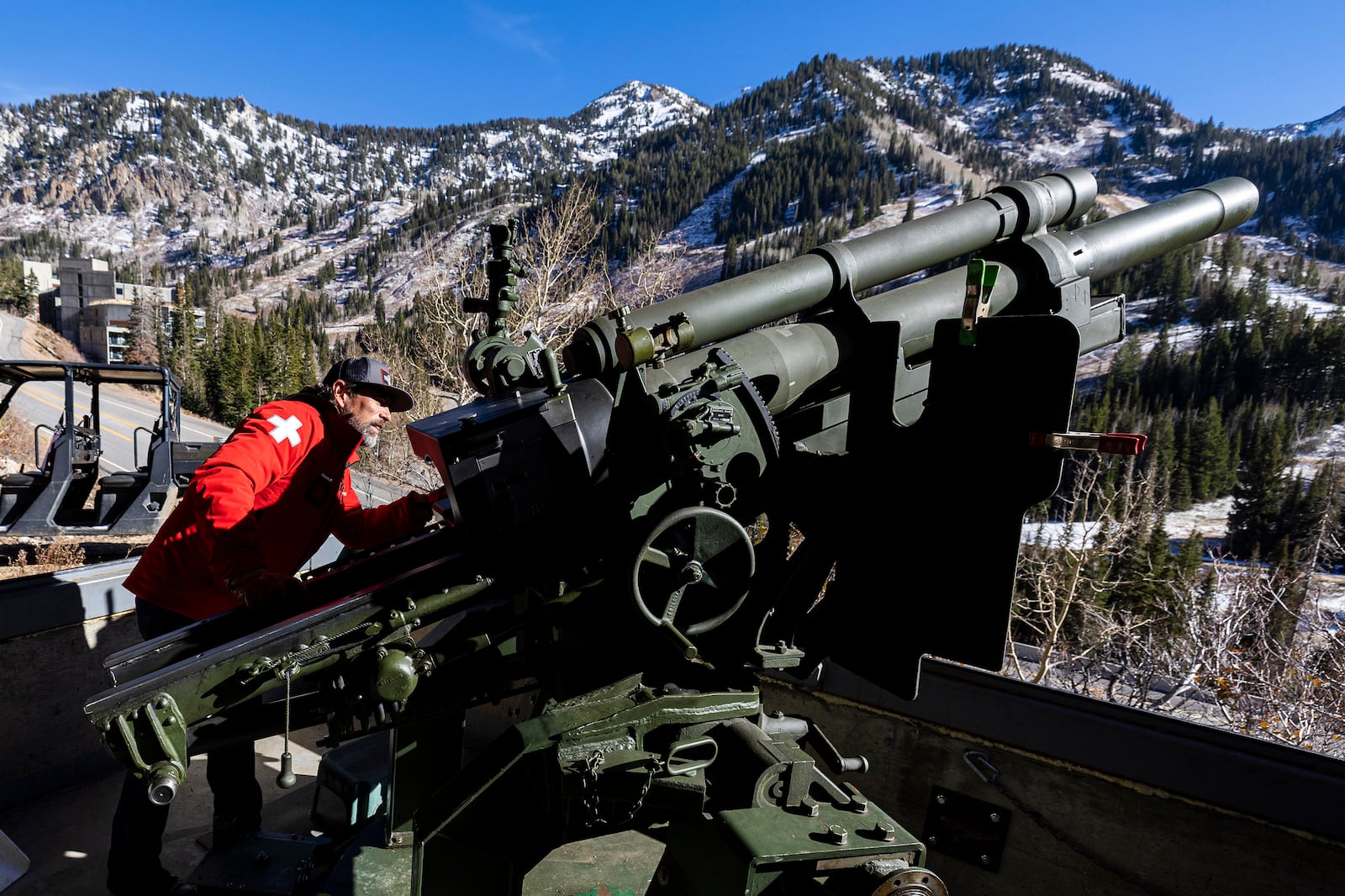
The errant explosive, three miles off course, was a shell from a military howitzer the Utah Department of Transportation uses for avalanche control, a practice that started in the steep, slide-prone terrain of Little Cottonwood Canyon in the 1940s, where pioneering snow scientists developed protocols that would come to be used all over the world.
To use this weapon of war to save people’s lives is very poignant. You can kind of compare it to warfare, it fuels the romantic notion.
If you’re a skier in Utah, you’ve likely heard the boom of artillery or been stuck in a building in the canyon for an interlodge (safety protocol during avalanche danger), where the windows rattle with the reverberation of the howitzer’s blast.
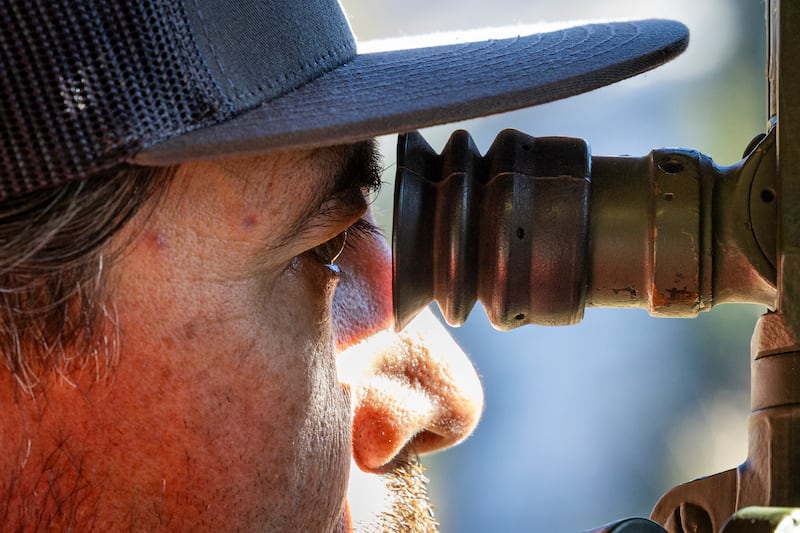
But that’s changing. The military is asking for those weapons back — Alta has already returned all of its guns — and now ski areas and the transportation departments that have used them for decades are figuring out new tools to manage slides in the avalanche prone canyons of the Wasatch and beyond.
Birth of a method

The practice of using explosives for avalanche control started in Little Cottonwood Canyon just as skiing started at Alta. In 1939, the U.S. Forest Service hired Douglass Wadsworth as its first snow ranger and directed him to minimize the avalanche danger in the area. Once an avalanche has happened, the danger goes away, so Wadsworth experimented with things like dynamite to try to create controlled avalanches to clear the ski runs and the road.
He was the first recorded person to do so. But the practice of using explosives to make avalanches really kicked off after World War II, when 10th Mountain Division veteran Monty Atwater was hired as a snow ranger in 1946. Atwater was an iconoclast. He wrote children’s books, and he almost always had a cigarette in his mouth, even when he was handling dynamite. In Europe, he’d seen avalanches triggered when they shot artillery, and he started to think that maybe, in the postwar era, they could use the weapons for safety instead of destruction.
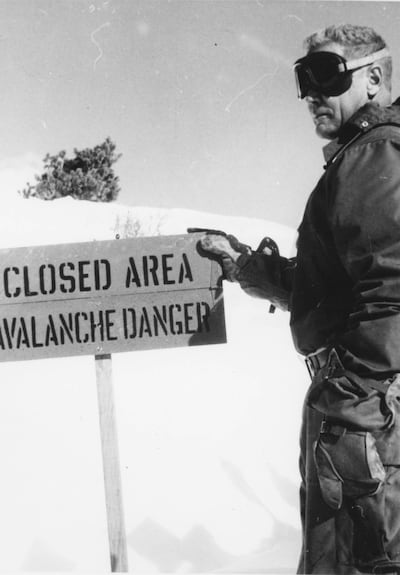
In 1952, Atwater convinced the Utah National Guard to bring a 75 mm French howitzer up to Alta. He told them where to shoot it, and the National Guard soldier loaded and launched the gun, triggering big avalanches.
It worked so well that the Forest Service decided to keep the guns in the canyon for avalanche control. But the logistics were tricky. The military said only soldiers could fire it, but the National Guard base was down in the valley, which meant they often couldn’t get up to the mountain when it was snowing and their work was needed. Atwater, a former infantry man, broke the rules and fired it himself a few times to get the road and the ski area open. After he was caught and disciplined by the Forest Service, the Army decided to change the policy so snow rangers and then ski patrollers could fire the gun. They developed a training and deployment program that is now used in seven ski areas across the West, and which was quickly adopted by state departments of transportation to clear highways that cut through avalanche terrain. Utah, Colorado, Washington, Wyoming and Alaska also brought in artillery because the guns worked so well. Utah still has three howitzers in use, says Steven Clark, UDOT’s avalanche program manager.
“They were powerful and effective,” says Eric Murakami, Snowbird’s snow safety director. When Snowbird opened in ’71, the ski area started using artillery, too. But he says it was still kind of cowboy. The patrol had guns it would move around the mountain, including one the workers could roll out onto the plaza deck.
In December 1973, they shot the gun from the plaza, aiming at a slide path on the other side of the road. The avalanche they triggered ran down the mountain, across the road and up onto the plaza deck, splashing their ski boots. An employee named Valerie was still in employee housing, which was supposed to be cleared, and she got stuck in the slide. They were still figuring out their range and protocols.
There are very few places on Earth where the avalanche problem is so front and center.
Howitzers are incredibly effective at creating the kind of large avalanches that stabilize slopes, minimizing human risk, but they’re also military weapons that take a ton of expertise to run, and which come with embedded hazards, like fragmentation, which can be hazardous around recreational users, dud shots and very rare misfires, like the one in Pleasant Grove.
In the early 2000s — particularly after 9/11 made everyone hyperaware of where the nation’s firepower was — the Army and the Forest Service came together with the ski areas and highway departments who had artillery and made a more formalized, streamlined plan. They agreed that they would all use the same guns — M101 howitzers, a Korean War-era piece of artillery that was in good supply — so that munitions and training would be standardized. They formed the National Avalanche Center to oversee the Forest Service program and complement the Avalanche Artillery Users of North America Committee that had been formed in the ’80s to give the users common tools and practices.

Civilians, like ski patrollers, can’t just get access to military weapons, so there is a complicated chain of command for the guns. The Army still owns them, and then a government agency, like the Forest Service or the state transportation department, leases them. That agency then provides oversight, regulates training and buys ammunition for the private entity like the ski area, so they can put it to use.
Then, on early stormy mornings, patrollers will load chairlifts in the dark or hike up to gun towers to load the weapons and shoot the charges, always being respectful of the howitzer’s energy. “To use this weapon of war to save people’s lives is very poignant. You can kind of compare it to warfare, it fuels the romantic notion,” says Lexi Dowdall, Alta’s communications manager.
It’s worked really well for more than 75 years, but in 2023, a 903-inch snowfall year, the deepest on record, Alta shot its M101 howitzer for the last time.
The Army had asked the groups using its weapons for avalanche control to start making plans to decommission the guns. They weren’t worried another shell would land in someone’s yard, they were worried about aging weapons and supplies (for instance, the guns use a singular kind of fuse that’s no longer produced), changing administrative priorities and a diminishing number of people who know how to use and maintain the weapons, which are delicate.

The hard part about transitioning away from artillery is that slides still need to be managed on a large scale, especially in steep, popular areas like the canyons of the Wasatch — “There are very few places on Earth where the avalanche problem is so front and center,” Dowdall says — and the guns are a really good tool to do so. They can shoot long distances with accuracy. They can be shot in the dark, or over buildings, and their visual impact is small. They can be deployed at a distance to shoot targets in hard-to-reach wilderness — a technique UDOT uses to control the Twin Peaks Wilderness and is planning to continue to do.
Now the challenge is finding other tools to fill their place. And Utah has been on the leading edge of doing so, as it was with artillery nearly a century ago.
New tools, new era

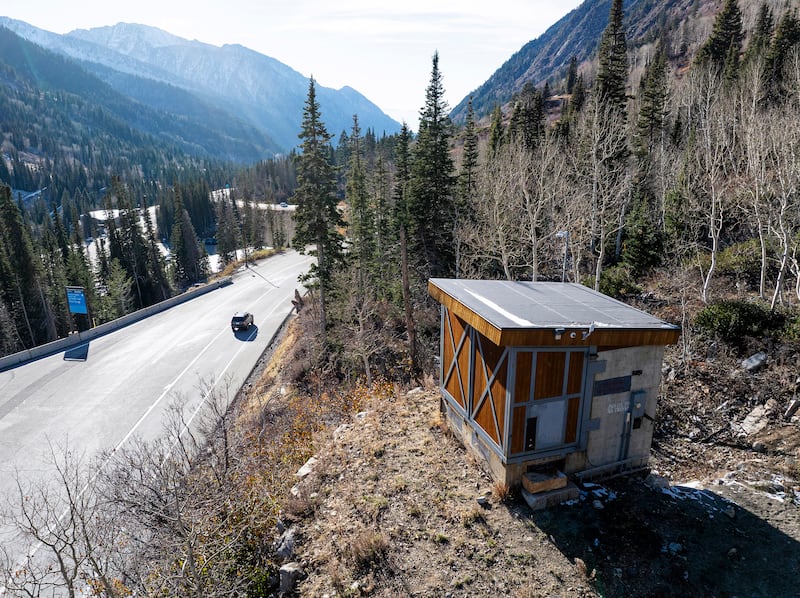
Those new tools have to create similar avalanche-starting blasts to the howitzer, without the long-range projectile. The main alternative is what are called RACS, or remote avalanche control systems, permanent towers that hold explosives that can be triggered from afar.
There are different models that use varying techniques: Gazex, which Snowbasin has been using since 1999, shoots hot flammable gas into the snowpack via a tube, while Wyssen Towers, which UDOT started installing in 2016, becoming the first place in United States to do so, drops charges from above.

They can create the kind of explosions necessary to create avalanches, but they don’t move, so they have to target specific places, which can be complicated to plan; they are expensive to install and labor intensive to maintain. And they create a kind of visual impact on the landscape, which the guns did not. If you have spent time in Little Cottonwood Canyon lately, you can see a chain of RACS just below the ridge of Mount Superior. They’re emblematic of a changing era.
It’s kind of full circle. This is the birthplace of avalanche control and we’re still pushing what’s new.
In 2017, Alta installed four O’BELLX exploders on Mount Baldy, and a year later, UDOT started installing Wyssen Towers on Emma Ridge. Since then, the ski area, the first in Utah to get rid of its gun, has brought in a mix of different RACS, including one of three existing Boom Wooshes, an exploder developed in Jackson Hole.
Snowbird, which is planning to get rid of its weapon by 2030, has installed 21 Wyssen towers. Murakami says they chose to exclusively use them because they like the simplicity and the worker safety. They can be installed in high-hazard areas with overhanging threats of avalanches, so ski patrollers don’t have to go into those spaces. He pushed to have the RACS installed, and he said he was incredibly nervous when the first few were deployed. “When we put our first one in it was $2 million of infrastructure. I was holding my breath; thank goodness it worked.”

No state transportation department has fully stopped using the guns, and Utah is no exception. The department has installed more than 60 RACS, which Clark says adds up to over 100 in the canyon — the highest density of RACS in North America. But he says that switch comes with challenges. For instance, they can’t get a permit to install towers in wilderness areas, and he says it’s logistically illogical to do so in a lot of places. “From one location, you can mitigate the whole mid and lower part of the canyon with a gun,” he says. “In order to cover that amount of terrain, it would take 50 or 60 RAC systems. Out there, they’re also a piece of technology in a really harsh environment, with the potential for not working.”
There’s also the issue of public response and acceptance. Clark says they didn’t have much public opposition to the RACS until they planned them on Mount Superior, a popular backcountry skiing zone, and then the pushback was significant, especially from backcountry recreators who he says saw it as an assault on a beloved landscape, both because of the infrastructure’s visual impact and the construction. But he says that since they’ve been installed, the response has been minimal, in part because the impact on recreation hasn’t been much different than the howitzers’ charges.
If anything, Murakami says, it might be better in places, because it’s allowed them to be more efficient and control multiple areas at the same time. He says the locals are starting to learn that the road, or some of their favorite areas, might be open sooner.

But, he says, there’s still some nostalgia and resistance to the change, because it’s the end of an era of an important piece of history, in avalanche control, in innovation and in the history of the military working well with citizens. “When someone comes to interview for a job here, we joke, ‘When are they going to ask when they can shoot the gun?’” he says. “Some people really have a hard time letting go of them. I know that’s industrywide.”
But even when the weapons go away, the rhythm of avalanche control will remain the same. There will still be stormy mornings and road closures, and the blast of bombs in the mountains. “It’s kind of full circle,” Dowdall says. “This is the birthplace of avalanche control and we’re still pushing what’s new.”
This story appears in the December 2025 issue of Deseret Magazine. Learn more about how to subscribe.
