


Seven months after President Donald Trump launched his “Liberation Day” campaign of global economic protectionism, the government’s Solicitor General John Sauer stood before the U.S. Supreme Court to argue that Congress gave his boss the authority to impose sweeping tariffs.
“There’s enormous deference to the president in both political branches” and “inherent authority” to manage foreign affairs. “And pile on top of that there’s a broad delegation of the duty,” Sauer continued before Justice Neil Gorsuch cut him off and asked: “You’re saying there’s inherent authority in foreign affairs, all foreign affairs … commerce, duties and tariffs and war. It’s inherent authority all the way down, you say. Fine. (What if) Congress decides tomorrow, well, we’re tired of this legislating business. We’re just going to hand it all off to the president. What would stop Congress from doing that?”
Reporters seized on the November 2025 exchange as evidence that Trump’s foreign-policy ambitions were likely to be checked. Yet the dynamic Gorsuch described — Congress ceding broad authority to the president — has long been the norm. Presidents Joe Biden and Barack Obama rewrote the nation’s immigration laws by executive fiat. President George W. Bush authorized the National Security Agency to conduct warrantless surveillance, circumventing rules established by Congress under the Foreign Intelligence Surveillance Act. President Bill Clinton engaged in a nearly 80-day military campaign in Kosovo without receiving congressional approval under the War Powers Resolution.
Such has been the story of executive- legislative relations for generations, be it Republicans or Democrats occupying the White House or controlling Congress. The House and Senate write vague laws that presidents interpret with maximum latitude, and Congress responds to presidential overreach by doing nothing. The president becomes more powerful while Congress becomes weaker. Even if the Supreme Court strikes down Trump’s tariffs, the fact remains that it is the court — not Congress — that is responding to executive overreach. Time after time, Congress has allowed the president to walk all over it.
The fact remains that it is the court — not Congress — that is responding to executive overreach. Time after time, Congress has allowed the president to walk all over it.
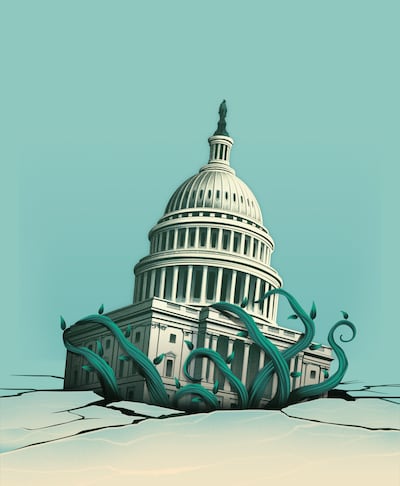
Congressional diminishment has become so entrenched in our thinking that even members of Congress erroneously think of their institution as co-equal to the executive branch. Years ago, I took a group of high schoolers to visit the Capitol. Before the tour began, we were shown an introductory video that proclaimed Congress “co-equal” to the other branches. I could not believe it. The framers of the Constitution would have been appalled. Congress was not “co-equal” in their thinking. It was intended as the first branch of government, constituting the assembled representatives of the people to write laws on the country’s behalf, which the courts and the president are required to follow.
There is, no doubt, a lure to executive power. The president can get things done quickly and efficiently, while Congress often gets mired in gridlock. However, this shift in constitutional authority has had bad consequences for how the United States is governed. The only institution that can possibly reflect the values and interests of 330 million people is Congress. With it increasingly distancing itself from the traditional role as lawmaker, public policy is not going to reflect the entirety of public opinion. Instead, policy increasingly depends on the views of just one person — the president. No wonder our country has become more divided — as power moves from the legislative to the executive, the opportunity for debate, discussion and compromise has diminished.
Fixing Congress should be a national priority, but it will not be easy. There is no simplistic account for the collapse of Congress. It was a complicated process that took over a century. But if we hope to restore the federal legislature to its constitutional place, we have to understand the story of its fall.
Designing power
If you have ever been to Washington, D.C., it is easy to appreciate just how much the city’s designers wanted you to notice Congress. The gridlines of the city, which dissect it into four quadrants, converge at Capitol Hill. That elevated perch overlooking the sprawl of monuments and executive offices is named after the Capitoline Hill in Rome, the most important place in the celebrated Roman Republic. The White House is a rather traditional and somewhat plain looking estate from the 18th century, while Congress is a grand and ornate building. Built in the neoclassical style, it draws heavily on Roman influences, again intended to convey the founders’ admiration of one of the world’s first republics.
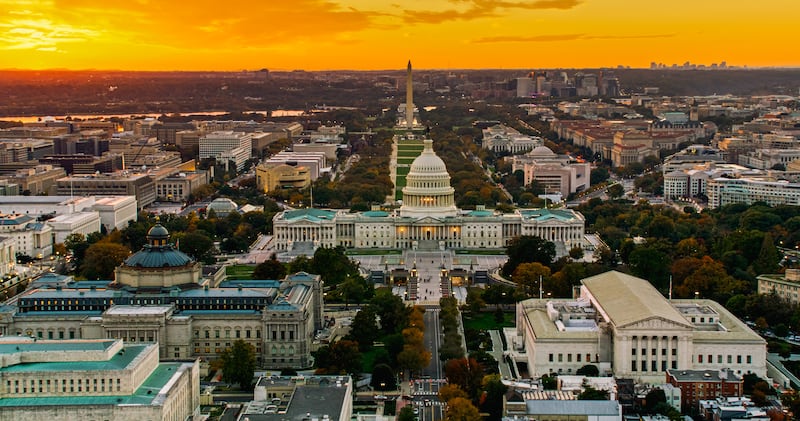
Washington’s design was meant to reinforce our constitutional structure. Under the Constitution, Congress has vast and sweeping powers — and not just to write the law. The executive departments and the lower courts are creations of Congress, which can direct how they operate. Congress also funds both branches. The Senate’s power to advise and consent on judicial and executive appointments gives it the ability to micromanage personnel decisions in both branches.
Moreover, Congress can impeach and remove any official in the executive or judicial branches, but the president and the courts cannot remove members of Congress. If you can fire me, but I cannot fire you, are the two of us “co-equal”? Hardly. I’d say you were my boss, which is exactly what the framers had in mind. As James Madison wrote in Federalist 51, “In republican government, the legislative authority necessarily predominates.”
Congressional diminishment has become so entrenched in our thinking that even members of Congress wrongly think of their institution as co-equal to the executive branch.
The constitutional powers of Congress reflect the republican character of our nation. Abraham Lincoln declared at Gettysburg that our government is “of the people, by the people, for the people.” The only branch that actually represents the people is Congress, and the framers debated internally for months at the Constitutional Convention over how that should look — finally agreeing that the House should reflect the people as citizens of the country, and the Senate should reflect the people as part of states. While the president is also elected, he is only one person, and cannot possibly reflect all the varieties of values, preferences and experiences in American life. But Congress can. Even the name itself tells us what the framers had in mind. “Congress” derives from a Latin word, meaning “come together”: The people, through their representatives, gather to resolve the disputes, find consensus and enact laws for the public good.
For much of our early history, Congress functioned as the framers intended. National debates over slavery, westward expansion and economic development were centered in Congress. Leaders like Henry Clay and Daniel Webster would give long, majestic speeches in the Senate that were published in newspapers across the country. The president, while important, usually was left following the legislators’ lead. There were exceptions. George Washington was of such astonishing national stature that the government often followed his direction. Andrew Jackson likewise could dictate terms to Congress. But for the most part, the job of the president was to enforce the laws of Congress while recommending policy changes that were, ultimately, up to the legislature.
How did that change? In a word, corruption. As the 19th century wore on, Congress turned away from the people’s business and toward the demands of special interests. Coincidentally, a major force behind congressional dysfunction was the very issue driving Trump’s economic agenda — the tariff. After the War of 1812, the United States adopted industrial “protection,” placing high tariffs on imported goods to protect domestic manufacturers from foreign competition. The original intent was for national security. Policymakers realized that the country needed domestic industries to supply its wartime needs. Great Britain was the United States’ top trading partner, and the war had deprived the young nation of essential goods like clothing and farm equipment. Tariffs were meant to prevent that from happening again. The high tariff was a boon to the nation’s manufacturing sector, which by the 1820s had begun organizing itself into a political lobby to raise rates even further, regardless of national security. Congress eventually acceded, and the tariff schedule became a complicated tangle of various rates, drawbacks and exemptions, whose purpose was not to advance a national agenda but reward local constituencies.
While the problem of corruption started with tariffs, it was hardly confined to it. Members of Congress began demanding that the president distribute federal jobs, contracts and licenses as political rewards. Imagine the person delivering your mail was chosen because he was a second cousin of a senator — that’s how life was in the 1800s. As the decades passed, the scale of patronage grew. By the 1870s, the Ulysses S. Grant administration had given the Republican Party of New York control over the jobs at the Port of New York, where millions of dollars flowed annually through tariffs, import penalties and bribes. The New York Republicans ran the port similar to how the mafia used to run Las Vegas — skimming off the top from collections to enrich itself and build an unstoppable statewide machine.
As the industrial economy developed, big businesses bought plenty of friends in Congress to keep regulations to a minimum. By the end of the 1800s, the Senate did not so much represent their states but rather the “trusts,” the massive combinations of businesses that controlled all manner of economic life, from oil to sugar to beef. The bargain was simple, if diabolical: Senators would make sure that business interests were defended in Congress, and in return, businesses would give senators cash to build political machines. None of this was subtle. Representatives of the trusts would often hand senators bags of cash. And senators in turn would literally buy votes — giving cash gifts to voters to make sure they stayed in office.
Corruption exposed
By the end of the century, the country had had enough. Muckraking journalists exposed the extreme graft and corruption in the public councils, federal and local — with works like “The Treason of the Senate” by David Graham Phillips and “The Shame of the Cities” by Lincoln Steffens. And the cries for reform became undeniable. The widespread public outrage gave rise to a progressive movement that dominated politics from 1901 until 1920. One priority for the progressives who ran for public office was congressional reform. They enacted the 16th Amendment to allow the income tax, intended to be a more equitable way to raise revenue than the tariff. The 17th Amendment required the direct election of senators, to cut down on the power of party bosses. The progressives also instituted the first party primaries to transfer power from party bosses to average American voters, although it would be decades before they were adopted nationwide.
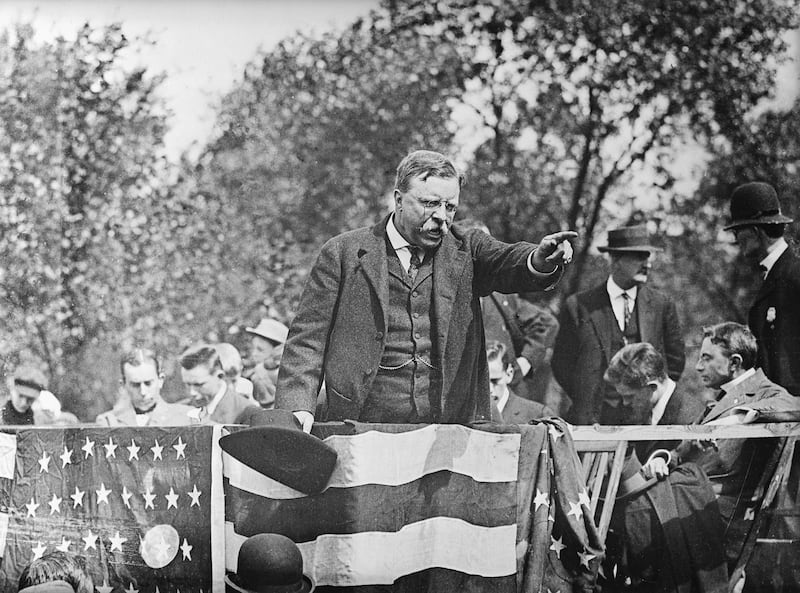
Progressive leaders in government also sought to limit congressional malfeasance by transferring power to the president. He was, after all, the only official in government chosen by the whole country. He could claim to reflect the national interest and perhaps could force Congress to behave itself. Teddy Roosevelt was the first embodiment of this idea. He involved himself in all manner of affairs that previous presidents had avoided. For instance, he intervened in the Anthracite Coal Strike of 1902 when the shutdown in coal production threatened to cut off home heat for the winter. After an unsuccessful effort to mediate the dispute, he threatened to send in the military and have the government mine the coal.
Voters were thrilled to have a president who could get things done. But presidential action came at a cost — for the office has no real, constitutional authority to do what Roosevelt had threatened. Nevertheless, his intervention in the coal strike set the tone for politics in the 20th century: expanding the powers of the president to handle problems that Congress could not or would not solve. As he wrote in his autobiography, “My belief was that it was not only (the president’s) right but his duty to do anything that the needs of the Nation demanded unless such action was forbidden by the Constitution or by the laws.”
If Teddy Roosevelt was a model for presidential action, Woodrow Wilson provided a theory. Wilson, an academic who served as president from 1913 until 1921, was a conscientious advocate of presidential power. He thought the framers had erred in placing too much authority in Congress, and that the president could correct this problem. In his 1908 book “Constitutional Government in the United States,” Wilson asserted the president’s position “is the vital place of action in the system, whether he accept it as such or not, and the office is the measure of the man, — of his wisdom as well as of his force.” The former New Jersey governor and president of Princeton University thus injected himself into all sorts of congressional activity. He started the tradition of a State of the Union address — all presidents since Thomas Jefferson had submitted theirs in writing — to lobby Congress directly. As Congress was debating tariff reform in 1913, Wilson took an office in the Capitol to jawbone members on the Hill. When senators balked at the Treaty of Versailles to end World War I, he embarked on a nationwide speaking tour to move public opinion.
Wilson also pushed for redesigning government so public policy was settled in the executive branch. The Federal Trade Commission was a Wilsonian innovation that gave the executive branch the authority to decide which businesses were too big for the country’s good. The War Industries Board sought to manage the wartime economy through negotiations between the president and big business, among other responsibilities. Congress still wrote the underlying legislation, but there was an undeniable shift in decision-making power, from the legislature to the executive.
Ultimately, the public rejected Wilsonian governance, overwhelmingly choosing conservative Republican Warren G. Harding in 1920. But one person who remained impressed was Franklin Roosevelt, who had served as Wilson’s assistant secretary of the Navy and ran as the vice presidential nominee in 1920. When he was elected president in 1932, he sought to continue Wilson’s project of expanding presidential power against an acrimonious and corrupt Congress.
The job of the president was to enforce the laws of Congress while recommending policy changes that were, ultimately, up to the legislature. How did that change? In a word, corruption.
FDR had widespread support for what he called the New Deal, for Congress had beclowned itself during the early years of the Great Depression. As the economy cratered in 1930, congressional Republicans returned to their tried-and-true formula, a protective tariff. The Hawley-Smoot Tariff was intended to stabilize domestic industry in the face of global economic collapse. But in practice it became a mad scramble for plunder, as every House member and senator looked to hike rates to protect industries in their districts. The tariff ultimately raised rates to levels not seen in 100 years, prompting an international trade war as foreign countries responded with tariffs against the United States. The global assault on international trade slowed the economy and worsened the Depression. When Roosevelt took the oath of office in 1933, the country was eager to put him — and him alone — in charge.
The New Deal Congress of 1933–34, stocked full of Roosevelt Democrats, was happy to oblige. On issue after issue, the legislature did not so much reform public policy but empower the Roosevelt administration to reform it as the president saw fit. The Agricultural Adjustment Act gave the executive power to set farm prices. The National Industrial Recovery Act gave a similar authority over wages and prices in the industrial sector. Banking and monetary policy were handed off to executive discretion. So was trade policy. The country’s 100-yearlong experiment with protectionism came to an end under FDR with passage of the Reciprocal Trade Agreements Act of 1934, which began the process of unwinding protective tariffs and creating the conditions for free trade. Importantly, decisions were left to the president on when and how tariffs would be lowered.
In some cases, the Supreme Court struck down Roosevelt’s initiatives. But the public stood fast behind Roosevelt, who won four consecutive elections. During his tenure, he filled eight of the nine seats on the Supreme Court, which in due course bent to his will. FDR’s revolution in executive power — begun with Teddy Roosevelt and Wilson — became the established way of governance in Washington, D.C.

When Republicans finally came back to power in 1953 under Dwight Eisenhower, they had made peace with the New Deal. A decade later, Lyndon Johnson’s Great Society once more expanded the power of government, specifically through the executive branch, as a whole host of new federal agencies were empowered to regulate American life. The underlying laws that empowered these agencies were notoriously vague on specifics. Congress was content to allow the president and his appointees to figure out how to promote goals like clean air, racial equality and truth in advertising. And once again, Republicans accepted most of it. Far from unwinding the Great Society, Richard Nixon expanded it with the Environmental Protection Agency.
The imperial presidency
Today, many analysts bemoan the rise of what’s been called an “Imperial Presidency,” a chief executive who wields power akin to the Roman Emperor Augustus, without regard to the concerns of the people’s representatives in Congress. This happened over decades of a Congress failing to address public problems, and the people — in frustration — turning to leaders like Teddy and Franklin Roosevelt, whose expansive views of executive power may not have been consistent with the framers’ vision of the Constitution. But when the economy is crashing or the nation is at war, debating constitutional niceties seems absurd.
And so it goes with Trump and his tariffs. His “Liberation Day” shocked many people, but nobody should have been surprised. Since 1934, Congress has empowered the president to set tariff rates. There are all manner of laws and precedents that Trump can cite for his actions, and even if the Supreme Court strikes down this round of tariffs, there are statutes empowering him to likely restore many of the duties by altering their legal justifications ever so slightly. After almost 100 years of historical precedent, in which Congress has handed authority of foreign trade to the president, Trump has manifold options.
The problem with this bargain is that the people may have gained executive efficiency, but we have lost the republican character of our constitutional system. Yes, the president can act decisively and quickly, for he is only one person. But, because he is only one person, there is no way he can account for the variety of views and interests in the nation. Inevitably, a large group of Americans are going to be alienated by presidential action. And that is exactly what has happened for decades. Republicans under Obama and Biden felt the sting of the imperial presidency on their unilateral changes to securing the southern border or providing legal sanction to certain classes of immigrants living in the country illegally, just as Democrats feel right now under Trump. If decisions are made by one person who is nominated by one party and elected by half the country, then the other party — constituting the other half of the country — is going to feel left out.
On the other hand, if Congress were restored to its place of power, there is a greater chance that policy would better reflect the diversity of views in this country. For the most part, Congress can only function through compromise, meaning everybody has to give a little to get a little. That makes policymaking slower — as deals take a while to develop — but it means the final result is more in keeping with the interests of the broader country, rather than just the faction that the current president happens to align with.
Ultimately, we must be mindful of all of history’s lessons. Congress in the 19th century really was corrupt and parochial. Reformers had good reason for moving power to the executive branch. But there was an overcorrection in the 20th century — the president acquired too much power. We are not so much a republic anymore as we are an elective monarchy. We need to find some middle ground between these extremes through a Congress where debates are held, disputes are resolved, and public policy is enshrined into law. But we also must remember that the president can serve as a good check on congressional incompetence, especially during economic crises.
Rebuilding Congress
The place to start is in reforming Congress itself. Happy to pass the buck to the president for a century, the legislature has allowed itself to fall into extreme disrepair. Nowadays, it would be foolish to demand Congress reclaim powers from the executive — for it lacks the ability to wield them responsibly. We must first make Congress a respectable partner in governance, rather than the national embarrassment it has become.
Consider, for instance, the periodic government shutdowns. These are, in part, a consequence of partisan bickering, but they also reflect the fact that the way Congress writes its annual budget is hopelessly outdated. The rules are still set by the Congressional Budget Act, written over 50 years ago, establishing a process that simply does not work anymore. Congress is chronically late in finalizing its spending plans, and the minority party (Democratic or Republican) often tries to slow it down further for political gain. It should be revised so that Congress can plan the next year’s spending in a timely fashion.
Likewise, the Senate filibuster should be reformed. The filibuster — which allows the minority to delay action indefinitely — was originally intended to allow unfettered debate among senators. It developed into a way to make sure that minority views are included in public policy, which is a good thing in a country as closely divided as the United States. But since the 1970s, it has become a way to gum up the works of the Senate, preventing even the most simple or essential measures from being enacted. In the 96th Congress (1979–80), the majority tried to end 21 filibusters. In the 118th Congress (2023–24), that number skyrocketed to 241 filibusters. Reforms of the filibuster — limiting its scope to certain bills or mandating that minorities actually hold the floor and talk if they want to delay — could retain the virtue of minority input while making Congress work better. As President Joe Biden said in 2021, the filibuster has “been abused from the time it came into being,” but “in an extreme way in the last 20 years. Let’s eliminate the abuse first.”
The purpose of Congress is not to “fight!” as so many candidates promise to do. It is to “walk together” — find common ground, build consensus and compromise.
As for the House of Representatives, it should become more representative. The current number of representatives — capped at 435 members — is not in the Constitution but set by statute nearly 100 years ago, when the country was roughly a third of its current population. A member of Congress now represents on average a district of more than 750,000 people. It is impossible for one person to reflect the views and interests of so many people. The British House of Commons has 650 seats and the German Bundestag has 630. Surely, the U.S. House can be expanded.
Above all, people must remember that — for better and for worse — change begins at the voting booth. If Congress is full of grandstanders who would rather scream at each other on cable news and social media rather than legislate solutions, voters can remove them from office. The progressive movement of the early 20th century provides an example — when the public demanded reform loudly and consistently enough, politicians listened. Today, we all need to remember that the purpose of Congress is not to “fight!” as so many candidates promise to do. It is to “come together” — find common ground, build consensus and compromise. That does not require sacrificing core values but acknowledging that other people have different values, and that the best way forward is discovering policies that work for more than just half-plus-one of the country.
Ultimately, we need to realize that our current problems have been brewing for a long time. Liberals bemoaning Trump as a king, like conservatives who despised Obama and Biden’s executive overreach, should recognize that their grandiose ideas of executive power have deep roots in our body politic. If we want to end the imperial presidency, we must appreciate that history, so we can reform the Congress and restore the constitutional balance within our government.
This story appears in the January/February 2026 issue of Deseret Magazine. Learn more about how to subscribe.