

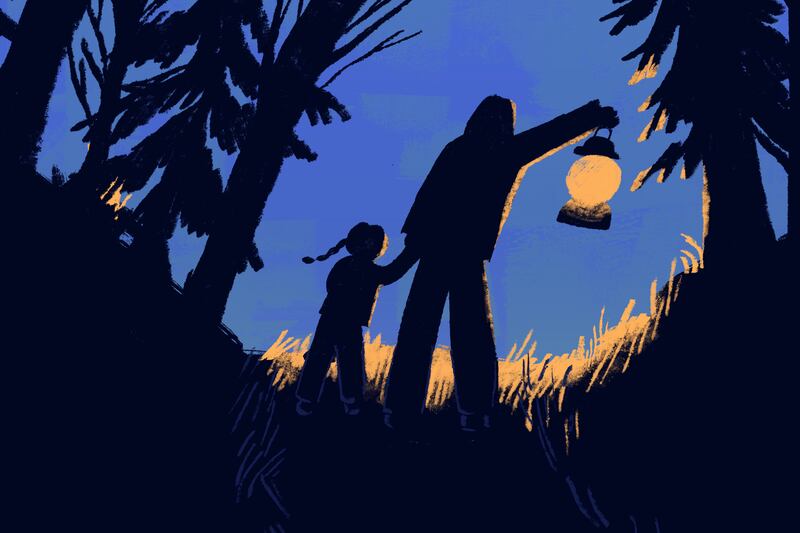
Over the course of my career, I served as a victim advocate, juvenile defense attorney and policy adviser, working alongside underresourced communities facing complex trauma and uncertainty. During those years, one truth has been affirmed time and again: In the face of adversity, hope is more than a fleeting feeling. It is not a simple wish — it is a force that heals. Hope moves the soul forward, step by step, through the darkest valleys. And each of us has the capacity to inspire it in others.
One unforgettable exchange reminded me of this truth.
At the conclusion of a commencement ceremony where I served as keynote speaker, a woman approached me with tears in her eyes. “Do you remember me?” she asked softly. I admitted I did not, and she gently reminded me: “You were my advocate.” Turning, she pointed to a graduate in regalia — her youngest child — and said, “You held my hand for hours, prayed for me, and told me it would be OK. You were right.” She shared the CliffsNotes of her life, confirming that the belief that she could offer her children a different future gave her the courage to persist.
In that instant, time rewound.
Fifteen years earlier, I had walked into a hospital room at 2 a.m. after receiving a dispatch as the advocate on call. Escorted by a nurse, I found a woman with visible injuries, holding three small children in pajamas, barefoot and frightened, their night disrupted by violence. Unsurprisingly, they were scared and unwilling to engage. It took time before we could talk about what happened, ask what she needed and begin to plan for what would follow.
It was in times like these that 19th-century Baptist minister and author Charles Spurgeon’s words came alive for me: “Hope is like a star — not to be seen in the sunshine of prosperity, and only to be discovered in the night of adversity.” After years of working in hospital rooms, homeless shelters, detention centers and courtrooms, where fear was real and choices felt impossible, I learned that it is both a responsibility and a privilege to hold hope when others cannot. To cultivate it when it is absent, and to lend it when others feel lost. I adopted a mantra I would share — for myself as much as for my clients: “I know today is hard, but I believe that with time, it can be better.” I understood that the only gift I could offer during those moments was not a solution but hope itself.
Science affirms what experience taught me. Chan Hellman, executive director of the Hope Research Center at the University of Oklahoma, teaches that hope is not passive optimism; it is an active process involving goals, pathways and agency. Hope is the ability to see possibilities and believe in one’s capacity to pursue them. Simply put, he defines it as “the belief that the future will be better and that you have the power to make it so.” Hellman’s research demonstrates that hope predicts well-being, resilience and recovery, especially for those who have endured trauma. Neuroscience confirms this truth: hope activates the brain’s prefrontal cortex, reduces stress hormones, and increases dopamine, fueling motivation and problem-solving.
In other words, hope is both a science and a lifeline — a bridge between fear and freedom.
That night, holding the hand of my client, I offered hope. Fifteen years later, holding her hands once again, I saw its harvest. A mother who believed her tomorrow could be better for her daughters, now standing free, bold and triumphant.
Imagine the ripple effect if each of us chose to be a hope bearer: someone who not only believes in a better future but actively helps others see it and pursue it.
Instilling hope begins with small acts: listening deeply, nurturing empathy, speaking words of possibility, and reminding others of their strength and worth. Hellman’s work further teaches us that while individual hope is powerful, collective hope is transformative, and more importantly, it is contagious. It grows into a movement when we care for those in need and join people in their challenging moments, choosing to offer hope in the form of kindness, resources and connection.
So I invite each of us to adopt hope as a shared responsibility, a science-backed force for good and a necessary strategy that offers light to pierce the darkest nights. Together, we can create a world where hope is not rare but radiant and abundant — where each of us become a bright star encouraging one another toward a better tomorrow.
Nubia Peña is director of strategic partnerships and external engagement at Gilead Sciences and a former senior adviser to Utah Gov. Spencer Cox.
This story appears in the January/February 2026 issue of Deseret Magazine. Learn more about how to subscribe.