


Harry Reid was despondent.
It was 1979, and the chairman of the Nevada Gaming Commission had just learned that Kansas City mobsters caught on FBI wiretaps had referred to someone they controlled as “Cleanface.” Reid knew — as did many others — they meant him. It was an ironic reference to the 39-year-old’s pristine image. The implication of the wiretaps to the feds was that Reid was unclean: The state’s top casino regulator could be — and had been — compromised.
After the wiretaps surfaced, raising questions about his integrity, Reid reported a death threat to the FBI, with the caller saying he would be “going out on a table.” Armed guards were stationed at his home. For Reid, it had become too much to bear.
The chairman went to visit the man who had appointed him, former Nevada Gov. Mike O’Callaghan, who had left office a few months earlier. Reid believed he owed it to O’Callaghan, his mentor since high school, to tell him to his face that he was leaving the job that the governor had given him to resurrect his public career after devastating campaign losses for U.S. Senate (1974) and Las Vegas mayor (1975). He could not credibly regulate the state’s most important industry while this cloud hung over him.
Reid’s career can be seen like the 15 marathons he ran — an endurance test where he worked harder and stayed longer than anyone else, always playing the long game.
O’Callaghan was having none of it. The gruff, blunt veteran of the Korean War, who had only one leg after being wounded in combat, knew that if Reid stepped down, he would always be seen as a tool of the mob.
“If you resign it’ll be the biggest mistake you ever make in your life,” Reid recalled the governor saying.
Reid remained on the gaming regulatory panel for two more years and eventually was cleared of any wrongdoing. He never looked back.
This was the pivotal moment in the political life of a man who would go on to become the most powerful elected official in Nevada history and one of the most consequential national leaders of the 21st century. Reid would use the gaming commission as a springboard to run for a newly created congressional seat in 1982, which eventually led to the Senate, where he would serve for 30 years and become the Democratic leader for the last third of his tenure.
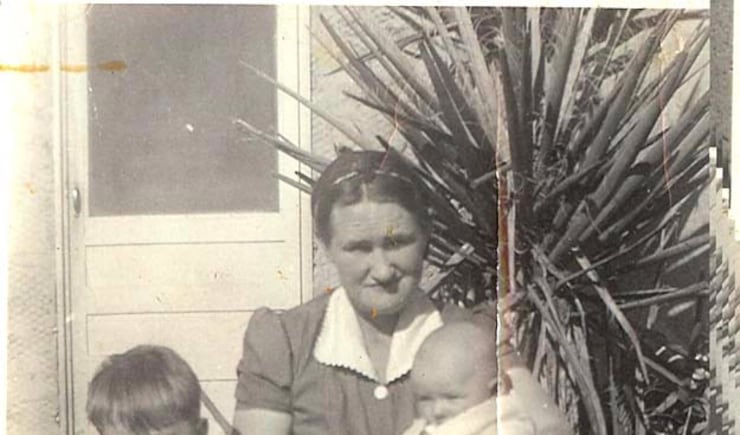
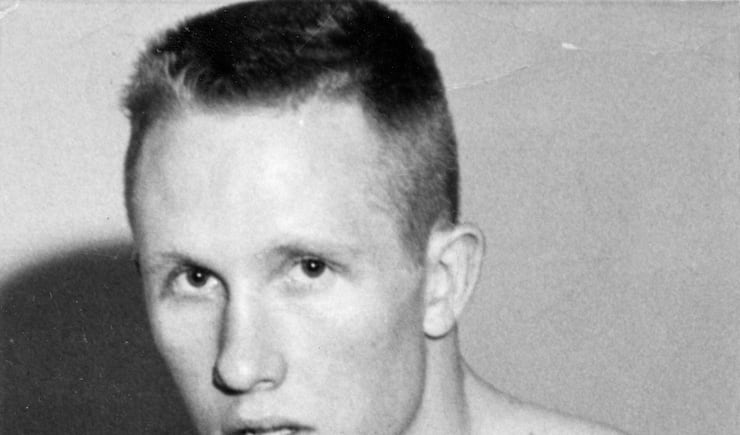
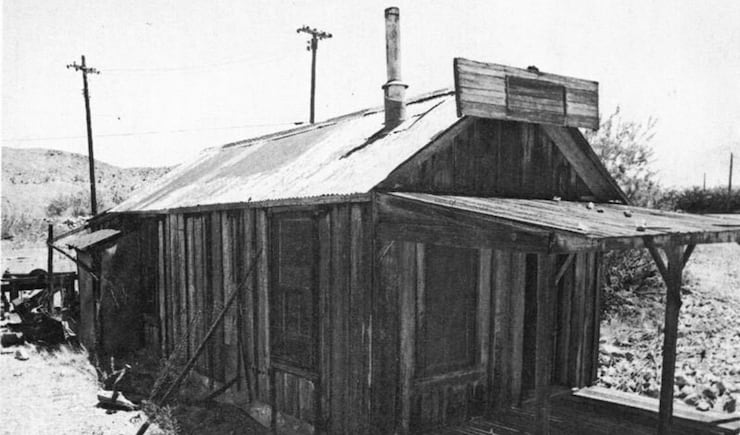
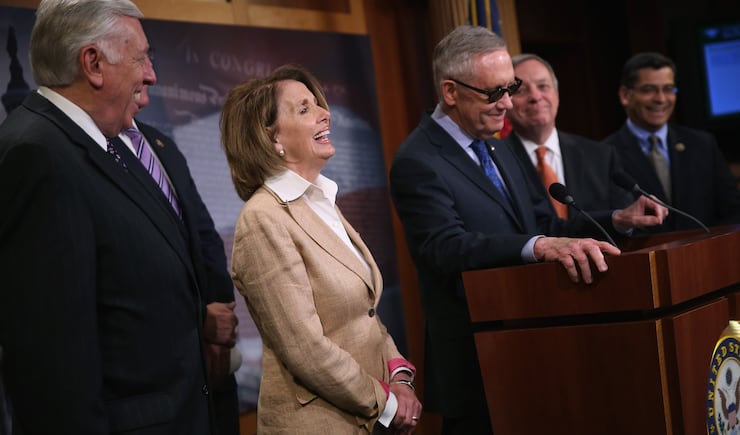
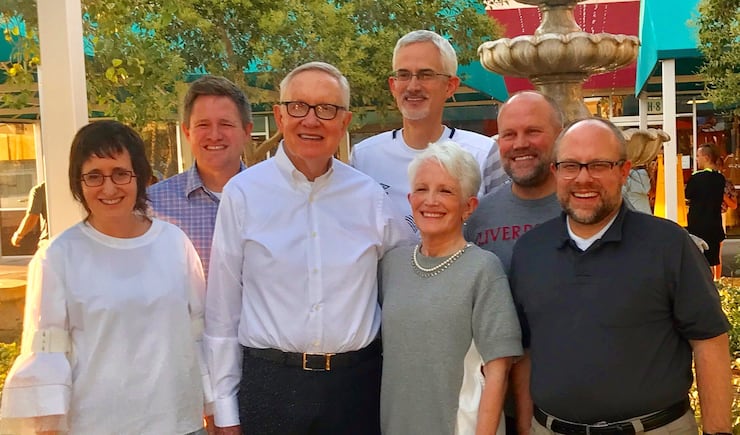


Reid’s career can be seen like the 15 marathons he ran — an endurance test where he worked harder and stayed longer than anyone else, always playing the long game. He came from nothing and nowhere — Searchlight, Nevada, a hopelessly poor hamlet not far from Las Vegas that gave him a will to succeed despite an alcoholic father and what could barely be called a home. Reid would survive taking on the mob, being investigated by the state and the FBI, barely winning reelection to the Senate in 1998 and getting elected to a fifth term in 2010 in a race few thought he could win.
Reid’s indomitability after that moment of doubt in 1979 became the signature feature of a remarkable career in which he became one of the most accomplished and polarizing figures of his time. His willingness to join any fight he believed was worthwhile — even if others did not think it was worth the risk — and his ability to rally his troops to the cause changed the culture of Washington, for good and ill. From that day forward, Reid showed no fear, becoming almost as ruthless as the mob bosses whom he helped drive from the state, a political godfather whose blessing would be sought by hundreds of Nevada elected officials and candidates.
The protean Reid, born December 2, 1939, in an oft-ridiculed small state, changed as Nevada became larger and more diverse, his positions flipping as his stature grew. Reid insisted he evolved, arguing that remaining intellectually static was the mark of a narrow thinker.
Through his half-century in public life, Reid remained a man of striking contradictions. He was a devout Latter-day Saint, who regularly attended church and read scripture every night, but who would not hesitate to go biblical against political enemies. He was against abortion as a matter of faith, but he became a favorite of women’s groups because he did not stifle pro-choice advocates in his caucus. He was as grounded a person as you could ever meet, but he also believed in UFOs — so much so that he helped secretly funnel a fortune to a Pentagon program to study sightings.
Reid, the Senate maestro who also was part of the dysfunctional mess the Senate would become, was a survivor against the odds, just like the town of Searchlight, where he grew up.
No Way Forward
When Reid finished eighth grade in 1953, he had a problem.
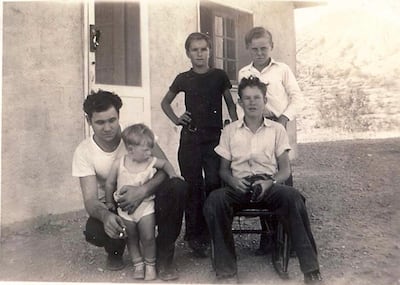
The closest high school was in Henderson, 40 miles away. Reid had no obvious way to get there, either, because the family did not own a car.
The Reids conjured a plan for the incipient high schooler: At the beginning of each week, he would hitchhike to Henderson, stay with relatives during the school week, and then hitchhike back home on most weekends. So began the Henderson sojourns that would change Reid’s life, introducing him to his future wife, his lifetime mentor O’Callaghan and the Latter-day Saint faith.
In his freshman year at Basic High School, where he was one of about 500 students, Reid lived with his uncle Joe, one of his dad’s brothers, and his aunt Rae. He went to the local Latter-day Saint church services with his aunt, but the inducement that eventually got Reid interested in religion was the preoccupation of most high school boys: girls.
One of Reid’s first friends, Ron McAllister, told him about an event that occurred before school started. “It’s called seminary,” McAllister told him. “There’s some really cute girls there.” So, Reid went.
In between chatting up his female classmates, Reid listened to the man who taught at the seminary, a future Latter-day Saint bishop named Marlan Walker, who also taught Spanish and Latin at Basic High School.
“He taught with authority in a sensitive, spiritual way,” Reid would later recall in a speech at Brigham Young University in 2007. “It was here for the first time that I learned of a man named Jesus.”
Reid would spend many nights at the Walker home, where the seeds were planted for his conversion to the church. “He had never lived in a house like that where the guy wasn’t fighting with his wife,” said Richie Vincent, Reid’s friend since high school.
Walker recalled Reid being “low-key” and at first not interested in his teachings. “He asked me, finally, to teach him some of the (Latter-day Saint) principles,” Walker said, so he invited the young man to his house, where Reid would spend many an evening. “We went through what we call the missionary teachings of the church, its beginnings, the beliefs that we had … where we came from, why we’re here and where we’re going.”
But the seeds were not ready to flower into commitment just yet.
A Different World
Landra Joy Gould was born in Los Angeles on June 19, 1940, the only child of Ukrainian Jewish immigrants, Earl and Ruth, who had separately come to the United States to escape antisemitism and get an education. Her parents met in Los Angeles, where her father had an office near a boxing ring and was a physician to many of the famous fighters of the day.
Doc Gould, as everyone called him, moved his family to Las Vegas when Landra was 10 and eventually settled in Henderson, where they lived on a busy street. She was a sophomore at Basic High School when Reid, then a junior, drove by one day. “There she is, out in the yard, washing the family car,” Reid recalled. Gould was five feet tall, with dark brown eyes and raven hair. But what Reid remembered was: “She was in short shorts.” He was smitten at first sight, the beginning of what would become a long love story lasting more than six decades, defying all odds, especially in the political world.
Landra’s presence was evident in everything Reid did. She was in key strategy meetings, often influencing his decisions from personnel moves to Supreme Court nominees. He would go home to be with her rather than spend time at events. His personal email for many, many years was landrajoy@aol.com.
“It’s the purest love I’ve ever seen,” said Rebecca Kirszner Katz, a longtime staffer, shortly before Reid died. “They are just soulmates in a way that a lot of politicians pretend to be. They thoroughly love being in each other’s presence. He still watches her in a room when she walks in, after all these years.”
Soon after that first sighting, Reid asked Landra on a date. He took her to a movie at the Victory Theater in Henderson, but they had a little trouble getting there. Reid borrowed a car from a friend. But the starter didn’t work, so they had to get the car rolling down a hill, and he popped the clutch into gear. They hit it off and began dating.
By his senior year, Reid had a girlfriend, he was a starter on the football team and he was a big man on campus. He was urged by classmates to run against the class president, Russell Williams, and he tabbed his good friend Rey Martinez to run his race. Landra helped him write a speech to get votes. He simply outworked a more popular kid who was considered a shoo-in, and with Martinez’s help, he won.
Leaving the Desert
Reid won a scholarship to the College of Southern Utah in Cedar City, a two-and-a-half-hour drive from Southern Nevada, to play football and baseball.
But when he arrived on campus in 1957, the 17-year-old felt out of place.
“I went up to Utah and all these Mormon men had been away on Mormon missions, and they had beards and families,” as he put it. “It was like putting a kid in with a bunch of adults.”
As if that weren’t disorienting enough, Reid’s idea of a future athletic career evaporated. He almost immediately injured his foot in football, sustaining nerve damage, and had to start wearing a brace. He was depressed, and then he had an epiphany.
“I was sitting on my bed in the dorm room there,” he said. “My three dormmates were at the football game. I was sulking because I wasn’t on the field. And as I sat there on the bed, I thought: ‘What am I going to do now? I’m not going to be the athlete I wanted to be.’ … I said to myself, you know, I’ve never gotten good grades. I’ve been in class now a month or so and things hadn’t been very hard. I bet if I tried, I could make good grades. And that was a transition for me.”
Reid rarely talked about his faith publicly, but what little was known was that he was devout.
He boosted his grades by his second year, and after he earned an associate arts degree, Reid decided to go to Utah State in Logan, seven and a half hours from Las Vegas. Landra decided she was willing to give up her collegiate career for her future husband — a sacrifice Reid would later mention in many speeches.
Reid never actually proposed; the couple just had a matter-of-fact discussion. They planned to elope until some of Reid’s friends went to their former seminary teacher, Walker, asking him to intervene. By now, Walker was a bishop, and he offered to marry the couple — they were both 19 — in the local chapel so that they could have someone they both knew perform the ceremony, rather than a justice of the peace, a stranger.
That was the only marriage Walker ever presided over with nonchurch members, a measure of his affection for both of his students.
After the ceremony, Landra called her parents and told them about the marriage. Then the couple left for Logan in a ’54 Chevy to begin the next chapter. They honeymooned in Mesquite, just outside Las Vegas, before continuing to Utah. When they arrived, there was a letter waiting from Doc Gould. He told his daughter that as her father, he had every right to do whatever he had to do to prevent a marriage outside of her Jewish faith. But, he added, now that they were married, that part was over.
The Goulds visited the Reids for Thanksgiving that first year. “I’m sure they wanted to see if their only child was OK,” Landra said. “And things were OK. And from that point on, it was completely different.”
The Goulds had accepted their new son-in-law.
Hard Beginnings
After the newlywed Reids settled into a basement apartment in Logan, Landra secured a job at the library of the Thiokol Chemical plant in Brigham City, an hour outside of Logan, taking the bus to and from work while her husband tended to his studies.
Reid was busy, too, accelerating his political activism by setting up the first Young Democrats chapter in school history. (He later received a letter from President John F. Kennedy congratulating him for the feat.) He also had decided to go to law school.
In Reid’s last year, professor Leonard Arrington, an author who would become known as the dean of Latter-day Saint history, took Reid under his wing and made him his assistant. Arrington opened new veins of knowledge for the young college student, taking him to conferences around the country and developing an enduring friendship.
As his political education continued, Reid was also undergoing a religious transformation. One day, he walked upstairs to borrow something from his landlord Matthew Bird, a Latter-day Saint. Through a window, he saw the family gathered around the dinner table, praying. It profoundly affected him. “He saw the guy, his wife and their children doing what normal people do, having dinner, and he said, ‘I’ve never had anything like that in my life,’” said his high school friend Don Wilson.
After their problems with the Goulds over religion, Reid and Landra did not want “a divided family,” as she put it. “If we were going to belong to any kind of church, we wanted to be on the same page. That was kind of the beginning principle.”
While Reid was gazing at the Birds’ idyllic family life, Landra discovered her driver on the bus to the chemical plant was a missionary. He invited her to learn more about the church.
The lessons took. In February 1960, the Reids became members of The Church of Jesus Christ of Latter-day Saints.
Reid rarely talked about his faith publicly, but what little was known was that he was devout. He attended church regularly with Landra and their children, and he occasionally taught Sunday school. While Reid was a committed Latter-day Saint, he also would come to know the political benefits of harnessing the growing Latter-day Saint vote in Las Vegas.
Finding His Path
Reid graduated Phi Kappa Phi with degrees in political science and history and a minor in economics. In his senior year, he was awarded a Fulbright scholarship to study in Israel. But he had no money, and his first child, Lana, had been born in March, so he decided to go directly to law school instead. He was accepted at the George Washington University in D.C., and the young family moved to the nation’s capital, where Reid began his studies and a job as a Capitol policeman earning $5,500 annually. The first year was as difficult as any they would have in their marriage.
To attend classes and work full time, Reid would leave the apartment at 6:30 in the morning and not return until 11:30 at night. The Reids also were unprepared for the higher cost of living. Landra initially took a job at a drugstore but had to quit when she became pregnant with their second child, Rory. Around that time, Reid’s mother, Inez, left his father because of his alcoholism and bouts of violence and moved in with the young couple.
The nadir came when the transmission went out on the family’s Buick.
A desperate Reid went to the associate dean of the law school, Ed Potts, and asked whether he could get financial help. Potts’ response, Reid recalled decades later: “Young man, I think you should drop out of law school.”
We couldn’t wait to get out of Washington. And we thought we would never, ever come back.
Reid refused to succumb. The car repair was covered by donated funds from their local Latter-day Saint church and Reid held a grudge for decades against the school, rejecting entreaties to speak after he was in Senate leadership. He finally agreed to give an address in 2005, when he also received an honorary degree. He did not hold back. “I told them how terrible George Washington had been to me.”
Meanwhile, his job as a night shift Capitol cop was not as taxing as his law school work. “Sometimes there was nothing going on,” he recalled, “nothing, just quiet. These great, big empty halls. I knew these buildings better than anybody.”
Reid would hide in a cubbyhole and tackle his schoolwork on a small, portable typewriter. But he also felt the vibe of the buildings, the import of what was going on there, day after day.
Reid applied himself and finished law school in a little more than two years. There was never any doubt that the family, now four, would return to Las Vegas, where their relatives lived. But they needed money, and Reid could not wait to take the bar, which in those days in Nevada was only given once a year in September. So he petitioned the state Supreme Court to take the exam before graduation.
The justices granted his request and Reid came home to take the bar exam in September 1963 inside the Masonic Hall in Reno. Two months later, on November 19, 1963, the list of those admitted to the bar was released. Harry Reid’s name, along with a handful of others, was listed at the bottom as “admitted at a later date.”
Three months later, Reid graduated from George Washington and on February 24, 1964, he was admitted to the Nevada bar.
As he and Landra returned to Las Vegas so that he could begin his career as a trial lawyer, they were relieved to be out of D.C. “Those were hard, really hard years,” Landra said. “We couldn’t wait to get out of Washington. And we thought we would never, ever come back.”
From “The Game Changer: How Harry Reid Remade the Rules and Showed Democrats How to Fight” by Jon Ralston, published by Simon & Schuster. Copyright © 2025 by Jon Ralston.
This story appears in the March 2026 issue of Deseret Magazine. Learn more about how to subscribe.