

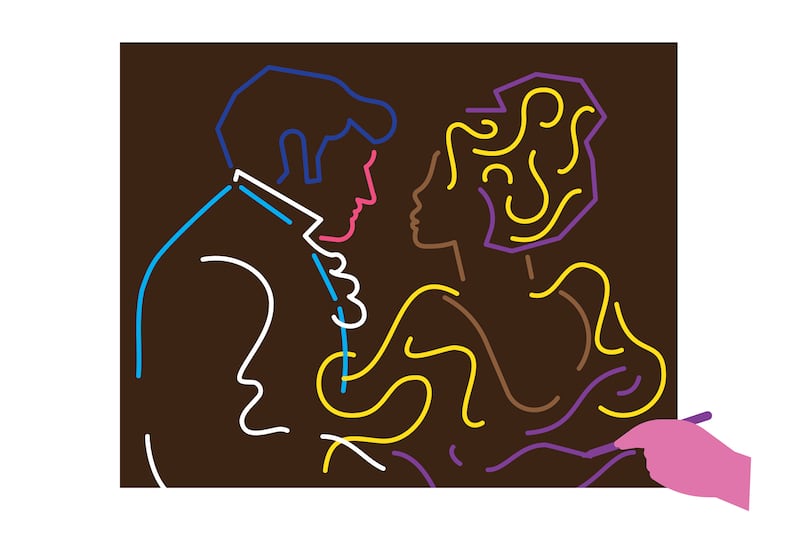

Hollywood began with a few dreamers on a dusty patch of farmland near Los Angeles. Now it’s the global capital of filmmaking, our dominant cultural language, a mirror that shows our biggest dreams and blind spots. For most of its history, the latter included race. A decade ago, an outcry over the Oscars prompted a concerted effort to change that. Now it’s common to see a Black superhero, an immigrant sitcom family, or a multicultural bank heist. For some, that’s overdue progress. For others, it’s proof that Hollywood is fluent in DEI talk, not genuine storytelling. Is what we’re seeing a breakthrough or just another performance?
Adjust the spotlight
Hollywood has built stereotypes, so it should take them down. The stories we see on screen shape our worldview and show us who matters, who’s the bad guy and who saves the day. For most of its history, white male heroes have pushed others out of the frame. But children suffer lower self-esteem when they don’t see people like themselves on screen, and audiences grow more accepting of minorities when they see them in movies and TV shows. As our national demographics evolve, the industry needs to adapt for the sake of society.
Diverse casting is more true to life. It’s our perceptions that come up short. America was 42 percent nonwhite in 2024, but only 1 in 5 lead roles in streaming comedy and drama series was played by an actor of color. The world has always been fluid, particularly in ports and trading centers, from Ancient Rome to medieval Scandinavia and modern-day New York City. Ride the subway and you’ll hear a chorus of languages. “It’s not a trend, it’s a reality,” director Ava DuVernay said at the Producers Guild Awards in 2018. “Think of (diversity) as an absolute must.”
Audiences reward representative casting. As business ventures, films with diverse casts consistently outperform those without. Women and people of color now drive much of the box office as viewers, but even broader audiences are drawn to fresh voices and talent. The 2024 film adaptation of “Wicked” — a Broadway musical built around the witch character from the “The Wizard of Oz,” itself adapted to the screen in 1939 — grossed over $650 million worldwide, in the year’s top 10, with actors of color playing nearly half the cast. Underestimating that demand, the McKinsey consulting firm estimates, costs Hollywood up to $30 billion each year.
Why not use art to imagine a better world? If films can take us through wormholes and across galaxies, into the past and the future, they can also help us to understand each other here and now. Casting characters from all walks of life models empathy instead of division. “Diversity guarantees our cultural survival,” Martin Scorsese wrote in a 1993 letter to the editor in The New York Times. “When the world is fragmenting into groups of intolerance, ignorance and hatred, film is a powerful tool to knowledge and understanding.”
Tell it like it is
Film and screen should not push an agenda. Bowing to political pressure doesn’t make for good storytelling. How it can’t be good for business? No viewer buys a ticket to sit through a lecture. We go to the movies or stream at home to laugh, cry, sit on the edge of our seats and lose ourselves for a few hours in another life or another world. Anything that takes us out of that moment is a distraction. When casting becomes a marketing tool, when every artistic choice is a volley in the culture war, the magic of cinema fades before the lights do.
Artificial diversity is jarring. In Hollywood’s rush to fix old wrongs, the industry has confused quotas with progress. What appears on screen isn’t honest representation but flat storytelling wrapped in a new tokenism. Characters who exist just to check a box stand out for all the wrong reasons, pulling audiences out of the story instead of drawing them in. How are we supposed to connect with someone whose main purpose is to signal a studio’s virtuous moral image rather than advance the plot?
Forcing representation tends to rewrite history. Some period dramas now assemble diverse casts with little regard for context. Consider Netflix’s “Bridgerton,” which reimagines a multiracial court with a Black queen and Indian nobles in 19th-century England — when the British colonial empire was exploiting those populations for sugar and silk production. As University of Winnipeg English professor Kerry Sinanan and other scholars wrote on Medium, “that would be a pleasant fantasy if the series offered an alternative instead of denial and erasure.”
Filmmakers should just tell great stories. Instead of obsessing over casting, the industry should be authentic and intentional about diversity. “Hollywood was right that audiences were hungry for different stories,” wrote Kabir Chibber for The New York Times. “The industry’s failure was in not finding enough creative ways to satisfy that appetite.” Instead of slapping a multiracial veneer onto the latest sequel like a “fresh content” label, try exploring life from new points of view, reflecting different ethnicities, political beliefs and religions. Put a variety of people into writers’ rooms, director’s chairs and studio offices, then diversity on screen won’t feel like an obligation anymore.
This story appears in the May 2026 issue of Deseret Magazine. Learn more about how to subscribe.