
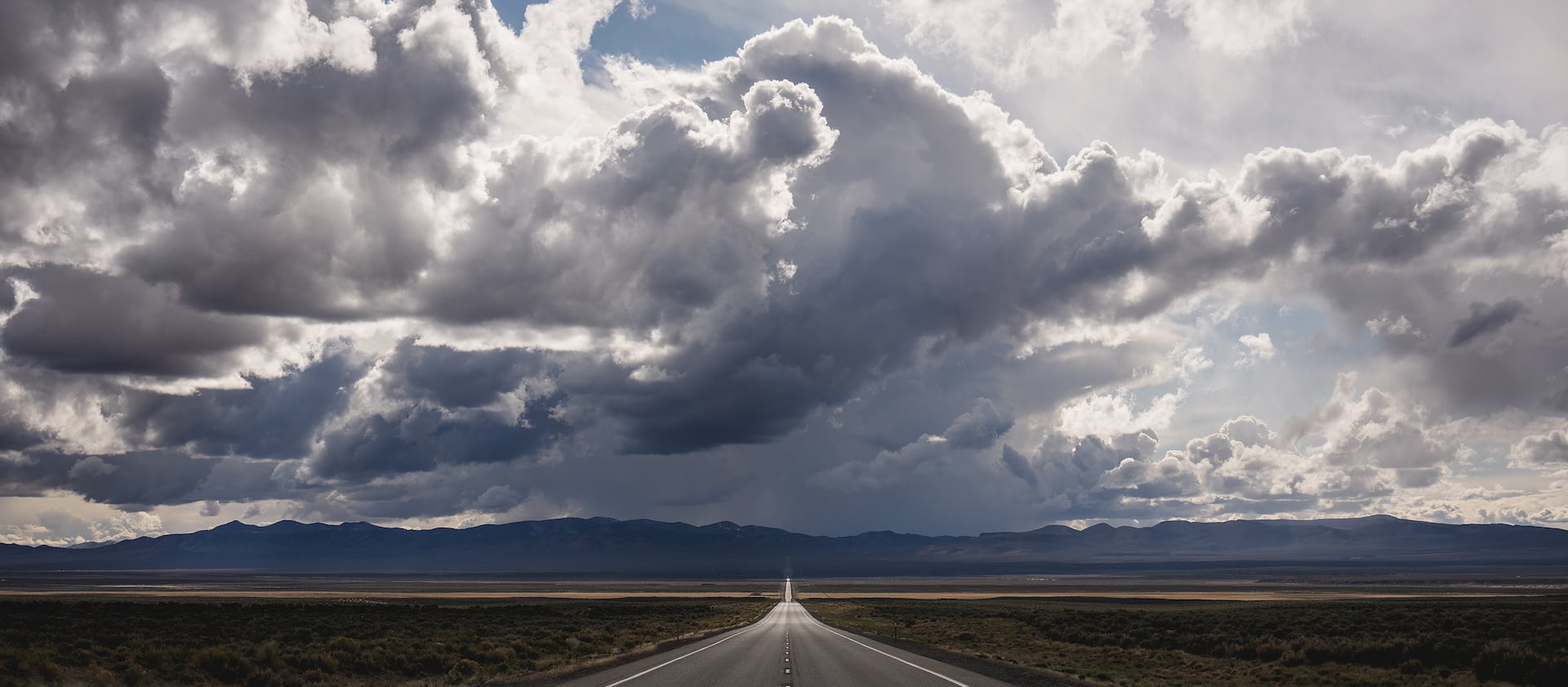


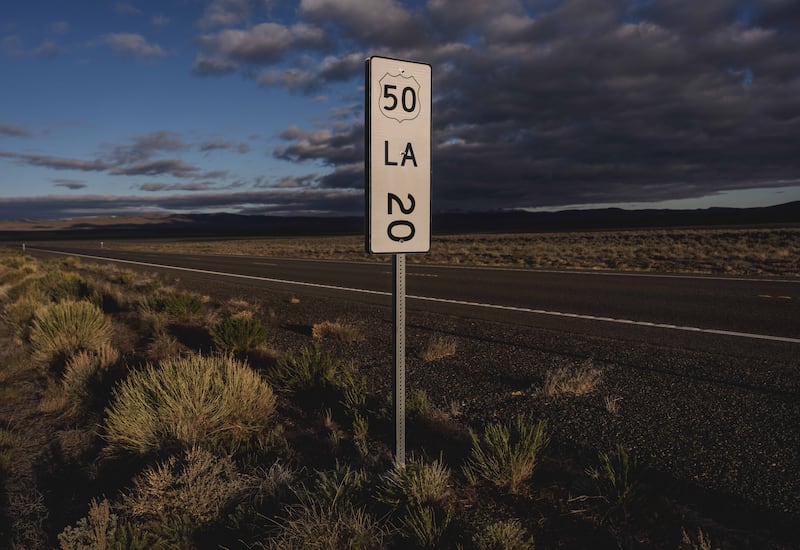
The asphalt stretches in a straight line for so long that the road seems to melt into the Nevada horizon, sun-bleached boulders and gnarled sagebrush blurring by at more than 70 mph. A road sign warns that the next gas station is 167 miles away. Another sign soon explains why that is. This is U.S. Highway 50, “The Loneliest Road in America.”
You can drive for hours on this blacktop connecting Nevada to California and Utah on either side and never see another car. But it was a 1986 Life magazine article that gave this arid stretch its superlative name. In it, a AAA spokesperson describes the road as something akin to a wasteland. “There are no points of interest,” the spokesperson said. “We don’t recommend it. … We warn all motorists not to drive there unless they’re confident of their survival skills.” The piece featured a long shot of the highway. Its caption, the same five words that eventually made their way onto that sign.
Rather than fight it, Nevada’s Commission on Tourism leaned in, that same year launching its “I Survived Highway 50” program to encourage more people to visit the lonesome road. The commission created survival kits with maps and information about attractions and services in the five key towns along the route: Fernley, Fallon, Austin, Eureka and Ely. These kits include a passport that visitors fill with stamps collected from locations along the way. Those who complete the challenge can mail their passports to the state in exchange for a certificate signed by the governor. It’s gimmicky, but it completely altered the public image of the long-overlooked thoroughfare, and the rural Western communities reliant on it. The commission distributed more than 12,000 kits by 1988, the same year the Nevada Legislature authorized the installation of the “Loneliest Road in America” signs.
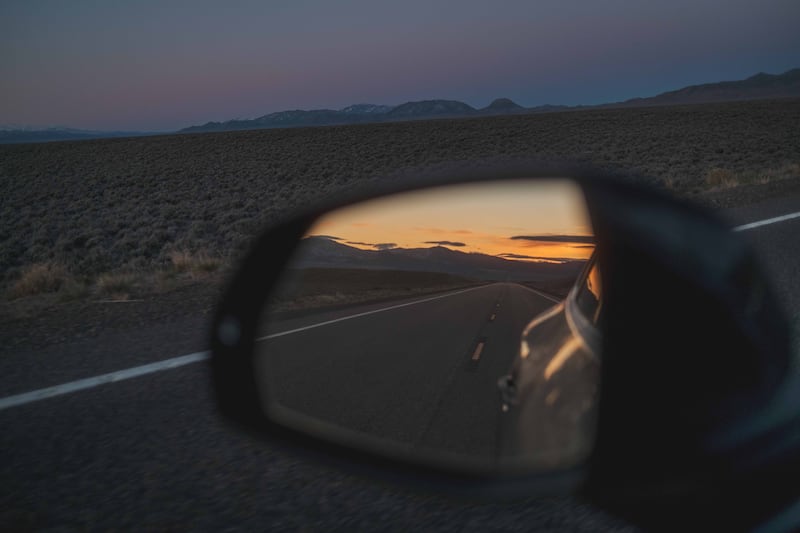
“I think there’s something special about a wide-open road,” says Tracie Barnthouse, the chief communications officer at Travel Nevada. She’s driven Highway 50 with her own family several times. An average of 900 completed passports are sent in from tourists every year, Barnthouse says, which doesn’t account for all the travelers who seek out the trip without starting or completing the activity. “More people are looking to find a little solitude in a busy, busy world, and a road trip provides a little bit of that.”
Even before the nickname came to be, this swath of land had served as a backdrop to challenge and triumph for generations. From April 1860 to October 1861, it was home to a length of the Pony Express Trail, which put out advertisements seeking “young skinny, wiry fellows” who were “willing to risk death daily” by carrying mail between Sacramento, California, and St. Louis, Missouri, on horseback. The conditions were brutal and six young riders died within those 18 months. But it helped solidify the West’s identity as part of the United States, connecting the settled region with the rest of the country. Then, when Dwight Eisenhower served as a lieutenant colonel, he participated in a Transcontinental Motor Convoy in 1919 to test how easily the military could mobilize during wartime. American troops had just returned from fighting abroad in World War I, where they’d relied on motor units to secure victory. Yet, stateside, many of the roads that connected cities were still unpaved, and the U.S. lacked a national highway system. The convoy’s 81 vehicles set out to see how difficult it would be to drive from Washington, D.C., to San Francisco, and the 3,251-mile journey proved particularly treacherous once the soldiers arrived West. Eisenhower later wrote that the trek from Tooele, Utah, to Carson City, Nevada, was a “succession of dust, ruts, pits, and holes” that nearly defeated the convoy with countless threats of quicksand, mud, and collapsing bridges. The desert route inspired the creation of the national highway system in 1926, which in turn created Highway 50.
That same urge to grow and change is still evident. Even on America’s most desolate highway, drivers passing through can now see wind turbines, solar farms and electric vehicle charging stations cropping up. The AI boom is encroaching as companies like Google and Microsoft flock to the high desert east of Reno to build and expand data centers, enough to newly crown the area as one of the largest markets for data centers in the world. Yet, in spite of all the development, the Loneliest Road and the communities that exist along it are best known for preserving the past. They contain some of the most well-preserved 19th-century mining towns in the country. At Winnemucca Lake in western Nevada, etched on boulders beside the dry lake bed, are the oldest known petroglyphs in all of North America, dating back tens of thousands of years. And scattered across Nevada’s Great Basin National Park, bristlecone pines stand as some of the longest living organisms on Earth. Some have clung to the landscape for more than 4,000 years.
There are challenges, of course. Hundreds of miles between service stations also means hundreds of miles between many Nevadans and medical care; some 89 percent of rural residents statewide lack access to a primary care doctor. And cruising down monotonous roads for hours creates a phenomenon known as “road hypnosis,” where drivers are lulled to a passive state, fatigued and often with little memory of the trip. That risk of crashing is what led Carson City Sheriff Ken Furlong to call Highway 50 the “most dangerous highway in the state” more than a decade ago.
Yet here is one place where the past is still winning over the future. That’s evident even among the people who live right off the highway. So I’ve decided, fighting off the hypnosis as I wheel from Austin in the center of the state to Ely in the East — the view outside my car window breaking from a sea of beige and green to show signs of civilization, gas pumps and brick buildings — I’ll stop to talk to locals, and find out, exactly, who’s drawn to this place.
A family starts anew in Austin
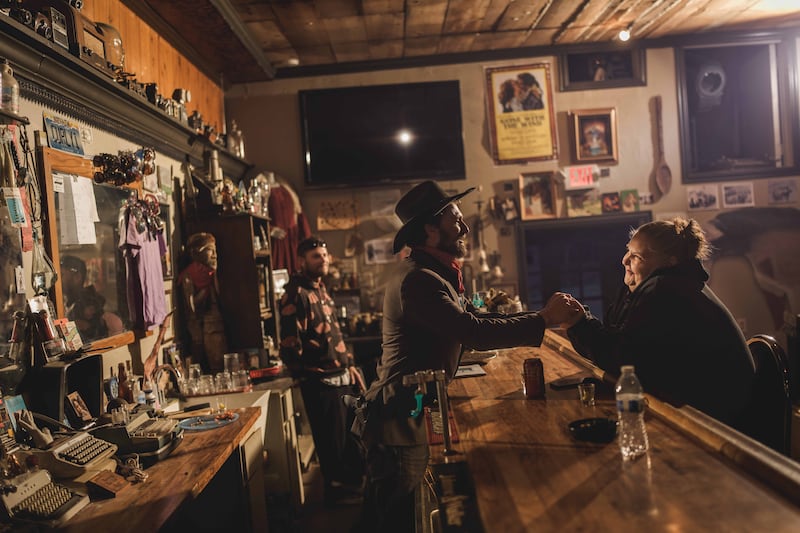
Tyler Margason nicknamed his daughter Autumn “Cold Steel,” on account of her being the most level-headed and laid back of his kids. The only time that was not the case was a year ago, when Margason, shortly after a divorce, announced that he and his three kids would be moving from Grants Pass, Oregon, to Austin, Nevada.
Autumn was 16 then, nearing the end of high school. Margason felt convinced that a move to the desert, away from cities and society and any semblance of fast-paced living, would help his children grow up safely and discover more about themselves. The 36-year-old had traveled to Austin several times as a teenager on what he called “spirit quests.” He’d spent his days dirt biking in the desert and ambling through the town of less than 200 people, its infrastructure frozen in another time, then camping out in the Toiyabe Range. He envisioned the same for his children. A big life carved out of a tiny town in the dead center of the Silver State. A home situated directly on the western slope of a mountain, hundreds of miles from the nearest major city and flanked by winding roads on all sides. That kind of life, though, he learned, is not instantly appealing to everyone. “My daughter fought me so hard,” he says. “It was a divorced teenage girl nightmare meltdown.”
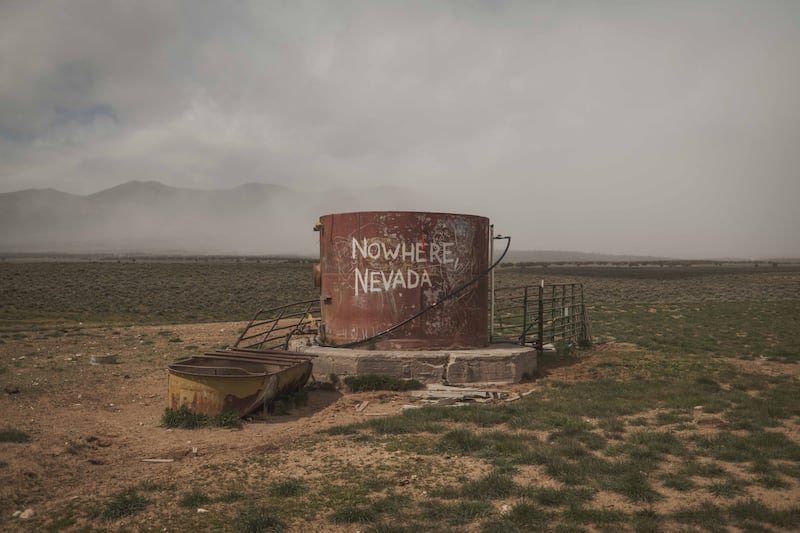
Before he broke the news, he’d already been collecting pieces of Austin. In 2019, he bought two miners shacks built in the 1860s, complete with original wallpaper, which had been mixed with authentic 19th-century newspaper. Then he bought the Owl Club bar and the house beside the bar. Then a triplex. Now, he owns all of South Street. The property was affordable, and since he’s an experienced construction worker, he was able to turn the Owl Club into a combination bar, movie theater, thrift shop, antique emporium and restaurant. And he convinced his kids — now 14, 16 and 18 — to give this new life a chance.
Grocery shopping is a major journey. Trips to Costco in Reno can rack up nearly 400 miles of driving round trip. “Every little scrap of food is so special,” Margason says. “You might have a kiwi in your hand and it’s the only kiwi for 100 miles in any direction.” His kids transferred to a school that had a total enrollment of 11 students. But it wasn’t actually as lonely as any of the Margasons feared. If a window breaks, a neighbor will bring a new panel of glass the next day. They’ll bake cookies for his kids and give Margason a ride to Reno when he needs a truck or an extra set of hands to lug back a new refrigerator. He relishes even the simple act of leaving his doors unlocked. “Everybody has to be held accountable here. You can’t be a thief … because the village will reject you.”
In the summers, the Owl Club fills with dozens of people at a time, from as far away as Germany or China. And even in the off-seasons, Margason found that the tiny population makes it easier for his kids to connect with neighbors and make friends than in bigger cities. It’s harder to fade into the background when everyone in town knows your name. “She loves it here. … This was a good move for (Autumn),” he says. Since moving, Cold Steel has graduated high school early, worked as a lifeguard at a community pool in the summer and as a gas station clerk in the spring.
His youngest son spends most of his time riding dirt bikes or bicycles, and his middle child, he attests, feels fairly indifferent — happy to be there, happy to be anywhere. No one enjoys it more than Margason, though. When he sifts through detritus on his properties or the town dump, he casually stumbles across checks from 1883, candy wrappers from the 1920s and furniture fresh out of the 1970s. “It’s like a time capsule,” he says. “I may leave, but I’d be happy to die here as well.” He’ll know for sure which route he’ll take once the rest of his teens are grown up. But as a local saying goes, if you stay long enough to wear out even one pair of shoes in Austin, it’s more likely than not that you’ll eventually come back here. And by now, Margason’s worn out his fair share.
Eureka: The ‘Friendliest Town on the Loneliest Road in America’
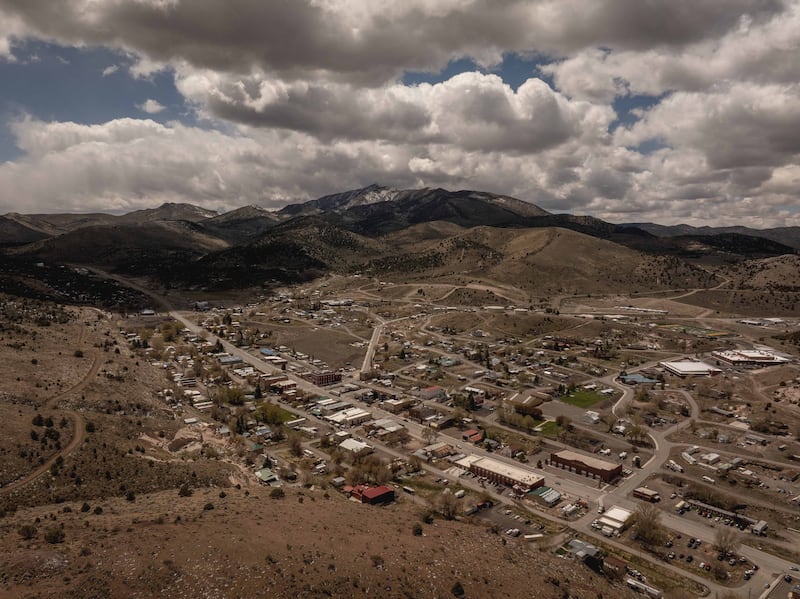
Lecia McDonald sat patiently behind the front desk at the Best Western in Eureka, waiting for guests to walk through the lobby doors. A few men in yellow high-visibility shirts filed through on that Monday in mid-March, checking in and checking out, likely brought into town by nearby mining or construction jobs. Otherwise, not many tourists. Eureka, population 414, isn’t exactly a premier spring break destination. McDonald likes it that way. She moved here for the quiet.
Eureka was once bustling. Prospectors flooded the town in 1864. Mining operations would later uncover massive deposits of the noble metal, second only to the Comstock Lode in Virginia City. Even after industry extracted most of the silver, the town sustained itself by its proximity to other metals like lead, zinc and even gold. At the height of its mining boom, Eureka could produce as much as 700 tons of ore a day, enough to earn the county seat in Eureka County, the richest at the time in all of Nevada. By the 1870s, 50 mines and 10,000 people crammed inside its borders, then the second largest city in the state. A decade later, natural disasters, labor disputes and a depletion of resources led the town’s nine major mines to shut down. Everything slowed down. People left. Today some call Eureka a “living ghost town.”
But none of that mattered much to McDonald. About a week before I met her, the 18-year-old had left her hometown of Paris, Texas, with, quite literally, nothing but the clothes on her back and her nine-month-old daughter. It helped that she already had her aunt, uncle and little cousins in town, and that she’d already visited in the summer to get a feel for the place. When she moved into her new home, facing her aunt and uncle’s house, her neighbors were immediately welcoming. The women at church offered to watch her daughter during service so McDonald wouldn’t have to fret over her. Locals helped her land a job at the motel, find new clothes. “We all look out for each other no matter what,” she said. “It’s kind of like you’re all family in this little town. They treat you like family … which I’m not used to, because being in Texas (was) like fighting for your life.”
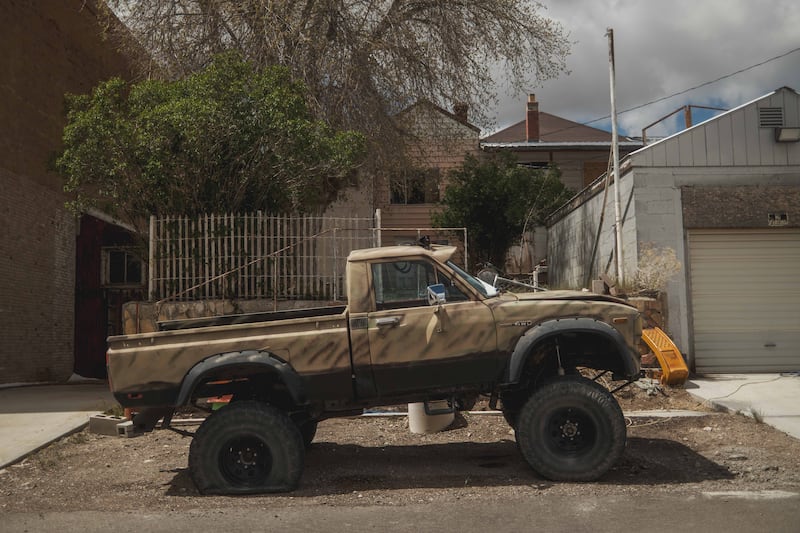
Flanking either entrance to town, billboards advertise that sense of community, going as far as to call Eureka the “Friendliest Town on the Loneliest Road in America.” A red brick Victorian-era opera house built in 1880 still stands at the center of town, and while it no longer hosts masquerade balls or operas, it still functions as a cultural center and museum, with occasional dance, poetry or fiddle performances. Other relics remain entirely unchanged, both in appearance and function. Like Eureka’s historic cemeteries, which the town once claimed outnumbered that of anywhere else in America. And a mysterious tunnel system that connects many of the buildings underground, built either by Chinese miners as a safe place to socialize or bootleggers as a den of iniquity during Prohibition.
Beyond a perfectly preserved city center, the town still offers proximity to active gold and silver mines, though production has dramatically decreased since its heyday. Most visitors pass through in the summers, or during hunting season. Otherwise, stillness. “We all get along pretty good over here,” McDonald says. “A lot of people are just glad to have somebody around.”
How Ely preserves the past
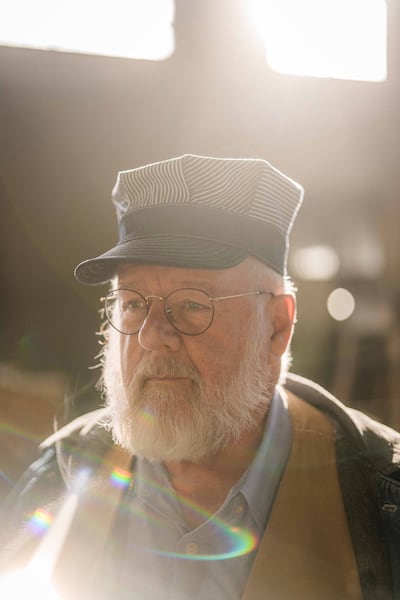
Mark Bassett centers his life around Nevada history. He’s worked for the Nevada Northern Railway Museum since 1999, and he’s been executive director for the last quarter century. The 72-year-old was born and raised in Chicago, where he grew up watching too many episodes of “Death Valley Days” to stand any chance of staying there long. Those 30-minute Westerns didn’t just transport him thousands of miles away, they teleported him to another time; one where hopeful people left cities for life on the prairie to strike gold and grow old. He moved to Elko in 1998 at 44 to chase what was left of the Old West, before winding up in Ely, one of the largest cities on the Loneliest Road with a population of nearly 4,000 people, the last town in Nevada before crossing east into Utah.
Bassett’s objective was to discover as many ghost towns as possible. That’s how he found the remnants of Hamilton, a town that boomed then busted in 1870, before the census could create an accurate record of the lives lived there. All that’s left are dilapidated stone dwellings and a cemetery with three small gravestones for children less than 2 years old. “We live in this world where we’re controlled by our phones, and we don’t get out there and we don’t appreciate what people did to create the society that we enjoy today,” he says.
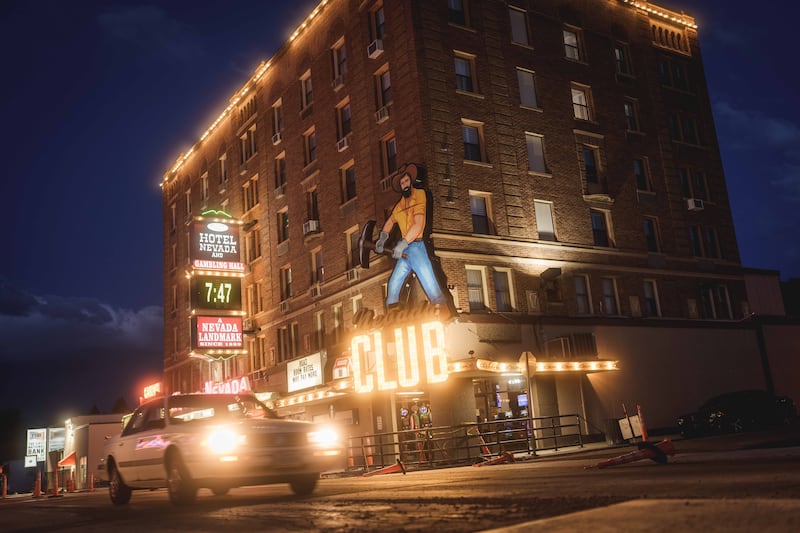
Ely started out as a stagecoach station on the Central Overland Route, which connected Salt Lake City to Carson City by four-wheeled, horse-drawn carriages, before the discovery of gold and copper led to its establishment as a mining town. Ore created a need for a railroad to connect mines to processing plants, which led to the Nevada Northern Railway in 1906. This railway serviced more than four million people and brought English, Italian, Chinese, Greek and Slavic immigrants into Ely for work before its last run in 1941. “The railroad brought people in from around the world,” Bassett says. “The Loneliest Road is really a story of America. We’re a country of immigrants. And these people came chasing the American dream.” Today, the primary employers in the Ely area are nearby mining operations and the Ely State Prison, which was a maximum-security facility before transitioning to medium security two years ago.
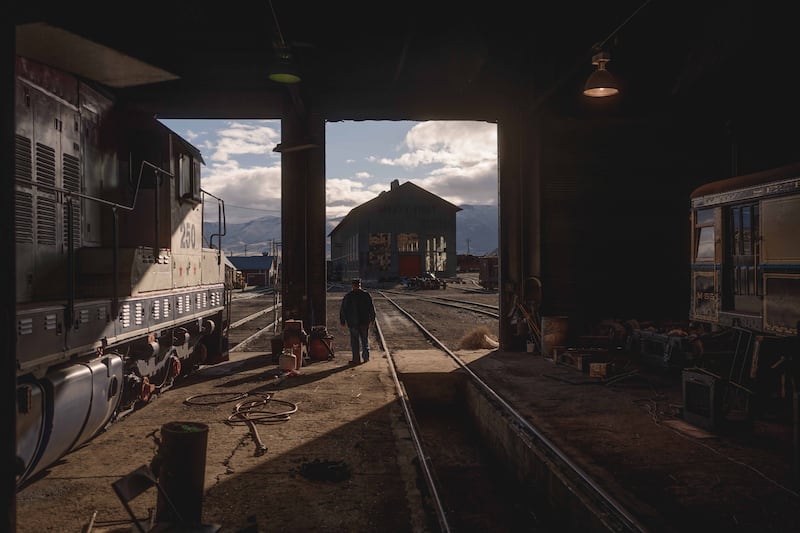
At the railway museum, Bassett oversees its 60 original buildings and four steam locomotives alongside over 20 paid staff and 130 volunteers. “If we were near a big city, this would have all been bulldozed down and there’d be nothing left of it. But because of the remoteness, it’s been preserved,” he says. “It is this loneliness that has allowed us to preserve it.”
When he leads guests on guided steam train rides and tours, and the vapor fogs up Bassett’s round lenses or tickles through his white beard, he’s reminded that reviving this history is his most successful attempt at hunting down the Old West’s ghosts yet. A steam spirit of the past, brought back to the present. “As one of our young visitors said, it’s like waking a sleeping dragon.”
Today, Ely is also known for some of the darkest skies in the United States. Even through the glare of red and yellow neon signs advertising casinos and hotels, the Milky Way appears overhead at night in a gash of brilliant light, just like it would have centuries ago. That kind of darkness, literal and figurative, either draws people in or scares them away.
But that’s the thing about a lonely road. The promise of isolation can fuel nightmares. It can also spur a sense of freedom. The outcome depends more on the people who seek it and the circumstances behind their journey than the highway’s coordinates and contours. For Bassett, this chunk of America, uninterrupted, is exactly what he was looking for. There are only so many slices of solitude left.
This story appears in the June 2026 issue of Deseret Magazine. Learn more about how to subscribe.