

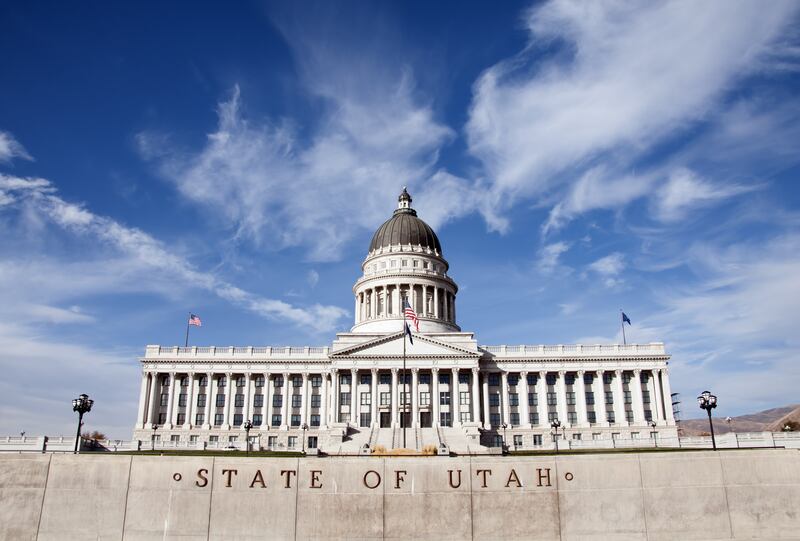
The 2020 Utah Legislature will begin Monday on an unusual note — with an admission that lawmakers fell short of providing what their constituents wanted. But that, of itself, is good news. It is a declaration of an important truth, which is that political power in this state derives from the people.
Last week, legislative leaders and the governor issued a statement saying they will introduce a bill at the start of the session to repeal the tax reform law they passed in a special session in December. This came after organizers of a petition drive turned in what appeared to be more than enough signatures to force a repeal vote in November.
In making the announcement, the statement from the Senate president, the House speaker and the governor said, “We are not foes on a political battlefield, we are all Utahns committed to getting our tax policy right.”
That attitude expresses nicely what governing in a representative democracy should be about. It contains a bit of wisdom that seems lost on many Americans today. Differences of political opinion should not make foes. A representative system of government allows for differences to be expressed, argued and voted upon. This results in compromises and allowances that not only result in good laws, but that give all parties a reason to buy into the legitimacy of those laws.
Unless a new tax reform bill emerges quickly, Utah lawmakers will face the task of drafting a budget without benefit of a solution to the state’s tax imbalance. Income tax revenues continue to grow faster than sales tax revenues. Both are still growing, however, thanks to a robust economy.
But lawmakers also will not have the immediate concern about finding new revenue sources for education. Repealing the tax reform law means also repealing its income tax cut. In Utah, all income tax revenues are earmarked for education.
We hope lawmakers begin again in earnest on a tax reform bill that reflects the concerns of many who signed the petitions. Chief among these was that it would have raised the sales tax on groceries, which was seen as harming poor people most.
With that off the table, efforts to find other solutions must take center stage. Some lawmakers have suggested it would be easier for the state to fund all its needs if the education earmark were removed from the income tax. That would require a change to the state’s constitution, which must be done by a vote of the people. We suggest such a measure be put on ballots in November to gauge public feelings and to guide future reform efforts.
Lawmakers will, of course, face many other issues during their 45-day session. They will deliberate over a state with a booming economy and a growing population — an enviable situation that also creates its own unique problems.
Utahns are concerned about education funding and air quality. They worry about the environment and health care. Some are concerned about Proposition 4, which voters passed in 2018. It would create an independent advisory commission to redraw political boundaries based on the 2020 census.
We hope lawmakers avoid tinkering with this, as it also expresses the will of the people. Despite the creation of a commission, the measure still gives lawmakers the final word on boundaries. However, people want a hedge against boundaries that ignore community interests in favor of political considerations.
Speaking of tax reform, the joint statement of Utah’s political leaders said further, “Utah has never shrunk from a challenge and, working together, we will chart the right path forward.”
That sounds like a worthwhile motto for every problem the Legislature faces in 2020.