

At this point in history 75 years ago, nearly two-thirds of Europe’s 9 million Jews had been killed at the hands of tyrannical Germans and their collaborators. Contempt and fear reacted to produce one of history’s most harrowing genocides, and while that worldwide conflict may have ended, the emotions that ignited it persist in ugly ways.
Globally, genocides, incarcerations and mass persecutions haven’t abated as strongmen vie for power and control. Each instance is fueled by contempt as despots classify others as unworthy of respect, dignity or life.
It was contempt that propelled the Nazi’s rise to power. Those who viewed Jews, homosexuals, Roma, Poles, Russians and disabled people as threats to a fictitious way of life succeeded in their power grab only by labeling others as subhuman.
“There were laws enacted step by step that deprived (Jews) of their rights as citizens,” Rabbi Andrew Baker, director of international Jewish affairs for the American Jewish Committee, told the Deseret News. The government “ultimately turned them into a despised and hated people.”
Failing to understand that gradual process, he added, means failing to grasp the significance of more recent anti-Semitic episodes.
The magnitude of the Holocaust is as difficult to fathom as comprehending how humans could let such a tragedy occur.
Indeed, it takes work to understand. The magnitude of the Holocaust is as difficult to fathom as comprehending how humans could let such a tragedy occur. To talk in terms of millions is overwhelming; the share of Jews killed by Nazis is roughly equivalent to the population of Colorado.
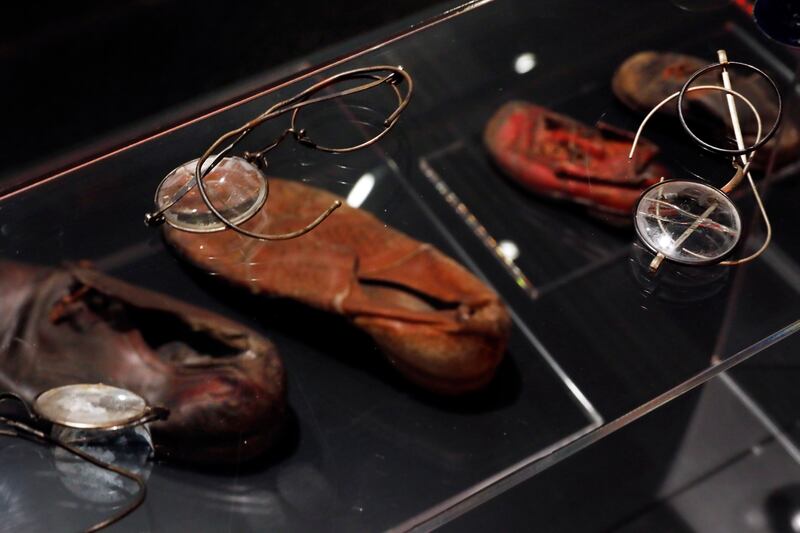
But to distill it to an individual is at once familiar and heart wrenching. Anyone who has silently stepped through a Holocaust exhibit understands how the enormity of numbers is swallowed up at the sight of a 6-year-old’s shoe, a mother’s locket or a father’s cap — mementos left behind to educate, not posterity, but the whole of humanity.
Are we listening?
It’s troubling to observe contemptuous exchanges within the borders of the United States. In subtle ways, political rhetoric has shifted from division to derision. White nationalism is rising, and religious persecution isn’t a stranger to front page news.
International Holocaust Remembrance Day, which the world marked this week to honor the liberation of Auschwitz, offers guidance in its name. Remembering is a powerful weapon against tyrants and oppression. Remembering is an individual act, and it requires individuals to educate themselves and fulfill the commitment to “never forget.” And the further humanity gets from its history, the more important remembering becomes.
Americans report mostly positive results when asked to recall their understanding of the Holocaust, according to data collected by Pew Research Center, yet the data also make clear more must be done to inform the public. Recent Holocaust curricula designed for secondary education are a good effort to go beyond facts and help young students grapple with the realities of genocide. Association, too, is a forceful tool: “Knowing someone makes it harder to harbor prejudice or animosity,” Rabbi Baker said.
Worth contemplating today is what your responsibility is to vanquish contempt and secure the lives and liberties of those around you. Even a small decision to engage is a step toward escaping the chains of indifference.