

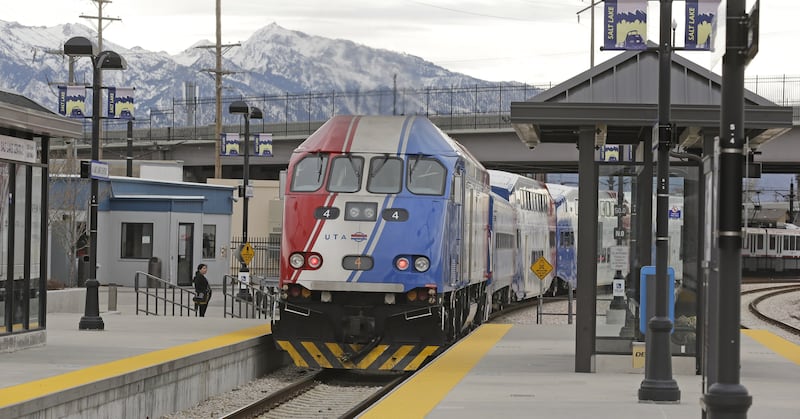
John C. Pingree served as general manager of Utah Transit Authority from 1977-1997. His recent passing serves as a reminder to celebrate the life of a genuine leader who put the public good ahead of political pressures. In the process, his vision for the future of mass transportation along the Wasatch Front included a robust UTA bus system, the implementation of TRAX light rail, and the foundations for the FrontRunner.
His visionary transportation system put the state in prime position to bid for the 2002 Olympic Games. With projections for soaring population growth along the Wasatch Front, experts realized we wouldn’t have the transportation to support such growth — or tackle the attendant air quality issues — except for our mass transit systems that have been put in place by visionaries like Mr. Pingree.
But it all came at a steep personal cost to John and his family.
UTA has always been a political lightening rod. That’s because the agency is funded, in part, from public coffers. So elected officials are anxious to influence the agency’s decisions. That won’t change. But John’s leadership style led him to do what he felt was right for the public good and not for the popularity of the politicians.
Two examples:
1.) When light rail was first conceived, there was a firestorm. People with no expertise in transit loudly claimed that nobody would ride it. Critics were widely quoted and public cynicism quickly ensued. In 1993, Salt Lake County voters defeated a referendum to help fund it. Though both local newspapers supported it editorially, there were op-ed pieces where trusted voices questioned why we would lay new tracks in the streets just a few decades after the old trolley tracks were torn out. Light rail was a political hot potato. That’s why influential politicians like most of the county mayors opposed it, and the governor at the time would only give a half-hearted endorsement — “we won’t oppose it” was the extent of the support.
Even some of John’s friends expressed their skepticism, sometimes publicly as was the case over the pulpit at a funeral service. His family tried to take the criticism in good humor, but it was often uncomfortable in public places like the grocery store. John hoped for some support from those who would benefit the most, but it was slow to come.
Eventually, the University of Utah saw the wisdom of transporting students to and from campus without adding parking lots and concrete structures. Light rail was a perfect fit, so Arthur Smith publicly came out in support of light rail. That was a huge endorsement. Then The Church of Jesus Christ of Latter-day Saints jumped on board, so to speak. Transporting employees and Conference Center visitors into downtown, and back out again, would become a growing problem. Given the choice between light rail and more underground parking structures was a no brainer. Over time John has been vindicated.
2.) John made political enemies of politicians and union leaders who wanted higher wages for certain employees at UTA. A battle ensued. John stood firm on the principle of fiscal responsibility; he would raise wages only to the degree that it reflected the market and fit into the budget. Aggressively, politicians and their power brokers pressured John to meet their demands. When he refused, they then threatened him. They knew they could stack the UTA board with political appointees that would vote Pingree out as the general manager. In time, in spite of all his accomplishments, that’s exactly what happened.
Ironically, and in hindsight, with all the ongoing publicity about UTA’s financial woes and debt, and declining bus ridership over the past several years, it’s important to remember that when Pingree was voted out, his frugality left the agency with $45 million in the bank —and an increased growth in bus ridership. UTA had been recognized that very year as the “Outstanding North American Transit System” by the American Public Transit Association.
For a man who stood on principle and gave little attention to politics and popularity, we should express our gratitude for John C. Pingree’s leadership and contributions to the quality of our lives.
Robert Fotheringham is a former business owner, current branding consultant and peaceful community activist.