

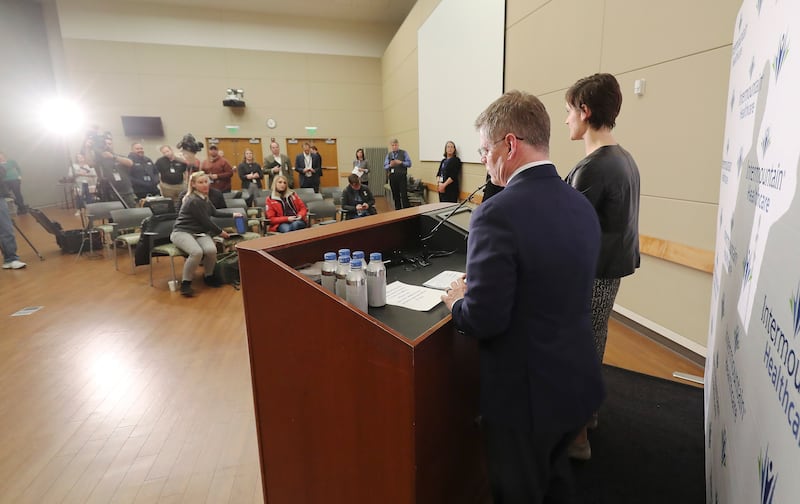

SALT LAKE CITY — At the end of February the journalists who produce the New York Times podcast “The Daily” looked among their ranks for one with unique understanding of pandemics. They interviewed longtime Times journalist Donald G. McNeil Jr., “a science and health reporter specializing in plagues and pestilences.”
Drawing on his experience observing governments and medical professionals during crises, and reporting on the behavior of the human family in response to AIDS, Ebola, SARS and more, the producers of the series asked him many serious questions, including this:
“Just how scared should we be?”
His answer: “If things don’t change, a lot of us might die.”
That has stayed with me, as have other important insights from medical professionals sounding the alarm from China, South Korea and Italy as the virus spread and pointed toward America.
McNeil’s comment was published by the Times on Feb. 28. A day later Washington state health officials and the Centers for Disease Control and Prevention reported the first COVID-19 death in the United States.
Much has happened in the seven weeks that followed. As of Saturday, the virus is in at least 185 countries or regions (some put the number at more than 200). More than 107,500 deaths have been attributed to COVID-19 with 1,754,457 cases recorded according to Johns Hopkins University.
The losses are heartbreaking. But without the dramatic societal changes it would have been much, much worse.
Medical experts say if a change of course had not occurred, late or otherwise, the widespread social distancing and stay-at-home orders underway for much of the nation the past few weeks would not be effective. Despite the economic hardship and uncertainty, many more lives would have been lost.
How do news organizations balance the need to perform their role of providing the public with essential information, while protecting their reporters and photographers?
The answer is essentially the same one given by McNeil: If standard procedures haven’t changed or don’t change, people can get sick, or worse.
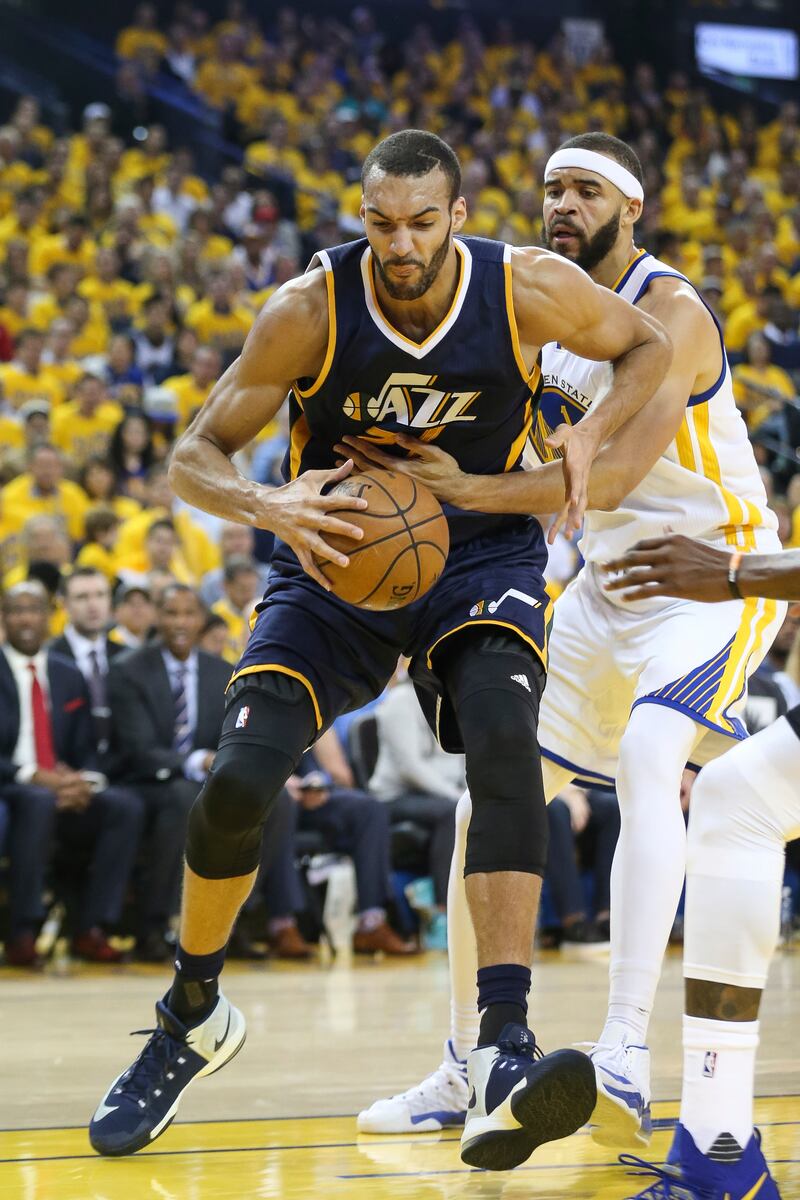
This became clear for Utahns and the entire United States on March 11. That’s the night in Oklahoma City that Jazz star center Rudy Gobert tested positive for COVID-19. That began the cascade of events that stopped play in the NBA and every other sports league. Education would eventually move online from kindergarten through grad school programs. Most restaurants eventually closed their doors. And the world found two new phrases that will never leave our vernacular: “flatten the curve” and “social distancing.”
Our Jazz beat writer Sarah Todd chronicled her experience from that night in Oklahoma, which led to quarantine but thankfully not COVID-19. Working remotely was already underway at the Deseret News, but now it got more serious.
We discussed movements with our staff. Some staff members have family or are themselves in higher risk groups. We do not require anyone to take on an assignment they believe puts them at undue risk.
Inside our combined Deseret News/KSL newsroom broadcast journalists actively practice social distancing and have been doing so for weeks. We have a Deseret News manager in the newsroom each day. He coordinates the assignments for reporters who no longer come into the office, instead starting their days and nights remotely.
Our indepth, opinion, sports and entertainment teams are focused on covering COVID-19 in all its aspects. None are expected to work in the office. Church News staff as well as our web and audience teams are all remote. The two-day general conference of The Church of Jesus Christ of Latter-day Saints provided unique challenges for the Church News and Deseret News staffs. We had a skeleton crew working from the office while others were connected through Zoom conferencing.
We live by daily Zoom or Google Hangouts now, with meetings done staff-wide, by department and in one-on-one interviews. We miss the social interaction, but all are adapting well.
We cover the news in every way you can imagine: phone, web, conducting interviews 6 feet from our subjects, even meeting car to car. Which brings us to the photo staff.
You have to be on site to take a picture. Chronicling testing and “telling” the stories of those who are impacted by the virus necessitates proximity. We carefully respect the privacy of those being tested, while still showing the testing areas, as is being done in New York and elsewhere.
“There’s a little bit of angst,” said Chuck Wing, our photo chief and managing editor of cross platform news for the Deseret News and KSL. That’s a good thing. We want our photographers to determine the best way to chronicle events without compromising their own safety or the safety of those we come in contact with.
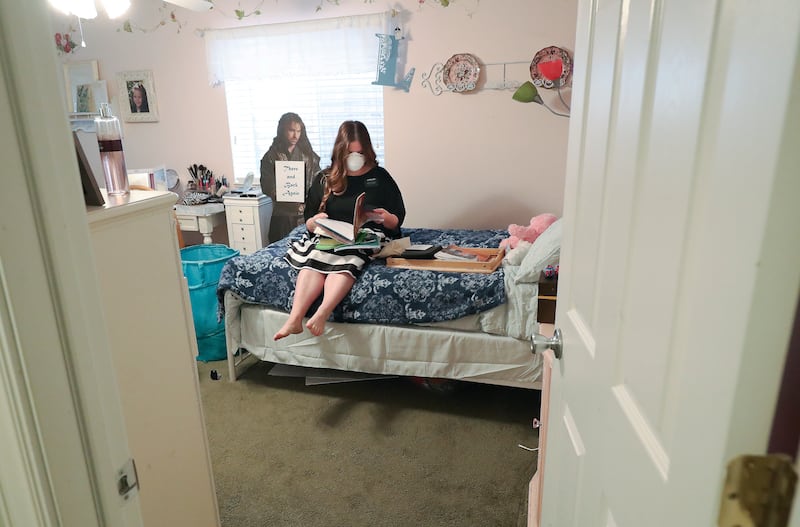
New boundaries and guidelines are in place. Such as, when do we go into a home?
“The policy I put in place last month is the photographer must check with me, talk about the risk-to-reward factor. The next question is can we still tell the story from outside someone’s home?“
There are other challenges. How do we shoot pictures at the airport?
The answer may seem obvious: From a safe distance, and by abiding by specific guidelines for media trying to assess how the governor’s new restrictions are working at Salt Lake International. Long lenses have become the photographer’s best friend. These are the lenses usually used during sporting events. Now they allow for important images while staying a safer distance away.
“We want to make the best images possible because it’s an historic time,” Wing said. But safety is equally important. It’s the same thoughtful process used making photography decisions covering an actual war. The coronavirus is now a proven enemy, but we don’t know where it’s lurking. In this war, a mask and good judgment are our flak jacket.
Personal, intimate stories of loss are chronicled with family permission. We seek family photos. We’re asking some people to share selfies with us. There are many layers to these stories and many ways to tell them.
The Utah Headliners chapter of the Society of Professional Journalists will be conducting a webinar for journalists dealing with these issues on Thursday, drawing on the expertise of Wing and others in broadcast, web and print journalism. McKenzie Romero, one of our assistant news directors and a past president and current board member for Utah SPJ, has helped organize the event. We’ve also tasked her with tracking best reporting practices from the industry for the Deseret News.
“Journalists are living through the pandemic in personal ways even as they’re reporting on it,” Romero said. “It is vital they are able to protect themselves. They are in the field chronicling today what will become the stuff of history books tomorrow.”
Much more will be written about why the nation wasn’t prepared to do better. Both praise and heavy criticism has landed at the feet of President Donald Trump. The nation’s governors are also being measured for their performance, including Utah Gov. Gary Herbert. Journalists will continue in a watchdog role, questioning government response, the supply chain, stay-at-home orders by cities, counties, states and the country.
But currently the most important role is providing clear, accurate information for a public trying to stay safe and navigate this new (hopefully temporary) normal.
And that includes for those chronicling COVID-19.