

Ironically, King George III may have inadvertently given George Washington the greatest compliment of his life. Britain’s king reportedly asked the American artist who was painting him what America’s greatest general would do after winning independence.
“Return to his farm,” the painter said.
“If he does that,” the king said, “he will be the greatest man in the world.”
Washington not only did that, resigning his military commission, he later gave up the presidency — a job he probably could have held for life — after only two terms.
In the wake of last weekend’s Independence Day celebrations, and in light of some recent disturbing attempts to topple statues of America’s first president, it’s important to understand the greatness of the man who set the precedent for how power should be treated and then voluntarily relinquished. That, perhaps more than anything, has been a key to the nation’s stability and success.
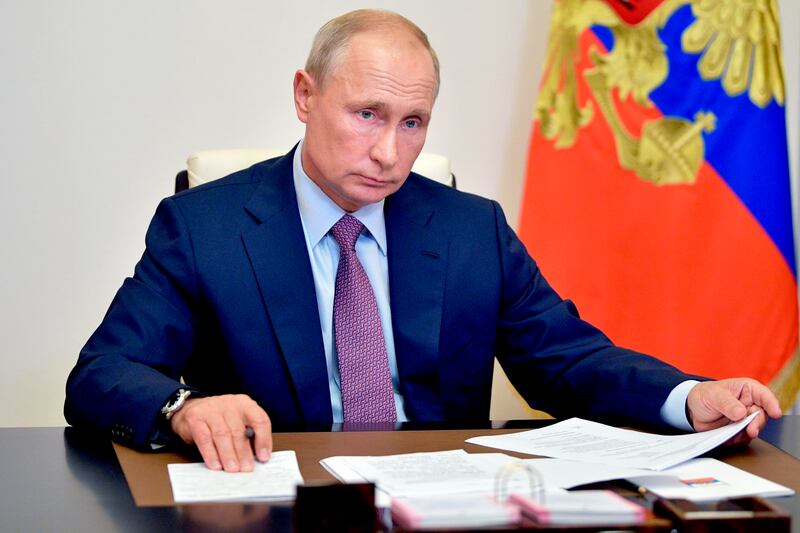
It’s also a sharp contrast to Vladimir Putin, the Russian president who seems to be setting himself up to be president for life. By King George III’s standards, Putin is not the greatest man in the world.
Putin’s power play came in the form of a referendum on a package of changes to the Russian Constitution. That package includes such crowd pleasers as a guaranteed minimum wage and favorable adjustments to pensions. But it also resets the clock on Putin’s limit of serving no more than two consecutive terms, allowing him to potentially remain president until 2036, when he would be 83. In addition, it gives him greater control of courts and prosecutors, and it elevates the role of the State Council, of which Putin is chairman. Should he remain energetic and power hungry after 2036, he could continue to guide Russian policy from that post.
All in all, the package contains about 200 constitutional amendments — enough to tax the attention span of any electorate.
Preliminary reports show the package is widely popular. About half the polling stations had reported by late last week, and the official count showed 76% voting in favor, with a turnout of about 65%.
The support is curious, given that recent polls show Putin’s approval rating has slipped to 59% in the wake of a contracting economy, sagging oil prices and a growing poverty level.
The Wall Street Journal reported on a couple of peaceful public demonstrations against the changes, but they were quickly disbanded, with arrests made.
Putin, with his military ventures into Ukraine, Syria and Crimea, is a reason why Russia remains a concern for U.S. foreign policy.
And, of course, the big question, in this as in all cases of strong leaders who desire to serve for life, concerns what happens after they eventually relinquish control. Who succeeds them? What power struggles will emerge, and who will get hurt?
Washington was wise enough to contemplate all that, which is one reason he chose to peacefully withdraw from the election of 1800. As David Boaz, Cato Institute vice president, wrote, Washington “believed in a republic of free citizens, with a government based on consent and established to protect the rights of life, liberty and property.” He had an “abhorrence of kingship.”
That included the idea of himself as a king.
In light of a long world history of leaders who chose otherwise, it may be time to pause and give thanks for the peace and prosperity that great example has provided.