

Renewable energy, water resources and temperature rise are significant concerns for Utahns. One solution would mitigate these issues at scale. A recent study looked at the cost of pumping water to fill the Great Salt lake but did not consider the climate or business cases for such a concept, which are significant.
Allow me to explain:
Green energy is inconsistent
The problem: Solar and wind power are not consistent, and battery technology is not sufficient to fill those gaps.
The solution: Solar, wind or nuclear microreactors could pump water into existing reservoirs with water turbines (Flaming Gorge, Lake Powell, Lake Mead, etc.). This would serve as a large natural battery to even out inconsistent green energy. Water would be let back down through water turbines to regenerate power when solar and wind aren’t producing. A pipeline or pump system could be built from Lake Superior to the Green River or Bear River. Power could be regenerated at multiple hydroelectric plants along those rivers (Flaming Gorge, Lake Powell, Lake Mead, etc.). Side benefit: full lakes equals maximum drinking water, agricultural use and power generation.
Great Salt Lake water levels are low
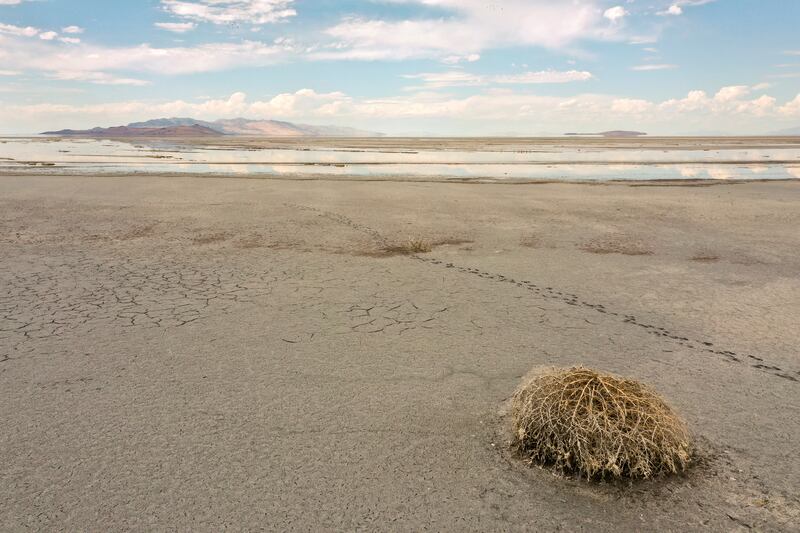
The problem: The Great Salt Lake is dangerously low. The Wasatch Front depends on rain and snowfall generated by the “lake effect” from the Great Salt Lake, around 5-8% of its annual precipitation. Toxic dust is blowing into populated areas from the dry lakebed.
The solution: Pumping water into the Bear and Weber Rivers would fill the Great Salt Lake, Salt Flats and Sevier basin. This would dramatically increase annual “lake effect” precipitation in Utah, lower high temperatures significantly along the Wasatch Front, and eliminate the toxic dust problem on the dry lakebeds.
Western cities don’t have enough water
The problem: Salt Lake City, LA, Vegas and Phoenix don’t have sufficient water for their populations. LA and Vegas buy water from the Colorado River.
The solution: Pumped water in the Green, Colorado, Weber and Bear Rivers would provide these areas with water and power. Revenue from selling water and power to these areas would offset the cost of the system.
Dry lakebeds increase temperatures
The problem: Rocks, sand and dirt in the dry lakebeds of the Mountain West absorb sunlight and re-radiate that energy as heat, which gets trapped by the greenhouse effect, increasing temperatures and reducing rainfall.
The solution: Numerous dry lakebeds could be filled. These lakes would decrease temperatures and increase rainfall and plant life. This new plant life would absorb millions of tons of CO2 and megawatts of sunlight and would eventually make the soil useable.
The potential for renewable liquid fuels
The problem: We need renewable liquid fuels. Battery technology is not sufficient for aviation applications, and EVs are range-limited.
The solution: Algae could be cultivated in these lakes to produce renewable methane, which could then be combined to form renewable gasoline, diesel and jet fuel. These renewable fuels are net zero, absorbing CO2 and solar energy. Revenue from this energy would offset the cost of the system.
In conclusion, there is a significant business case for pumping water into the Mountain West. Pumping water into these drainages would provide water for large population centers, enable increased hydropower generation, serve as a large battery to even out inconsistent green energy sources, reduce temperatures and increase rainfall over the Mountain West, eliminate dust from dry lakebeds, would fill the Great Salt Lake and several major reservoirs, and would enable the production of renewable hydrocarbon fuels at scale, making the aviation and transportation industries largely renewable.