
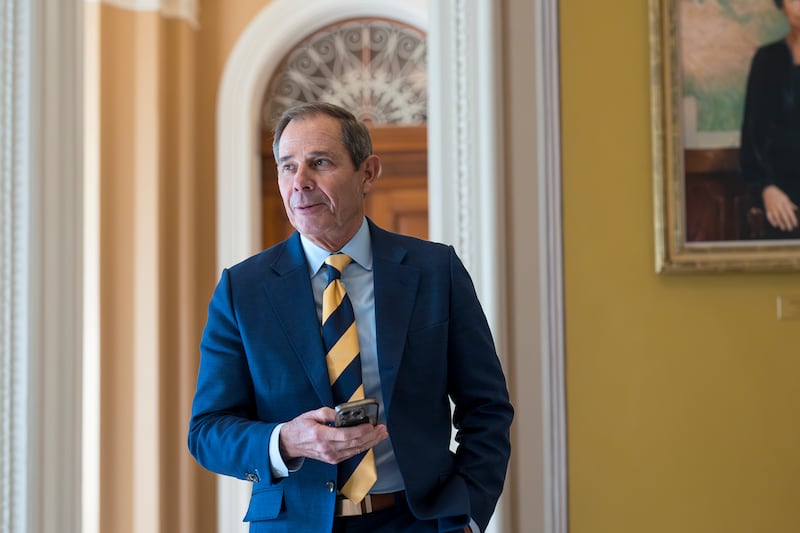

If I had to sum up my first year in the Senate, I’d say it’s been a year of contrasts. It’s been a year of loving my job and a year of sometimes just surviving it. A year of great accomplishments and a year of seeing all the things still left undone. I turned 65 this year, and I used to joke that I never really wanted to live past 65. Well, now that I’m here, I’ve decided 65 isn’t nearly as old as I once thought — although the fact that I just learned I’ll need hearing aids is a sure sign the warranty is starting to run out.
That aside, this year has been as humbling as it has been energizing. I’ve found that the Senate doesn’t so much change your values as it reveals them. It tests whether you’re here to make noise or to make a difference. I’ve learned that mediocrity is always just one rationalization away if you let it be.
Years ago, when I was mayor of Provo, I took a tour of the Capitol here in Washington, D.C. The guide told us we’d get to sit in the Senate Gallery and look down on the Senate floor. As things turned out, we couldn’t do that, but they cracked the door open for a second so we could peek in. I remember feeling awestruck just to catch a glimpse of the Senate floor. I never imagined I’d someday stand on that floor, giving a speech, and come and go as I please. That sense of awe stays with me every day, and it reminds me never to take this responsibility lightly.
In my first year, I’ve been surprised by just how much weight this office carries. I felt it as I voted to confirm members of the president’s cabinet, knowing the impact those choices would have on the nation. I saw it in how a single senator can shape reconciliation bills to influence the direction of our energy policy. I witnessed it firsthand presiding over the Senate as Cory Booker broke the filibuster record — an African American man surpassing the record previously set by a man arguing against civil rights for African Americans. I gaveled the Senate into the longest government shutdown in U.S. history — one that wasted billions in taxpayer dollars and precious time that could have been spent debating real solutions on health care. And I was there, counting the votes that finally released the Epstein files to the public.

My team and I have introduced meaningful legislation to protect our communities and improve lives. This includes my Fix Our Forests Act, which reforms how we manage our forests and reduces wildfire risk. We’ve expanded access to public lands, secured increased funding for Hill Air Force Base, worked to crack down on AI-powered robocallers, and advanced efforts to curb the harmful effects of social media algorithms that are driving division in our families and communities. We also added two new bills that rescind Biden-era rules to the 27 I have already gotten signed into law — one that blocked incentives for energy companies to lower their emissions, and another that restricted access to public lands.
I realized this year that much of the work in Washington is far more practical than people think. Most days are less about fireworks and more about steady cooperation to solve problems. I saw that Utah values like thrift, integrity and a relentless pursuit of truth are the best compass you can have in this place.
More importantly, I learned about myself. I discovered that at 65, I can still run as fast, lift as much and think like I did at 40, just with a little more wisdom and a dose of collagen every morning. I have realized that when I inevitably walk out of this Senate chapter someday, I want to do so with no regrets.
Because neither mediocrity nor drift is an option, I’m choosing to reimagine how we do things — from legislation to communication, from the public’s right to know to common-sense policies that deliver real results.
Looking ahead to next year, I’m not just focusing on big legislative battles like Social Security reform, energy independence, or holding social media companies and their algorithms accountable. I’m also committed to the small but vital, work that makes a real difference in people’s daily lives, solving the so-called “small problems” that are anything but small when you’re the one facing them. That means making sure we’re still the office people can count on to help with passports, navigate VA issues or sort out immigration challenges. We will continue to be recognized for excellence in that kind of hands-on service.
And just as importantly, I’m committed to staying rooted in Utah, being present, listening to Utahns, and making sure that the mindset I bring to Washington is always shaped by the values and common sense of the people who sent me here. After all, that’s where the real solutions and real results come from: staying connected to the people and the pioneer spirit that make Utah strong.
In the end, I’m grateful for this first year, contrasts and all. Every time I step onto the Senate floor, I remember that mayor who once peeked through a cracked door just to get a glimpse inside. That sense of awe should never wear off. As I head into year two, I’m committed to serving Utah and our nation with integrity, humility and a forward-thinking vision.
After all, as I’ve learned, sometimes the best part of the journey is realizing just how far you’ve come and how much more you still need to do.