


“We rise in power and make a difference in the world due to what is best about human nature, but we fall from power due to what is worst.”
Dacher Keltner captured a hard truth about leadership: The very qualities that lift people into positions of influence are often the ones that erode once they get there.
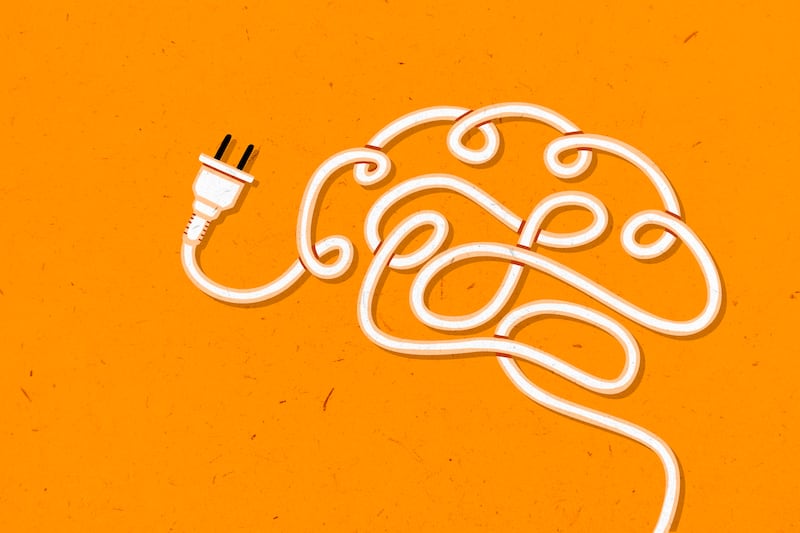
Pointedly, Keltner has compared the feeling of power to brain damage, noting that people with lots of authority tend to behave “like neurological patients with a damaged orbito-frontal lobe, a brain area that’s crucial for empathy and decision-making. Even the most virtuous people can be undone by the corner office.“
In other words, power can dull the very capacities that helped someone earn it in the first place. Even well-intentioned people aren’t immune to the literal brain damage that can come with power.
Most of us don’t need a neuroscience degree to recognize this pattern. We’ve all watched someone become less patient, less generous or less self-aware once they gained a title, a following or a little control. And this isn’t confined to politics or corporate leadership. You see it everywhere — in student organizations, nonprofit boards, neighborhood associations like HOAs and, yes, even sororities.
The old warning still holds true: Power corrupts and absolute power corrupts absolutely. In his book “The Power Paradox,” Keltner explains that influence is typically granted to those who improve the lives of others. Yet the experience of privilege itself can push people toward impulsive, entitled and ethically “sloppy” behavior. Power, paradoxically, carries the seeds of its own undoing.
“If power were a prescription drug,” begins a 2017 article in The Atlantic, “it would come with a long list of known side effects. It can intoxicate. It can corrupt. It can even make Henry Kissinger believe that he’s sexually magnetic.”
Poor Henry. But he illustrates one especially troubling consequence: a growing inability to see ourselves clearly. People in authority usually know what the right thing is, but they become remarkably skilled at justifying exceptions for themselves. Research shows that individuals who feel powerful judge others more harshly for rule-breaking than they judge themselves. When someone else speeds, it’s reckless. When they speed, it’s necessary. After all, they have important places to be.
This distorted self-perception shows up at the institutional level as well. A 2010 Wall Street Journal piece noted that those in power often overrate their own moral character, resist oversight and surround themselves with allies rather than critics. The result is a dangerous mix of confidence without accountability. Even worse, the same mindset that inflates moral self-assurance can also warp decision-making and information processing.
In my faith tradition, our founder Joseph Smith wrote from Liberty Jail in Missouri, and among the many rich doctrinal statements now included in the Doctrine and Covenants, Section 121, is this pertinent verse: “We have learned by sad experience that it is the nature and disposition of almost all men, as soon as they get a little authority, as they suppose, they will immediately begin to exercise unrighteous dominion.”
How to prevent power from corrupting your brain
So how can people in positions of influence guard against the mental and ethical blind spots that power creates?
Start by building a circle of truth-tellers — and actually listening to them. Encourage honesty, even when it stings. Not all your jokes are funny, not all your ideas are brilliant and sometimes you really need a breath mint. If all you have are yes-men and women around you, you are already in trouble.
Next, increase transparency. Make sure that corner office — literally or figuratively — has lots of windows. Don’t hide behind closed doors and get into situations where you act anonymously. Numerous studies have shown that when we think we are alone or that “no one will know,” we make some pretty bad decisions.
Third, anchor yourself to clear principles and refuse to bargain with them. Clayton Christensen, in his powerful little book “How Will You Measure Your Life,” shares, “It is easier to hold your principles 100 percent of the time than 98 percent of the time.” Once you begin making “small” exceptions, trust and integrity tend to unravel quickly.
Finally, practice real humility. Not the performative kind, but the kind that recognizes responsibility as inseparable from authority. As Spider-Man reminds us, “With great power comes great responsibility.”
Keltner observes: “Our influence, the lasting difference that we make in the world, is ultimately only as good as what others think of us. Having enduring power is a privilege that depends on other people continuing to give it to us.”
I think it’s also fair to say that we don’t have to continue giving unchecked power to those who have abused that privilege.