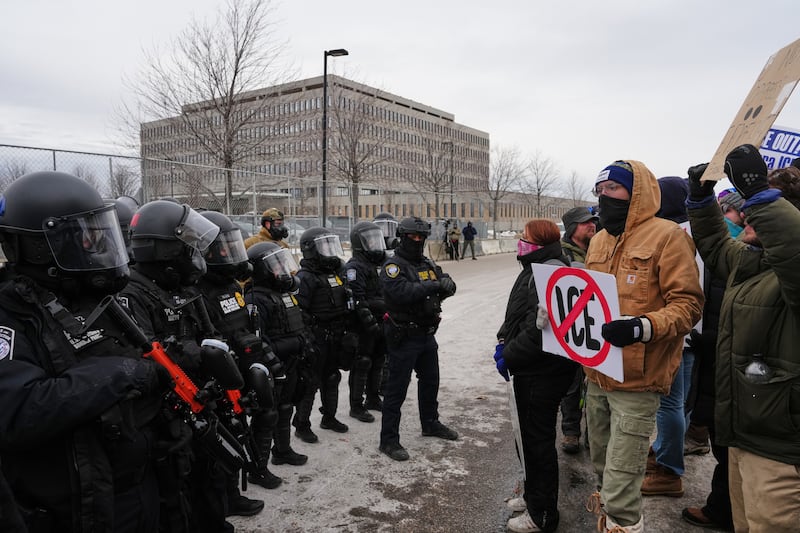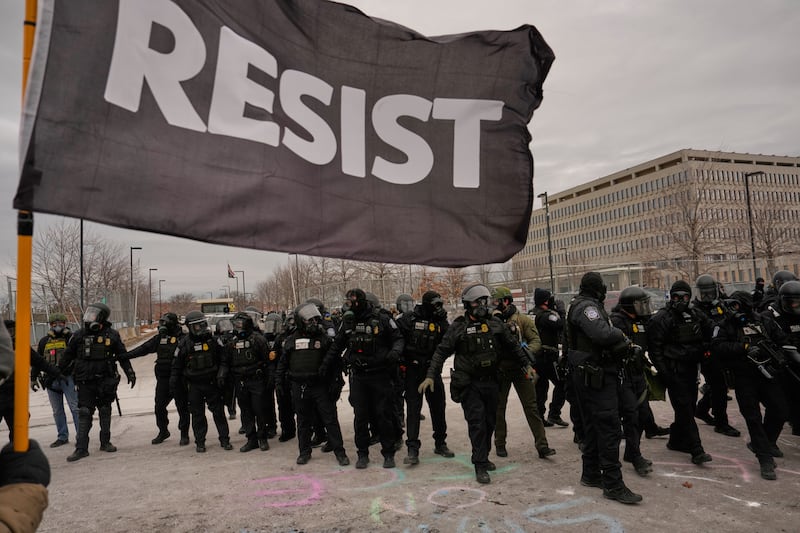

Renee Good did not set out to test the outer limits of free speech. She was a poet, a mother, and a school board member who, on a cold January morning in Minneapolis, encountered something many Americans now recognize immediately: unmarked federal vehicles, neighbors blowing whistles, phones raised to record, and the sudden arrival of U.S. Immigration and Customs Enforcement in a residential neighborhood.
After dropping her child off at school on Jan. 7, Good encountered U.S. Immigration and Customs Enforcement agents conducting an enforcement operation a few blocks from her home as she drove down a public street. Minutes later, Good was dead. A U.S. Immigration and Customs Enforcement agent fired three shots into her car during a confrontation on a public street.
Within days, federal officials labeled the incident “domestic terrorism,” defended the shooting, and deployed tear gas and pepper spray against protesters and students who returned to the streets, including near a public high school. Classes were canceled. Prosecutors resigned. And a chilling message settled over communities watching closely: protest near immigration enforcement had become dangerous.
Public discussion since has focused almost entirely on use of force — whether the agent reasonably feared for his life, whether a car can constitute a deadly weapon, whether the shooting was justified under the Fourth Amendment.
Those questions matter. But they obscure a deeper and largely unexplored constitutional issue. Namely: What happens to the First Amendment when protest collides with immigration enforcement?
For decades, the Supreme Court has treated verbal opposition to law enforcement as core protected speech. In City of Houston v. Hill, the Court put it plainly:
“The Constitution does not allow such speech to be made a crime. The freedom of individuals verbally to oppose or challenge police action without thereby risking arrest is one of the principal characteristics by which we distinguish a free nation from a police state.”
That principle is not rhetorical flourish. It reflects a judgment about democratic identity. Free societies tolerate dissent directed at the state itself, even when that dissent is angry, disruptive, or deeply uncomfortable.
Immigration protests test that commitment because they unfold in volatile settings. They take place on streets and sidewalks during active enforcement, where civilians watch and record as the government exercises one of its most coercive powers. The speech is confrontational by design. The discomfort is the point.
Shouting at agents, criticizing their actions, demanding that they leave a neighborhood — none of this loses constitutional protection simply because officers find it hostile or distracting. Nor does the protection evaporate because the subject is immigration rather than some less politically charged issue.

The line between order and suppression
The First Amendment does not protect everything that happens at a protest. The law draws a line between speech and conduct, and that line becomes critical when emotions run high. Chanting, filming and verbal confrontation are protected. Yet physical obstruction that creates genuine safety risks may be regulated, even in public forums.
The hard question is not whether limits exist. It is how they are enforced.
In the Good incident, her car was positioned in the street, partially obstructing traffic. That fact matters. But regulation is not escalation. The Constitution does not treat every act of civil disobedience as a lethal threat. Video shows other vehicles maneuvering around her car, verbal exchanges that were plainly protected and an agent approaching while recording on his phone. Seconds later, he fired.
The car’s trajectory was ambiguous enough to support competing accounts of whether it posed an actual threat, or whether the moment reflected confusion rather than imminent danger.
Even if one accepts that obstruction can be regulated, the central question here is whether Good’s actions could reasonably have been perceived as the use of deadly force rather than as expressive or obstructive conduct. That question cannot be brushed aside: a moving vehicle can, in some circumstances, constitute a lethal threat.
But when the facts plausibly support competing interpretations — protest-related obstruction on the one hand, imminent danger on the other — the use of deadly force carries constitutional consequences far beyond this incident. It signals to others that participation itself, including watching, filming, or speaking, may carry extreme risk.
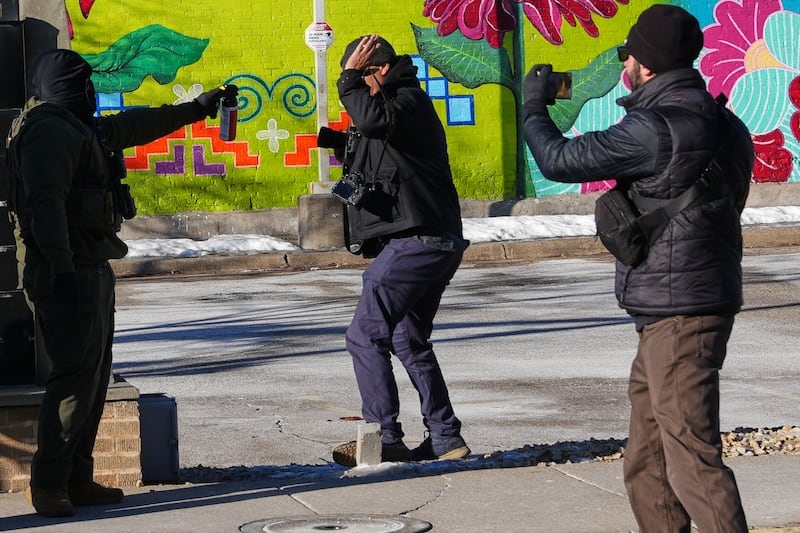
That chilling effect deepened in the days that followed. Federal agents deployed chemical agents to disperse crowds, treating entire gatherings as threats rather than distinguishing between unlawful conduct and protected dissent. The Supreme Court has repeatedly warned against this kind of collective suppression. Unlawful acts by some do not erase the First Amendment rights of others.
There is also the unresolved problem of retaliation. When protest activity aimed at immigration enforcement draws harsher responses than comparable conduct elsewhere, constitutional suspicion is unavoidable. The First Amendment forbids the state from using its enforcement power to punish disfavored viewpoints. Labeling civilian monitoring and protest as “domestic terrorism” risks collapsing that distinction altogether.
None of this denies the real dangers immigration officers face. Vehicles can be weapons. Officers make split-second decisions under stress. The Constitution does not require agents to absorb genuine threats without response. But it does require restraint, especially when enforcement unfolds amid constitutionally protected dissent.
It goes without saying that authority does not include a right to silence critics.
What makes Renee Good’s death so unsettling is not only the loss of life, but the precedent it threatens to set. If protest near immigration enforcement is treated as inherently dangerous, then the First Amendment shrinks at precisely the moment when its protections are most needed.
The Constitution does not guarantee order or efficiency. It guarantees space for speech, for protest, for communities to bear witness when the state exercises its most formidable powers. Immigration enforcement may require authority. But it does not require a protest-free zone.
The unresolved question after Minneapolis is not just whether a single shooting was justified. It is whether dissent remains a protected constitutional act, or whether it is only tolerated when it is quiet, distant, and safely removed from the officials it challenges.
That question has received far less attention than it deserves. And it may ultimately matter more than any single verdict.