

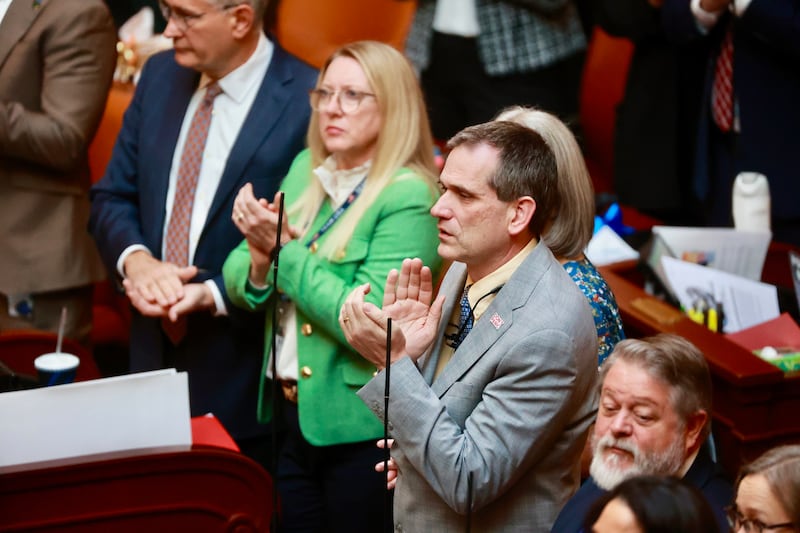


The 2026 general session of the Utah State Legislature convened this week. For politicos, it’s a buffet of policy, politics, frustration and entertainment. For us, it reveals trends that are occurring not just statewide but also across the country. The several hundred bills already filed reveal some interesting developments. We explain.
Economic populism and affordability
Donald Trump received significant attention for his not-so-business-friendly proclamations on social media, proposing interest rate caps on credit cards, attacking insurance companies and recommending various government interventions in the economy. The same dynamic is happening in Utah, and is a House GOP caucus priority. Examples include:
Gasoline tax changes
Republican legislators expressed frustration over Utah’s average fuel price, which is higher than the national average during the summer, yet lower in the winter. Legislation is percolating that will restructure how gas taxes are paid, which is intended to affect producers and retailers directly but will surely impact consumers at the pump. Arguments abound on whether unintended consequences will result.
Digital ads tax
Utah Gov. Spencer Cox and Sen. Mike McKell have been vocal in their criticism of tech companies. Like other proposed tax shifts, it may be well-intentioned or even Robin Hood-esque — charging the big, bad tech corporations to benefit Utahns. But small businesses that rely on online ads to reach customers may experience increased costs.
Property tax shift
Currently, Utah homeowners only pay 55% of the assessed value on their primary residences. There is a movement among the GOP to decrease this to 40% to help with affordability. However, to keep the revenue stream consistent, businesses would shoulder the extra tax burden. An informal coalition of some Republicans and Democrats concerned with the cost shift to commercial enterprises may be developing to oppose the bill.
Budgetary constraints
For many years, the only issue for Utah lawmakers’ appropriations activities was how to spend the extra dollars. Not this session. Because of the federal “Big Beautiful Bill,” income tax receipts will be lower, and a cooling economy will further dampen all receipts. This new fiscal environment is spurring controversies.
5% cut
Not only are Utah lawmakers inherently frugal, but the state constitution also requires the Legislature to balance the budget. In anticipation of a possible worst-case budget scenario, lawmakers asked all state agencies to develop budgets that anticipate a 5% reduction. While this full amount is unlikely to be implemented, it will lead lawmakers to examine and question the necessity of various programs.
The appropriations process
Because the true reality of the fiscal situation will not be revealed until February, lawmakers will conduct the normal appropriations process and prioritize new spending requests. This will be performed with the understanding that everything depends on the final revenue numbers revealed in February, which could be depressing or exciting for many.
Amendment A repeat?
Two years ago, lawmakers approved the constitutional amendment eliminating the requirement that income tax dollars be allocated towards education and certain Medicaid programs, but it was removed from the ballot by the Supreme Court for technical reasons. Will the unusual 2026 fiscal environment foster a similar amendment?
Redistricting saga continues
During the session, there will likely be a Utah Supreme Court review of Judge Gibson’s congressional map selection. Also, we will learn in February if local Republicans secured enough signatures to place the repeal of Better Boundaries on the November ballot. Both matters will place Utah in the national political spotlight … again.
Judicial reform
Judges are still in the crosshairs of the Legislature. Rep. Jason Kyle has introduced a bill that raises the vote threshold for judicial retentions to 67%. Rep. Walt Brooks proposes a constitutional amendment that authorizes the Legislature to develop a special retention process for judges. The media has focused on Gov. Cox’s request to expand the Utah Supreme Court to seven justices to assist the judicial deliberations of a growing state. Because the Court did not request this, there are allegations of “court packing.” However, several states of similar size to Utah have seven justices.
Technology
AI will be a focus of many this session, with several bills already introduced and several more likely to drop. Rep. Ariel Defay’s bill requires disclosure of content created by AI and implements takedown rights for individuals being impersonated by AI. Another will focus on chatbots or AI companions, putting parameters around lawful conduct with minors intended to safeguard their mental health. Rep. Doug Fiefia has a bill that creates protections for whistleblowers and requires AI developers to publish child safety plans and risk assessments. Sen. Lincoln Fillmore has a bill creating a “bell-to-bell” ban on cell phones in K-12. Another bill creates restrictions on in-classroom technology and computers in early grades, opting for more traditional teaching aids in these formative years. Sen. Chris Wilson has introduced a bill adding a tax to online streaming subscription services.
Immigration
Virtue signaling, by both parties, is a staple of the legislative session. Rep. Trevor Lee has introduced a bill that would prevent immigrants in the country illegally from accessing taxpayer-funded benefits. Juxtaposed to Rep. Lee’s bill is Sen. Nate Blouin’s bill, which prohibits local law enforcement from aiding federal immigration officers in places of worship or from wearing facial coverings.
DISCLAIMER: Our firm represents several companies impacted by several bills mentioned in this column.