
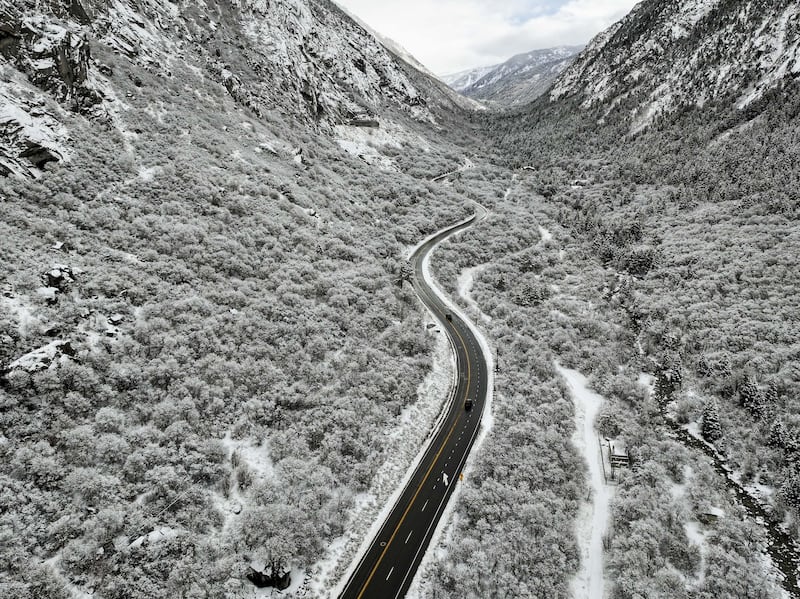
Big and Little Cottonwood Canyons are known worldwide as the sole access to some of the greatest skiing and snowboarding on earth. What’s lesser known is that our canyons are watersheds that supply drinking water to over a million Utahns, a place where families recreate year-round and a critical route for emergency response. Anyone who has spent time stuck in canyon traffic knows the current situation isn’t working effectively — for residents, visitors or the canyons themselves.
That’s why our communities — Sandy City, Cottonwood Heights, and the Towns of Alta and Brighton — are closely engaged in the environmental assessment process for proposed transportation solutions in Big Cottonwood Canyon. We appreciate UDOT and the U.S. Forest Service for looking at multimodal options such as enhanced bus service, tolling and mobility hubs. We agree that doing nothing is not an option. How these tools are implemented will determine whether they actually solve problems or simply shift them elsewhere.
First, protecting the watershed must remain the top priority. The Cottonwood Canyons provide a pristine drinking water supply, with water reaching homes in the Salt Lake Valley within hours. Transportation improvements should be implemented with preestablished monitoring and tracking systems in place to prevent potential pollutants from entering the canyon water supply. If those levels are exceeded, mitigation measures will be enforced by the appropriate state or federal agency. Strong, enforceable mitigation measures — and long-term monitoring — are essential to protect this irreplaceable resource.

Second, Big and Little Cottonwood Canyons must be planned and operated together. Treating them as separate systems risks pushing congestion from one canyon to the other, increasing traffic on Wasatch Boulevard and through nearby neighborhoods. The Utah Legislature recognized this reality when it directed UDOT to pursue coordinated solutions for both canyons. We strongly support a single, unified approach that aligns timing, operations, pricing and public messaging so that travelers experience a consistent, predictable system — and so congestion is reduced, not relocated.
Third, transit must come first. We wholly support increased busing in the canyons as announced by UDOT on Dec. 17, 2025 in an effort to reduce the number of vehicles entering Little Cottonwood Canyon and anticipate UDOT following suit in Big Cottonwood Canyon. Before the activation of tolling, bus service must be frequent, established and reliable, especially during peak winter weekends. Tolling should be clear, congestion-based and flexible, with defined performance measures and the ability to adjust if unintended impacts occur. It should incentivize transit use and higher-occupancy vehicles — not function primarily as a revenue tool. Traffic conditions outside the canyons should be monitored closely to ensure surrounding communities are not negatively affected.
Finally, mobility hubs and transit infrastructure must work for the entire region. A new mobility hub in Cottonwood Heights and the existing UTA Park & Ride in Sandy should connect seamlessly to existing bus and rail networks, accommodate carpools and rideshare, and provide safe access for pedestrians and cyclists. Each mobility hub and transit stop should be appropriately equipped with sanitary restrooms and shelter from the elements. Additional valleywide mobility hubs should be part of the broader system so visitors have real choices before they reach the mouth of the canyons. Along with UDOT, it is our desire to see measures implemented that result in fewer cars entering the canyons, not simply as an attempt to manage traffic when roads are already over capacity. Managing vehicle volumes must go hand in hand with managing recreation impacts to keep the canyons within their safe and sustainable carrying capacity.

We believe a coordinated, transit-focused strategy — implemented thoughtfully across both Cottonwood Canyons — can improve safety, protect our watershed, support recreation and preserve the character of our mountain communities. Getting this right matters not just to those who live and work in the canyons but also to everyone who depends on clean water, functional transportation and access to these treasured public lands.
We look forward to continued collaboration as this important work moves forward.
Gay Lynn Bennion represented Cottonwood Heights at the state Capitol for five years. She is beginning her first term as mayor of Cottonwood Heights. She enjoys hiking, biking and skiing.
Monica Zoltanski is beginning her second term as Sandy City mayor. She is an attorney, former small-business owner and avid equestrian.
Roger Bourke is the mayor of Alta, just starting his second term. He moved to Alta in 2000, having retired from a career with NASA in space exploration. He started skiing at Alta in the 1960s.
Scotty John is beginning his first term as mayor of the Town of Brighton and was active on Brighton’s community council prior to its incorporation. He and his family are avid skiers.