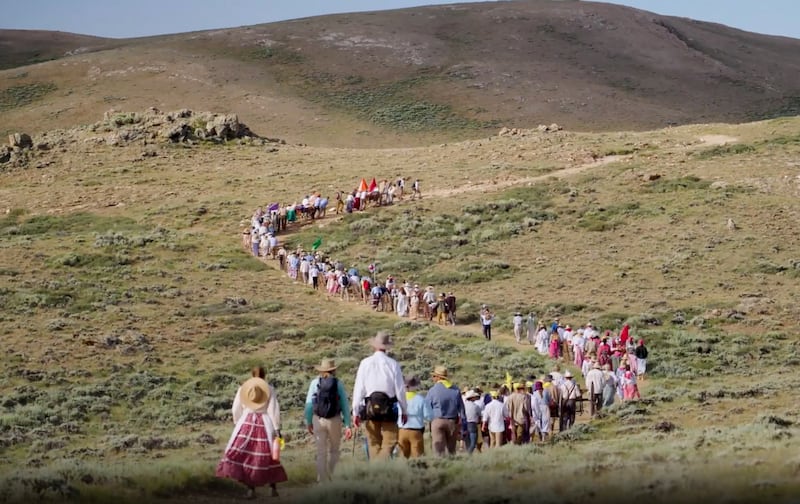
Every generation inherits something it did not build. Utah’s pioneers inherited a desert and left behind a community. Today’s leaders have inherited something far more complex: institutions, markets, technologies and influence that earlier generations could scarcely imagine.
The question before us is not whether we will grow. Utah has proven it knows how to grow. The question is whether we will sustain the community that made that growth possible.
Frontier stewardship was never just about land or water. It was about people. On the trail, no one survived alone. Strength was measured not by how fast you moved ahead but by how many you helped along the way. Those who arrived first returned to help others, out of charity and out of necessity. The community moved together or it didn’t move at all.
That lesson still applies.
We — the authors — lead in different sectors: civic leadership, financial services, and aerospace and defense. Our industries operate on different timelines and speak different technical languages. But we are united by a shared inheritance and a shared responsibility.
More than a century ago, business leaders recognized that if Utah was going to endure, it needed institutions that thought beyond individual gain. The Salt Lake Chamber, founded in 1887, convened competitors around shared needs — rail, roads, utilities, airports, schools — not because cooperation was fashionable but because it was necessary. That ethic of coordination over chaos became part of Utah’s DNA.

It also laid the groundwork for Utah’s emergence as a national banking and financial services epicenter. Utah’s financial success came not from chasing risk but from managing it. When the state embraced the Industrial Loan Company charter, it built a regulatory environment defined by clarity, discipline and competence. Banks came to Utah not to avoid oversight but because of it. They found a workforce shaped by trust, a regulatory culture focused on safety and soundness, and a community that understood finance as a public good.
That same long-view stewardship explains Utah’s aerospace, defense and space ecosystem.
From early military aviation to Hill Air Force Base in 1940, Utah became a trusted partner in national defense. When priorities shifted, Utah adapted rather than collapsed. Today, Utah offers something rare: an end-to-end ecosystem from research and testing to manufacturing, powered by a mission-oriented workforce. In national security, trust is everything. Utah earned it the hard way, over decades.
But history alone will not carry us forward.
The next chapter of Utah’s story will be written by something more than infrastructure and institutions. It will be written by people and by how those with influence choose to lead. This is where frontier stewardship becomes personal.
As industry leaders, we benefit from ecosystems we did not build alone. With that inheritance comes obligation. Mentorship is not optional; it is the modern form of stewardship. Taking time to guide emerging leaders, opening doors quietly and sharing lessons learned the hard way.
In high-performing ecosystems, trust compounds faster than capital. People give their best work where they feel seen, valued and supported. Frontier communities learned quickly that cruelty was wasteful. Utah should not have to relearn that lesson.
We believe Utah is poised to become the nation’s premier ecosystem for finance, aerospace, defense, space and dual-use technology — not because we are the loudest or the largest, but because we understand something older and rarer: Growth that lasts is built by people who think and look beyond themselves.
The responsibility now rests with today’s leaders to ensure that the ladder remains firmly in place for those climbing behind us — to steward not just markets and missions but also people.
The frontier taught Utah how to survive. Stewardship taught it how to endure. The pioneers who reached safety first didn’t rest; they assisted those who followed. Today’s leaders must do the same. The success we’ve inherited means nothing if we don’t advance it into the next generation. So ask yourself: Who are you preparing to carry this vision forward?