

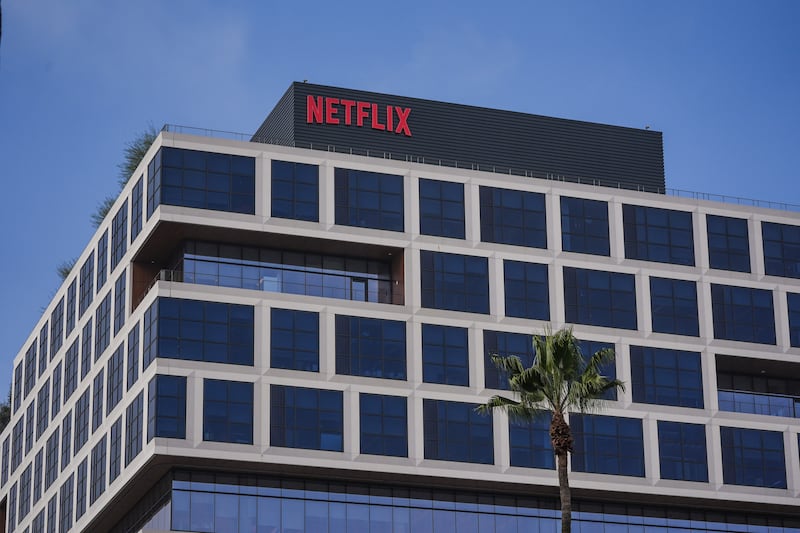

Warner Bros. Discovery’s announcement last month that it had accepted an offer to be acquired by Netflix sent shock waves from Hollywood to Washington. The merger, should it be approved, would transform the media and entertainment industry with potentially huge consequences for consumers.
A hearing this Tuesday before the U.S. Senate Judiciary Subcommittee that oversees antitrust and consumer rights issues — chaired by Utah Sen. Mike Lee — will offer a glimpse into whether Netflix’s proposed purchase is good for Americans or whether it should be thrown in the trash bin like a bad movie script.
In December, Sen. Lee cautioned that the merger raises “a lot of antitrust red flags,” but in a new letter to Netflix and Warner executives, our senator expressed concerns that the real purpose of the proposed merger may be a “killer non-acquisition.”
In other words, Sen. Lee worries that — given a prolonged antitrust approval period — Netflix’s interests may lie in “(tying) up a rival for an extended period, (weakening) that rival as a competitive constraint, or (obtaining) competitively sensitive information under the guise of due diligence.” Yes, Netflix would pay a hefty termination fee, but it is a small price to pay for paralyzing a rival.
After all, Netflix is already the largest subscription streaming video platform — by a mile, not an inch. To its credit, the company disrupted the traditional cable TV model and has ridden the wave brilliantly since. But that’s not to say its rapid ascension to the top of Tinseltown has been good for the entertainment industry, downstream businesses or ordinary families.
The streaming giant has used its weight to strong-arm virtually every piece of the media and entertainment industry, from dictating what films and shows get made to pulling the profits out from under theaters and distributors. But most alarming is its control over customers, who could find themselves even more cuffed to the “stream-opoly” if the sale is allowed to proceed.
With 325 million subscribers at the close of last year, Netflix enjoys nearly 50% more users than the next nearest competitor, Amazon Prime Video. And that’s hardly an apples-to-apples comparison. For Amazon, streaming video is just one of many services to recruit and retain users in its Prime memberships. Compared to the next closest “pure” streamer, Disney+, Netflix has almost 250% more subscribers.
That dominance gives Netflix tremendous discretion over the content viewers see and the prices they pay. The company has steadily hiked its rates — a standard plan that cost $8 in 2014 now runs $18 per month — and as one commentator noted, not because it needs to, but “because it can.”
Armed with Warner’s impressive content catalog — which includes many popular titles, from “Casablanca” to “Harry Potter” — Netflix would gain even greater leverage to require users to pay up or miss out.
Competition is good for consumers, especially in media. A robust marketplace invites new and dissenting voices, gives viewers options and helps keep prices low. If MSNBC or CNN were the only news outlets, Americans would receive a very biased take on current events. The streaming space is no different. If one or even a few powerful companies control what subscribers see, they will have immense ability to shape culture.
However, Sen. Lee explains that Netflix’s acquisition of Warner Bros. Discovery would risk “lessening competition in the streaming markets … (and) eliminate a major competitor, consolidate control over an extensive content library, and increase bargaining power over creators and talent.”
As Congress wades into Netflix’s proposed acquisition, I expect and trust that Sen. Lee and his colleagues will carefully consider the impact it would have on ordinary families. It’s not often that President Trump and Sen. Elizabeth Warren agree. That they do on this deal demonstrates what a calamity it would be for one of America’s most cherished industries, our economy and, most importantly, consumers.