

“Shhhh… the baby’s sleeping.” I can still remember sitting in my grandparents’ small kitchen in their Queens apartment, as my Aunt Sally — actually my grandmother’s sister — kept insisting that my sister and I (maybe ages 6 and 4) should stop being so loud because of the “baby.”
“There’s no baby,” we told her, laughing louder and louder each time she insisted on the existence of this imaginary being in the next room.
Aunt Sally was a fixture of my childhood, my favorite aunt. She never married and had no children of her own, but she was beloved by generations of nieces and nephews.
When my mother was young, Sally lived with her family. And when my mother and her brother got older, Sally moved around the corner. She had a career as a bookkeeper and I’m sure she had lovely friends too, but I can only imagine her as a constant presence in the lives of her sister’s family and those of her two brothers too. Whenever tragedy struck in the extended family, she was a reassuring presence. I felt lucky when she came to my house and would sleep in the extra bed in my room. She has a great-niece and a great-great-niece who are named after her.
To modern sensibilities, Sally’s life perhaps will seem circumscribed. Was she simply a lone satellite orbiting the planets of her siblings’ families? I never asked her. But when she died, she was surrounded by loved ones and if she had suffered from any kind of long illness, family members might have fought over who would have the privilege of caring for her.
There were other aunts in my orbit, and when I was in my late 20s, my Aunt Julia got sick. Julia was actually my grandmother’s cousin. When I first moved to New York, she let me stay in the extra bedroom in her Manhattan apartment for a summer. She was an advertising executive whose clients included Leona Helmsley. She was married late in life to a man who already had two teenage sons. Her relationship with them was strained. As adults they moved across the country. She was a widow within a couple of decades.
Julia was great fun. We would both come home from work — she went to the office well into her 70s — and sip gin and tonics while watching “Jeopardy” and “Wheel of Fortune.” She would take me to great restaurants and “Mostly Mozart” concerts at Lincoln Center and musicals on Broadway. She loved her life. She was not close to anyone else in the family except her single, childless sister who passed away before she did.
When I moved to the suburbs and had children, I saw Julia less frequently, but would still come visit. One day I came to find her looking very ill, speaking incoherently. Her apartment was in disarray. I called an ambulance over her objections. Soon I was being asked to sign a health care proxy. Over the next few weeks, with Julia in the hospital, I kept calling her stepsons, reiterating to them how they needed to come and take charge. I tried to deal with her bills and her apartment and all sorts of paperwork, visiting her when I could. Eventually, the stepsons arrived, and they accused me of trying to steal her money.
Who was responsible for Julia? Had she ever imagined the time when she would need others to take care of her? Why didn’t she plan for it?
Which brings me to a few months ago, when I signed a power of attorney form for Aunt Susan, my father’s sister, who was diagnosed with Alzheimer’s. How was I back here again?
Aunt Susan was divorced and childless. She loved her life, to hear her tell it. She was a speech pathologist for little kids. She lived in Manhattan and traveled and had friends and belonged to a synagogue. She liked to talk to her nieces and nephews and great nieces and nephews, but we saw her rarely. She did not reveal her diagnosis to anyone in her family until she was already forgetting important things and should not have been living alone.
Did she worry we would try to take away her independence? Did she think her friends would care for her? It is hard to know. A friend of hers recently told me that Susan had come to visit her in California two years ago and she already showed signs of confusion, but the friend didn’t know who to call. And so she did nothing.
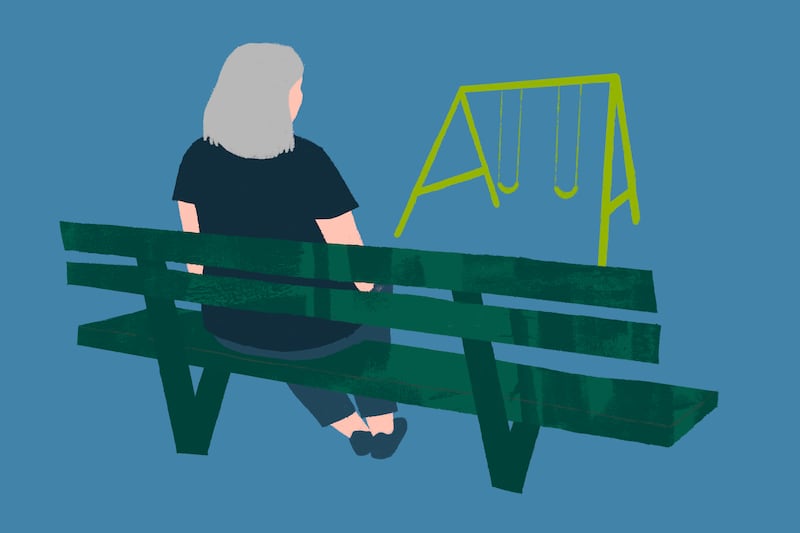
Our declining birth rates mean that there will be many more aunts like mine in many more families. These are not “childless cat ladies” to be derided, as our vice president once did when he was a senator. They are women who have been told by our culture that they can find fulfillment on their own — or maybe with a partner — in their careers. They are told that relationships with their siblings are “toxic” and that they can cut off family members (or that family members can cut them off) without any negative consequences. And they are told that friends can replace their family.
Perhaps this works out for some women. And perhaps being like my Aunt Sally and feeling like an appendage on someone else’s nuclear family is not appealing. But it was something.
I don’t know how to change the messaging to young women. No one wants to live their whole life just to prepare for their final years. But the alternative seems tragic.