



- Compared to the 1970s, the United States is now one of the world's largest oil producers, and the shale industry can respond relatively quickly when prices rise.
- These changes in oil production across decades are sometimes overlooked by those fearing a spike in oil price might push the U.S. economy into a recession.
- Yet real risks still remain in the current war with Iran that a sharp rise in global energy prices could still slow growth abroad and weaken demand for U.S. exports.
- And at a moment when firms are already struggling to navigate shifting trade policies, geopolitical conflict can deepen uncertainty and discourage long-term business investment.
When conflict erupts in the Middle East, economists brace for the same outcome: an oil price spike that threatens to send the U.S. economy into recession.
That logic made sense in 1974, but makes much less sense today. The United States is now one of the world’s largest oil producers, and the shale industry can respond relatively quickly when prices rise.
If war with Iran harms the U.S. economy, it will likely do so less through gasoline prices and more through uncertainty and weaker global demand.
The conventional story about oil shocks comes from an era when the United States was heavily dependent on imported energy. When oil prices rose, the country effectively transferred income abroad.
Consumers paid more for gasoline and heating, firms faced higher production costs, and the economy slowed. The result was the painful combination of inflation and recession associated with the oil shocks of the 1970s.
Changes in oil production today
The structure of the energy market is very different today. The shale revolution transformed the United States into one of the world’s largest oil producers. Advances in hydraulic fracturing and horizontal drilling unlocked enormous reserves in regions like the Permian Basin in western Texas.
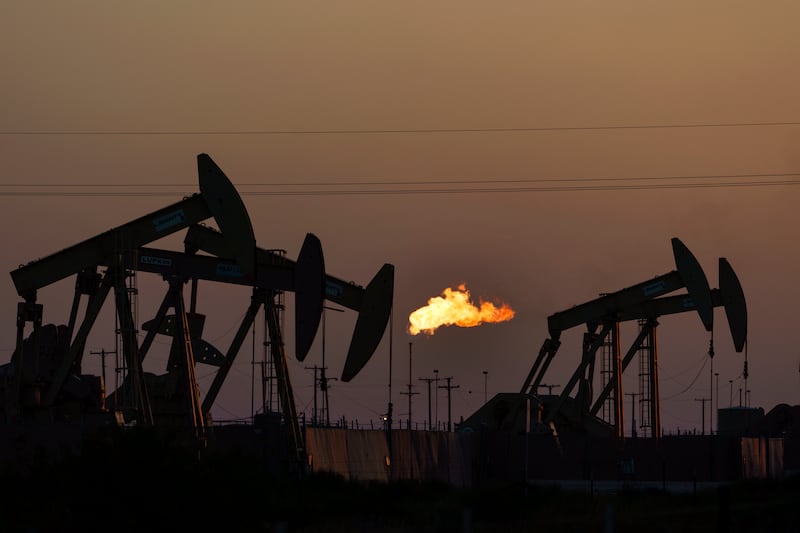
As a result, the United States now plays a central role on the supply side of the global oil market. This supply response is unusually elastic: Shale wells can be brought online much faster than traditional oil projects, so price increases tend to generate new domestic production relatively quickly.
For these reasons, rising oil prices now redistribute income within the United States rather than simply draining it abroad. Consumers lose purchasing power at the pump, but energy producers gain revenue and increase investment.
The net effect on the overall economy is smaller than it was when the United States depended heavily on imports. Certainly, oil remains a globally traded commodity and domestic gasoline prices still move with the world market — but the United States is simply less vulnerable to oil price shocks than it once was.
Broader global economic risk
The larger economic risk lies elsewhere: in the global economy. Many major economies today remain far more dependent than the U.S. on imported energy. Higher oil prices act as a tax on those economies, raising production costs, squeezing household budgets and slowing growth.
When economic activity weakens abroad, demand for U.S. exports falls, manufacturing output slows and multinational firms face lower sales. In this sense, the most important channel through which an oil shock can affect the U.S. economy may be global demand rather than domestic energy costs.
But even that channel may not be the most immediate threat. The more pervasive risk is uncertainty.
Wars introduce uncertainty about energy prices, trade routes, sanctions and geopolitical alliances. When uncertainty rises, businesses delay large investments and wait for clearer signals.
That dynamic is particularly relevant now, because firms are already contending with an unusual degree of policy instability. In recent months they have been whipsawed by rapid shifts in trade policy, with new tariffs, retaliatory measures and frequent revisions to the rules governing international commerce. Companies planning investments in supply chains, manufacturing facilities or export markets have had to repeatedly revise their expectations.
A major geopolitical conflict layered on top of that existing uncertainty could further dampen investment. Firms considering new factories or cross-border ventures may postpone those decisions until conditions clarify.
Financial markets reinforce this dynamic: Geopolitical tensions increase volatility and risk premiums, raising the cost of capital. Higher financing costs and uncertain demand feed on each other, discouraging the capital formation that sustains long-run growth.

Key indicators to watch
This is why the right indicators to watch are not the ones that dominated coverage in the 1970s. Headline inflation will rise if energy prices spike, but that number is noisy; it captures the direct cost of oil without distinguishing whether the broader economy is buckling.
More telling will be trends in private business investment and hiring. If firms are absorbing the shock and pressing forward, investment in equipment, structures and new capacity will hold up, and payroll growth will remain steady outside the energy sector.
If uncertainty is doing real damage, however, those figures will soften first, quietly, before they show up in GDP.
The United States is better positioned to absorb higher energy prices than it was decades ago. But that resilience doesn’t eliminate the risks. A sharp rise in global energy prices could still slow growth abroad and weaken demand for U.S. exports. And geopolitical conflict could deepen the uncertainty already weighing on business investment.
At a moment when firms are already struggling to navigate shifting trade policies, another source of instability could discourage the long-term investment that drives growth. The most significant economic cost of war may emerge not at the gas pump, but in the accumulation of deferred expansions and abandoned plans as businesses decide that waiting is safer than acting.