

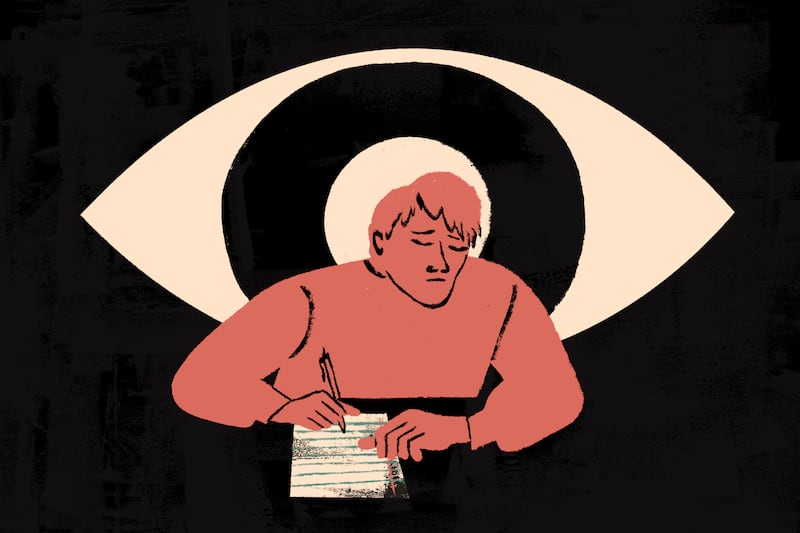

Is it time to get rid of homework? The campaign against the practice has been gaining momentum for decades, but according to a new survey, it has been accelerating since the pandemic.
Research from EdWeek Research Center found that in the past two years, 40% of teachers have assigned less homework, 33% assigned the same amount and only 3% said they increased it. Nearly a quarter of teachers assigned no homework at all.
I used to be firmly on the pro-homework side of this battle. I thought it was useful for kids to try out some tasks on their own, not just under a teacher’s watchful eye. I thought homework helped build time management skills and independence.
Yes, it’s true, many of these assignments were busy work. Or they became opportunities for parental involvement, which could put kids who don’t have parents at home at a disadvantage. But especially for longer assignments like essays and research papers, homework allowed students to have more time to think and write.
In the age of AI, this has become all but impossible. Teachers from elementary school through college have become frustrated by the frequency with which students are using AI to do their homework. My children’s classmates are shameless about it — publicly acknowledging what they’re doing in earshot of teachers and administrators. When caught, they will often freely admit it. Meanwhile, students who don’t use AI feel duped.
One obvious solution, as Charles Lehman writes in a recent column, is better enforcement. “The cheating crisis is not the result of forces beyond our control, but of our unwillingness to exercise control in the first place,” he says. He recommends, for instance: “Top universities need to think about expelling not just one or two students, but 10, 50, or even 100. That will send a clear signal to their peers that they can no longer get away with rule breaking.”
No doubt. And the first step is supervision. Everyone agrees that effective teaching in the age of AI will require more in-class assignments, maybe even with pen and paper, or at least technology that will block the use of these tools. What I don’t think people realize is just how much structural change will be required to achieve this.
First, the school day will have to be longer. If we want to make sure we are not sacrificing what little instructional time teachers have, then students will need extra hours in order to complete — under supervision — what they might once have been asked to do at home. For elementary school this could be half an hour. For high school it could be more than an hour a day. Will it be possible for anyone to write a research paper anymore? Some will argue it won’t even be necessary thanks to the robots who will take over the world. But writing improves thinking and it is hard to replace sitting down with a blank screen or pad and some books or articles to practice formulating a coherent argument.
And what about college? There is so little class time already. Colleges that are serious about challenging students should consider having proctored classrooms available all day long — maybe all night too, given college students’ sleep habits. Students can go to these rooms to complete the assignments they would have done as homework before. Maybe they will be shorter pieces of work. Maybe students will simply have to leave their phones and laptops and iPads somewhere else.
In some classes, of course, it is easy to check whether students are doing the work based on how they perform on exams. If you have AI complete your physics problem sets every week, chances are the final is not going to go well. But writing papers is different. And it would be good for students to spend at least one additional class period per week doing writing for each class.
Students will complain about this burden — they have gotten used to completing assignments in bed, in coffee shops, under a tree. They will not have as much freedom and flexibility in their schedules. Schools will have to pay a little extra for this supervision. Professors may have to grade more short assignments, rather than one or two long ones.
We may never get back to the days where classrooms of students can be assigned long research papers. And when they get into the “real world” there may be even fewer checks on their habits. But if schools are still tasked with getting students to read and write and think, they have to do something different. This is a start.