

Ukraine has quietly become one of the world’s most important laboratories of modern resilience: militarily, technologically, medically and spiritually.
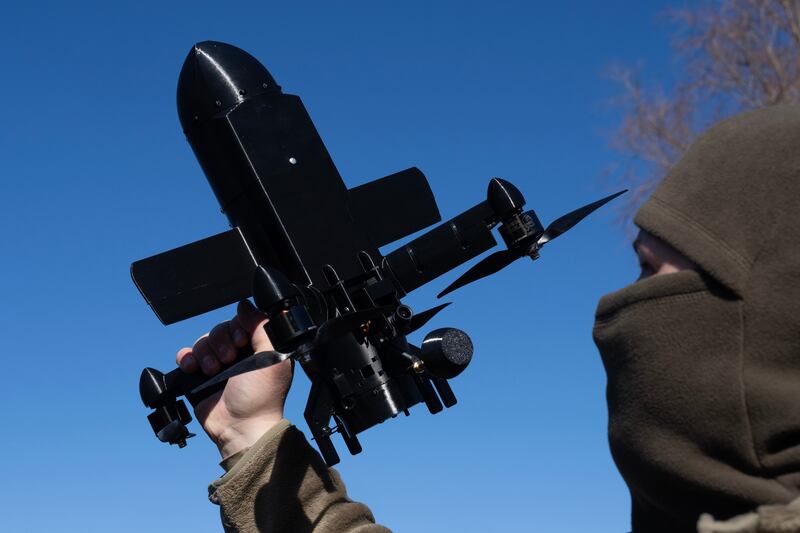
Ukrainian defense specialists have begun assisting U.S. bases in the Middle East and sending teams to several Gulf states to share expertise on defending against Iranian drone attacks. No country on earth has more real-time experience defending against Iranian-designed drones than Ukraine. What began as a desperate fight for survival has produced a generation of experts in modern warfare.
The implications extend beyond Ukraine itself. The technologies and defensive strategies being refined on Ukrainian battlefields are already shaping how NATO and the United States think about warfare. In many ways, Ukraine is becoming the testing ground for the conflicts that democratic nations may face in the decades ahead.
But Ukraine’s emerging leadership goes far beyond the battlefield.
During several recent trips to Ukraine, I met psychologists helping thousands of civilians and soldiers process trauma that most Americans can barely imagine. The scale of this war is staggering. Hundreds of thousands of military and civilian lives have been lost, and many others disfigured. Millions of people have been displaced. Many families are separated, while those who remain in the country live under the constant threat of missile attacks.
Yet hospitals and clinics remain open, treating children who have survived occupation, parents grieving sons and daughters lost at the front and soldiers returning home after months of enduring living hell.
These professionals are developing trauma-care approaches that the rest of the world will need. Wars, disasters and mass displacement are increasing globally. Ukrainian psychologists are learning, through painful necessity, how to help entire communities endure and rebuild after prolonged violence.
I have also spent time with pastors serving near the front lines. Many of their churches have become informal community centers, shelters and grief counseling spaces. They bury the dead, comfort the wounded, christen children and remind exhausted communities of their dignity and humanity.
At one of these churches outside of Kharkiv, our Renewal team met with veterans and volunteers who serve veterans and their families. The work of these pastors and volunteers is not theoretical theology; it is real-time spiritual triage.
Perhaps most striking were the chaplains that our team recently trained in Kyiv. These men and women walk daily into some of the darkest spaces imaginable — battlefields, military hospitals and rehabilitation centers filled with soldiers who have lost limbs and friends.
In a place where there are not enough caregivers, chaplains listen to the questions that surface when life is stripped to its essentials: Am I wanted? Why am I alive when others died? What does forgiveness look like after atrocities? How do you return to your family after months of violence?
These Ukrainian chaplains are developing models of spiritual and emotional care that military forces around the world will eventually study and apply.
None of this expertise was sought out or learned in textbooks. It was forced upon them.
But history often works this way. Nations that endure profound suffering sometimes become the teachers that the world later turns to.
Israel’s trauma medicine reshaped emergency care after decades of conflict. Bosnia helped refine international peacekeeping models. Rwanda became a global case study in reconciliation after genocide. Ukraine will soon join that list.
The country is rapidly becoming a hub for innovation in drone warfare, battlefield medicine, prosthetics, trauma rehabilitation and community rebuilding. Ukrainian engineers are adapting technology at wartime speed. Medical teams are advancing techniques for treating catastrophic injuries. Civil leaders are learning how to maintain democratic institutions under existential threat.
In short, Ukraine is learning how a nation survives, restructures and rebuilds, and it’s writing the playbook for how modern societies survive prolonged war.
If the world hopes to benefit from Ukraine’s hard-earned expertise, it must remain committed to helping end a war that currently has no clear end in sight.
Every innovation has been purchased with blood and grief, which is why the West cannot afford to simply move on.
If the world hopes to benefit from Ukraine’s hard-earned expertise, it must remain committed to helping end a war that currently has no clear end in sight. Supporting Ukraine is not only about defending international law or resisting authoritarian aggression — although both remain critically important. It is also about ensuring that a nation carrying immense knowledge forged in crisis has the opportunity to rebuild and share what it has learned.
There is also a message here for Ukrainians themselves.
In moments of deep national suffering, it is difficult to imagine a future beyond survival. I know many of you feel forgotten and forsaken. Yet the very skills being developed today — military innovation, trauma recovery, civil resilience and moral courage — will position Ukraine to serve the world in extraordinary ways. In the words of scripture, what the enemy intends for evil, God intends for good (Genesis 50:20).
When Russia’s war finally ends, Ukraine will not simply be a nation that endured tragedy. It will be a nation that understands how to be transformed by it.