


The United Nations holds two primary gatherings each year that convene thousands of people at its headquarters in New York City: the U.N. General Assembly meetings in the autumn and the Commission on the Status of Women (CSW) each spring. This year marked the 70th convening of the CSW, and many of the conversations and panels discussed countries in conflict where women are all too often victims of needless violence. It is disingenuous to have any meaningful conversation about the status of women in the world without talking about Afghanistan.
Two years ago, I sat down with a room full of women in Utah who wanted to change the world, protect human rights and better understand how to make a difference in their community. The discussion centered on the plight of women in Afghanistan, who are facing greater and greater persecution every day the Taliban remains in power. Whenever I am with a large group of women, I find myself reflecting on both how far women’s rights have come in the last century and how far we have to go — and in the case of Afghanistan, how quickly things can change.
The plight of women in Afghanistan and the movement to recognize gender apartheid is a crucial step in protecting democracy, security and prosperity for our world.
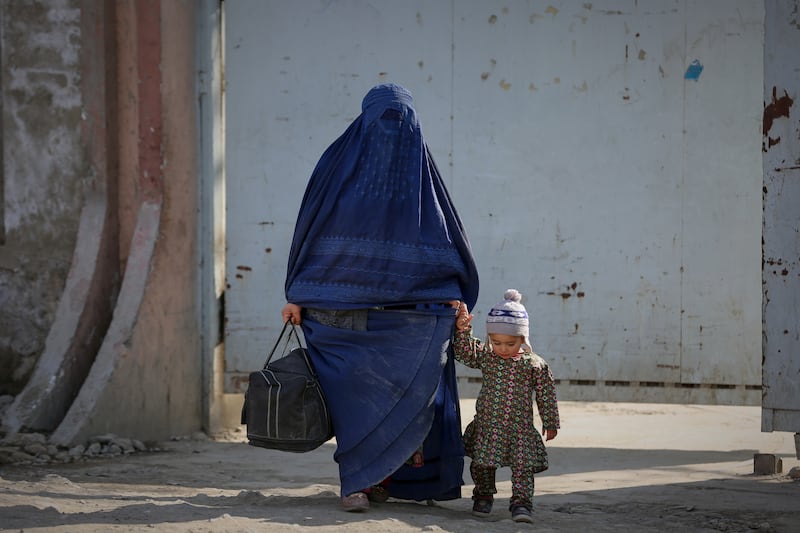
Every day in Afghanistan, women are erased from public life. There is no country on earth where it is worse to be a woman. Since the chaotic withdrawal of the United States military and takeover of the Taliban in 2021, women have been targeted; stripped of government roles; and deprived of educational opportunities, freedom of movement and freedom of speech. The Ministry of Women Affairs was replaced with the Ministry of Voice and Virtue. The Taliban’s Propagation of Virtue and Prevention of Vice Law bans women’s voices “in a song, a hymn, or a recital out loud in a gathering.” The campaign to annihilate women in Afghanistan is systematic and has consequences for human rights globally. Some say the crimes amount to genocide.
The international community has failed to hold the Taliban accountable, and some nations have empowered the Taliban by legitimizing and embracing their government. In many ways, the international community’s decision to ignore the atrocities in Afghanistan for so long has created the context to ignore atrocities in other conflicts, such as the horror in Gaza.
Defining gender apartheid in Afghanistan and the world
A movement to change the fate of women in Afghanistan is gaining momentum ahead of the 2026 U.N. committee meetings to reform the doctrine of crimes against humanity. Under current international law, gender is not included as a protected identity group under the crime of genocide nor crimes against humanity. While the Rome Statute includes gender persecution as a crime against humanity, the consequences of such a crime are not strong enough to punish regimes such as the Taliban which have created a governance model based on extreme persecution.
Following decades of systematic racial oppression in South Africa, the U.N. adopted the crime of apartheid as a crime against humanity. But this crime does not include apartheid based on gender, which was referenced as early as 1999 by Abdelfattah Amor, who wrote, “The Taliban has introduced what is in point of fact a system of apartheid in respect of women.”
International legal experts define the crimes against women in Afghanistan as “gender apartheid” and propose the official adoption of gender apartheid as a crime against humanity.
Standing with women in Afghanistan is standing with all women everywhere.
In July 2025, the International Criminal Court, responsible for prosecuting the crimes of genocide, crimes against humanity and war crimes, issued arrest warrants for the Taliban’s two highest leaders, stating, “While the Taliban have imposed certain rules and prohibitions on the population as a whole, they have specifically targeted girls and women by reason of their gender, depriving them of fundamental rights and freedoms.”
But will arrest warrants and even a new legal definition be enough to reverse the global trend toward mass atrocities? Legal efforts to codify gender apartheid must be combined with renewed international commitment to the prevention of mass atrocities and solidarity with the women of Afghanistan.
The brave women of Afghanistan model every day what freedom requires and the enormous sacrifice everyone must make in order to maintain our basic rights. Even as legal mechanisms in Afghanistan fail to hold perpetrators accountable, a coalition of organizations pushed to create The People’s Tribunal for the Women of Afghanistan to hear the crimes committed against Afghan women. Tribunals are specialized or opinion courts that can be organized at the grassroots level to hear criminal cases for war crimes, crimes against humanity or genocide. The Permanent Peoples’ Tribunal (PPT) was prompted by the Universal Declaration of Peoples’ Rights (1976) and was officially formed in 1979 in Bologna and has since helped organize some 50 sessions to hear legal cases not taken up by traditional courts.
At the conclusion of the Tribunal in October 2025, the court concluded, “The institutionalization of a system of discrimination and repression based on gender by the de facto authorities can be considered ‘gender apartheid’ within the category of crimes against humanity.” They further acknowledged that although the “crime of gender apartheid is not yet codified in international law ... the situation in Afghanistan meets the constitutive elements of an apartheid-like system, an institutionalized regime of segregation, exclusion, and domination. However, because the discrimination is grounded in gender rather than race, it falls outside the codified definition of apartheid in international law, which has yet to formally recognize gender apartheid as a distinct crime.”
‘We will not be silent’
Discussion for the adoption of “gender apartheid” as a crime against humanity continues, and so too does the advocacy of Afghan women for a better world. We all have something to learn from the resilience of Afghan women, their unwavering commitment to justice and accountability, and their example of the power of women in bringing justice to the world. Standing with women in Afghanistan is standing with all women everywhere.
I’ll never forget meeting Khalida Popal, an incredible leader who founded the Afghan National Women’s Soccer Team, then worked for the national soccer federation in Afghanistan, leading the movement to empower women through sport. Increasing oppression from the Taliban forced Khalida into exile and eventually led to her seeking asylum in Denmark. She continues to fight back for the country through her organization, Girl Power. When I met Khalida, she was receiving the 2021 Lantos Prize for her outstanding bravery. Her physical presence was tangible, the determination in her eyes palpable, and the room was moved to thunderous applause numerous times during her acceptance speech.
Khalida embodies the hundreds of thousands of Afghan women who are using their diaspora power to send a message to the Taliban: “We will not be silent. We will not be erased.” Defining and codifying gender apartheid is the first step on a long journey to disrupting the cycle of genocide in Afghanistan, and it is a vital step in ensuring equality and the status of women globally.
Global women, peace and security expert Dr. Valerie Hudson articulates, “The very best predictor of a state’s peacefulness is not its level of wealth, its level of democracy, or its ethno-religious identity; the best predictor of a state’s peacefulness is how well its women are treated. What’s more, democracies with higher levels of violence against women are as insecure and unstable as nondemocracies.”
The plight of women in Afghanistan and the movement to recognize gender apartheid is a crucial step in protecting democracy, security and prosperity for our world. Yearly commemorations around International Women’s Day, CSW and other crucial conversations must lead to meaningful action to help the women of our world, starting in Afghanistan.