



When I mentioned the Artemis II mission to the moon in class, I expected curiosity, awe or maybe even criticism of the cost. After all, this was a bold moment: our nation preparing to send astronauts back to the moon after more than five decades. Instead, there was no excitement — no real reaction at all. The room was quiet. A few students nodded politely. Most said nothing. I followed up: Could anyone name a scientist, engineer or public servant they admired? Silence again.
My students are thoughtful. The silence wasn’t indifference; it was something more unsettling — a generation unsure whether looking up to someone is still something you’re allowed to do.
A recent essay in Psychology Today makes a simple point: Role models help young people imagine what a good life looks like — not by being perfect, but by being admirable and real. For much of American life, we understood this. We did not expect heroes to be flawless. But we did expect them to be worthy of attention.
I was lucky. Long before I was the age of the students I now teach, I had heroes and role models who did exactly that.
One was Harrison Schmitt, the geologist-astronaut of Apollo 17 and the first scientist to walk on the moon. He was not a celebrity. He represented something better: seriousness, discipline, intellectual achievement and service. I had the rare opportunity not just to admire him but also to meet and spend some time with him. That experience mattered and is something that I carry with me today.
What I saw in Schmitt — and in the generation that made Apollo possible — was not perfection. It was a model of adulthood worth striving toward: curiosity joined to rigor, ambition to humility, brilliance to teamwork and achievement tied to something larger than oneself.
Crucially, they made that life visible.
When young people lack meaningful role models, they don’t just lose inspiration; they lose a framework for understanding what effort is for.
Today, many young people are growing up in a different ecosystem of attention. A majority of Gen Z would become influencers if given the chance, often preferring it to careers in science, medicine or public service. The most visible figures are not builders but performers — people whose primary achievement is visibility itself.
This marks a quiet but profound inversion. In the Apollo era, recognition followed achievement. Today, it often precedes it.
That shift does more than reshape culture. It reshapes formation. When young people lack meaningful role models, they don’t just lose inspiration; they lose a framework for understanding what effort is for. The result is rarely rebellion; more often, it is drift — an absence of direction masked as openness.
We should not be surprised, then, by rising anxiety, declining confidence or the sense — reported by so many young Americans — that life feels unmoored. When nothing is clearly worth emulating, everything begins to feel provisional.
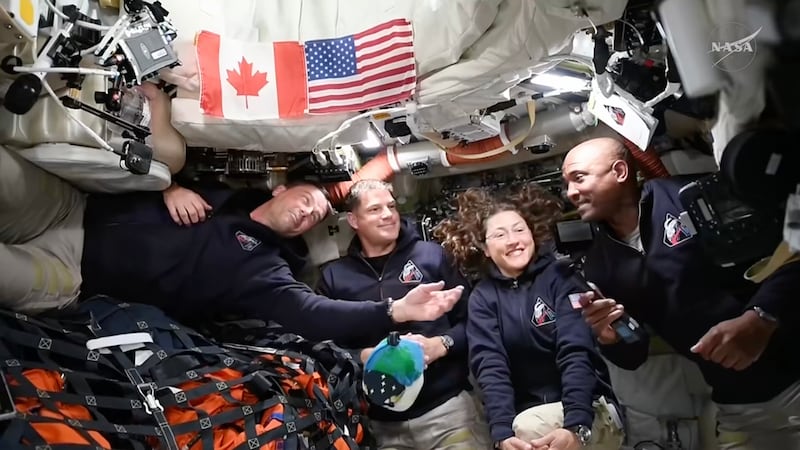
Moments like Artemis II matter because they offer a counterpoint. They reintroduce a different kind of hero into public view — not celebrities, but people doing hard things well: scientists, engineers and teams working toward a shared goal. They remind us that excellence still exists.
But visibility alone is not enough.
These figures must be named, taught and discussed. Young people need to see not just what they did but also how they lived — the discipline, the setbacks, the sense of purpose. Role models do not emerge automatically in a fragmented, algorithm-driven culture. They must be transmitted.
That transmission begins at home. Parents who speak with admiration about scientists, soldiers, teachers or public servants — who point to lives of purpose and say, simply, “Look at how he lived” — are doing something irreplaceable. So are coaches, clergy and mentors who name excellence when they see it.
Many faith traditions have understood this for millennia. In Jewish life, we do not simply study the Torah; we tell stories. At the Passover Seder, we ask each generation to see itself as having come out of Egypt. The figures we invoke — Moses, Miriam, the teachers and sages who followed — are not held up as perfect. Far from it. They are held up as purposeful. “L’dor v’dor” — from generation to generation — is not just liturgy. It is a theory of formation: What is worth emulating must be passed down.
This is where education must recover its confidence.
Too often, we are more comfortable teaching students how to critique than how to admire. We train them to deconstruct with precision. That work has its place. But we are far less willing to say plainly: This is a life worth studying.
Part of this hesitation is understandable. We recognize human complexity. No life is without flaws. But, in avoiding oversimplification, we have drifted into something else — a reluctance to speak in the language of admiration at all.
That reluctance carries a cost.
Students do not build lives out of critique alone. They need examples. They need to see what disciplined effort looks like over time, what responsibility looks like in practice and what it means to dedicate oneself to something beyond personal recognition.

If students leave our classrooms able to critique everything but unable to name anyone they admire, we have given them tools without direction, judgment without aspiration.
There is, at its root, a moral claim embedded in all of this — one we have grown hesitant to make. To point to a life and call it worthy requires courage. It is an act of responsibility. It says that discipline is not repression but formation, and that excellence is not exclusionary but generative — lifting others by showing what is possible.
A healthy society does not leave its young people to assemble their aspirations from fragments. It offers them a moral vocabulary and a visible set of lives that give that vocabulary meaning. It tells them, through word and example, that some paths are higher, some choices better and some forms of life more worthy of imitation than others.
Because young people do not become what we critique; they become what they can see. If we fail to show them lives worth following, we should not be surprised when they struggle to find a path worth taking and a life worth building.