

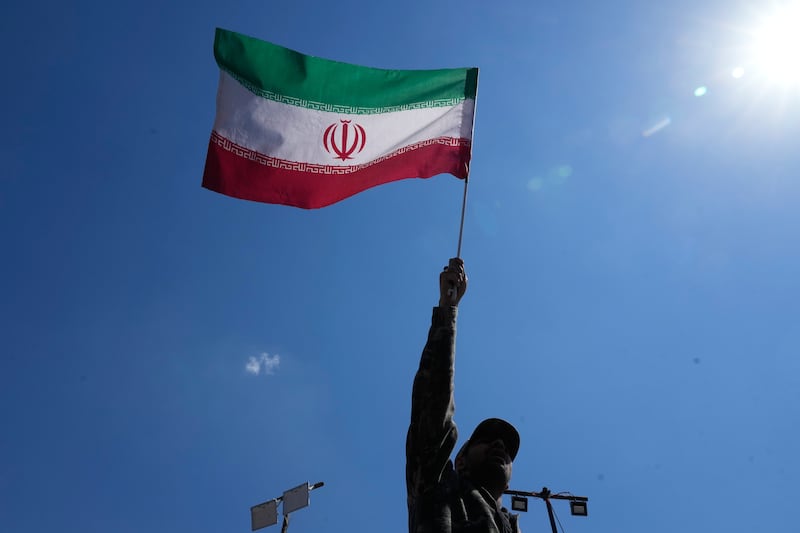

In the 24 hours or so since the news broke that a ceasefire has tentatively been agreed to between the United States and Iran, the world has already seen how fragile this agreement may be.
In the aftermath of the news, the price of oil dropped by its largest measure since the COVID-19 pandemic and the U.S. stock market rallied to add more than 1,500 points. Since that initial boost of optimism, Israeli attacks on Lebanon and Iranian accusations that the U.S. and Israel have already broken the agreement in multiple ways reversed some of that positive progress.
This has led both the U.S. and Iran to claim that the other party either does not understand the ceasefire agreement or is outright violating it. This roller coaster ride of war and peace, disorienting though it may be, is perhaps a harbinger of things to come.
Such volatility is unlikely to end in the short term. Even if the ceasefire turns into a peace deal — and that is a big if — it does not appear to lay the groundwork to resolve many of the fundamental tensions that led to the conflict in the first place. In particular, there appear to be strident disagreements regarding the disposition of Iran’s right to enrich uranium and increased control over the Strait of Hormuz — two issues upon which both sides seem to have staked out opposing positions.
Instead of solving issues, the Iran war and the ceasefire have created the real possibility of exacerbating existing problems, as well as creating new ones, in ways that are likely to cause additional challenges in the future.
Consider the Iranian regime. Iran has seen a significant amount of infrastructure destroyed and leaders killed and has further alienated itself in the Middle East. Yet, its leadership remains intact, the possibility of real regime change appears distant and it appears poised to exercise greater control over important resources and assets, such as the aforementioned Strait of Hormuz and nuclear stockpile.
Additionally, Iran appears eager to paint itself as a nation that was able to defy the strongest military on earth — a grandiose claim that, at the very least, is supported by the fact that its government remains in place and now demonstrates its ability to put its foot on the neck of the global economy. This explains why the Islamic Republic of Iran could emerge emboldened, not cowed, in ways that lead it to challenge the postwar order even more.
The picture is not so bright for the Iranian people. Despite the initial hope that the U.S. would find a way to topple the Iranian regime, they’re more aware than ever that this difficult task falls on their own shoulders.
On top of that, they now face the consequences of living in a place with damaged infrastructure and an even more security-conscious regime. The Iranian government has effectively cut off the people from the outside world by shutting down the internet since Feb. 28. And recent movements of Iranian-affiliated militias suggest the regime may be planning for a purge during the ceasefire.
And recent movements of Iranian-affiliated militias suggest the regime may be planning for future crackdowns. Some Iranian residents have expressed concern that those crackdowns may be close at hand, especially since Iranian security forces continued to track and execute those involved in the January 2026 protests even as the war was ongoing.
Whether the intention of the Trump administration ever was to effectuate regime change and to help free the people or not, the Iranian people do not appear to have been adequately factored into this ceasefire agreement.
Now turn to the United States. The U.S. has expended a large amount of money and weapons over the last month, including critical missile defense systems. It also suffered casualties in the form of 13 to 15 soldier deaths and injuries to hundreds of others.
Despite the investment of effort and comparatively fewer losses than Iran, the administration has prosecuted the war in a way that frequently seemed disorganized and without clear goals, and that creates a real possibility of a narrative that it will have lost the conflict.
Our nation’s military acquitted itself well, but as the U.S. should have learned from recent conflicts and long-standing national security doctrine, the ability to destroy targets does not compensate for a lack of clear strategic aims and public support. Despite efforts to message a more positive result, the nation as a whole likely emerges from this conflict with a battered reputation globally and seems to be more strategically adrift than at any other point in time in recent history.
It’s troubling to witness the impact of the Iran war on U.S. relationships with other countries, especially in Europe. The traditional allies of the United States in establishing and maintaining the post-World War II economic order have been left wondering whether the days in which the United States was a reliable and generally predictable partner in the world are a thing of the past — at least temporarily.
While it remains to be seen what the ultimate fallout from the Iran war will be for NATO, the Trump administration seems determined to spread the blame for the outcome around nations that it perceives did not support the conflict.
All of this comes at a time when the Ukraine war rages on, and other security challenges persist. Serious work will be needed — probably on the part of the U.S. Congress — to preserve NATO and bilateral European relationships that have served our nation (and the world as a whole) so well for the past several decades.
Finally, China has certainly been watching the Iran war, including U.S. capabilities, resolve, strategies and challenges, undoubtedly with close interest. And the lessons they could have learned are many. Among them, China has likely learned that, in a world in which the U.S. acts less like the leader of the rules-based international order, there is an increasing role for China.
In this case, by playing a role in the resolution of the conflict, China can — at least for the time being — fill the void left by the U.S. without having to bend to what had once been the rules of that order.
China has also likely learned that the U.S. commitment to the defense of Taiwan and the broader pivot to Asia are fragile. And it has seen how an effective blockade of critical resources can be just as effective as other military actions.
While China may not seek to take advantage of these lessons in the immediate aftermath of the Iran war, the nation’s leaders likely believe even more in their ability to be successful if it chooses to in the future.
So, what comes next? There is still much uncertainty ahead between Iran and the U.S. The ceasefire may not hold, or additional developments may present new challenges for all sides even if it does. Nevertheless, the war against Iran, if it ends on anything like the terms that appear as part of this current ceasefire, will seem to many to have been a costly effort for all parties that resulted in a post-conflict international environment that is even more uncertain and challenging than before.
In summary, while the ceasefire may have stopped some of the fighting, it has certainly not secured a lasting peace.