


Greek legend tells the story of the Gordian Knot — a rope tied so tightly around a wagon that no one could find the ends, let alone untie it. An ancient prophecy declared that whoever could undo the knot would rule all of Asia. Many tried and failed. Finally, Alexander the Great simply drew his sword and sliced through it. Problem solved — at least for him.
The next chapter in the tariff debate may prove to be of Gordian Knot proportions, with no sword in sight. The central question: Who should the government refund for tariffs paid over the past year following President Donald Trump’s so-called “Liberation Day”?
In 2025, the administration levied sweeping and unpredictable tariffs while citing emergency powers under the International Emergency Economic Powers Act, claiming that international trade had contributed to an influx of synthetic fentanyl. The Supreme Court disagreed, ruling 6-3 in February 2026 that the authority to set tariff rates belongs to Congress, not the president.
What the majority opinion left conspicuously silent was whether the government was obligated to refund the tariff revenues it collected during the past year — and if so, who has a legal claim to those funds. Only Justice Brett Kavanaugh, writing in dissent, flagged the inconvenient reality that the federal government “may be required to refund billions of dollars to importers who paid the IEEPA tariffs, even though some importers may have already passed on costs to consumers.”
And therein lies the knot.
Unlike income taxes or sales taxes, tariffs do not announce themselves on a receipt. When you check out at Costco or your local grocery store, you see the price of your goods and a line item for sales tax. When you file your income taxes in April, you see your liability, your deductions, and what you owe or are owed.
Tariffs carry no such transparency. Their burden quietly winds its way through the economy, absorbed and redistributed long before it reaches the average household.
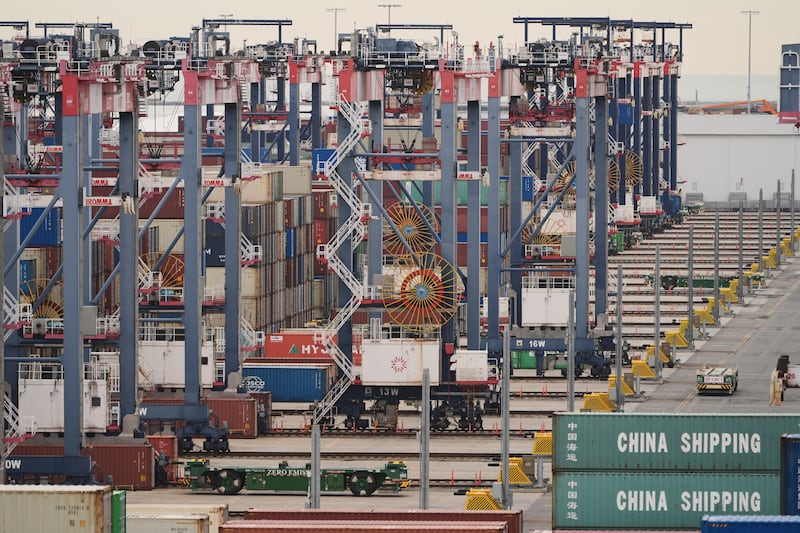
Here is how it works: When an American manufacturer or retailer imports raw materials or finished goods, U.S. Customs and Border Protection holds those shipments at the port of entry until the American firm pays the tariff. The firm receives a receipt and a legal record of what it paid.
But the economy does not stay still. A tax levied on one entity rarely stays with that entity. Like Tom Sawyer convincing his friend to whitewash the fence on his behalf, producers shift their cost burdens onto consumers through higher prices, reduced wages and leaner margins. Economists describe the outcome as tax incidence — a giant tug-of-war that consumers and producers divide between themselves. Who actually pays the tax in the end is different from who the government intended to legally pay the tax.
Policymakers repeatedly make the mistake of ignoring this dynamic. Tax the oil companies, and gas prices rise. Tax corporations, and wages fall. Tariffs are no different, yet they remain politically attractive because they are easy to misrepresent as a tax on foreign countries rather than on American households.
Beyond the visible toll of higher prices and reduced wages, tariffs also generate what economists call “deadweight loss” — costs that never appear on any invoice. How does one put a dollar figure on the unavailability of a needed medication, or the reduced selection of superhero backpacks when families head back to class? Or the quiet strain on a low-income household just trying to cover groceries?
None of these effects generate a receipt that can be mailed to the Treasury Department for reimbursement.
Foreign suppliers have also borne real losses — cutting revenues, restructuring supply chains and watching years of carefully negotiated trade relationships unravel. State governors who had spent years wooing manufacturers — automobile plants in the Southeast, transportation hubs in the Intermountain West — saw those efforts complicated overnight by unpredictable trade policy.
This dysfunction has done lasting damage to America’s standing as a reliable global partner. Like a carnival barker who promises simple solutions to complicated problems only to slip away when the bill comes due, the tariff experiment has left consumers, small-business owners and families holding the bag.
Now comes the reckoning. Some retailers may eventually receive refunds through delivery giants like FedEx and UPS, which collected tariffs directly from consumers — and have indicated they intend to pass refunds along. But for most households, there is no clear path to restitution.
Estimates suggest more than 330,000 firms will file for refunds covering 53 million shipments totaling roughly $166 billion. That money will flow back, for the most part, to the companies that paid it at the port — not to the families who ultimately absorbed the cost through higher prices.
Getting even that far will likely require class-action lawsuits, bureaucratic complexity, confusing paperwork and long wait times. Administrative costs will mount. And at the end of it all, the households that bore the true burden of this policy may see little or nothing.
Even Alexander the Great couldn’t slice through that mess.