

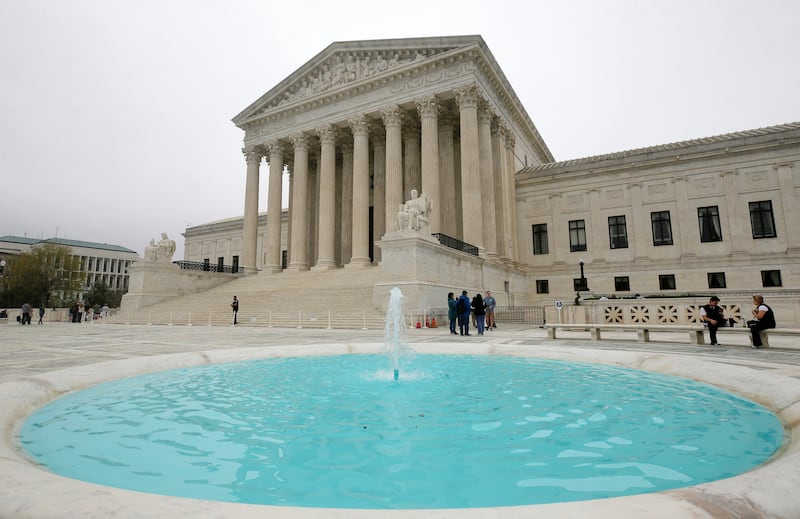

For the past decade, the Supreme Court has been building one of the most significant bodies of religious liberty law in a generation. Case by case, it has ruled that governments cannot exclude religious institutions from public benefit programs simply because they are religious.
The rulings came steadily, and they came easily. Too easily, it turns out, to tell us what the court would do when the case stops being easy.
St. Mary Catholic Parish v. Roy, which the court agreed to hear last week, is that case.
What happened in Colorado
Colorado’s Universal Preschool Program was built on a straightforward idea: Every child, regardless of family income, deserves access to quality early education.
Research consistently shows that the years before kindergarten are among the most formative in a child’s development, and that children who arrive at school without that foundation rarely fully catch up. Colorado decided to do something about that. It created a program offering families up to 15 hours of free preschool per week, open to any licensed provider willing to participate.
The universal in the name was a promise. Any family could enroll. Any qualified provider could join. No child would be turned away.
There was one condition. Participating providers had to agree not to discriminate against families based on sexual orientation. If a child had two moms or two dads, the door had to stay open.
For most providers, that condition was unremarkable. For the Catholic parishes of the Archdiocese of Denver, it was the whole problem.
2 families, 1 program
Picture two families signing up for the program.
The first family is a same-sex couple with a 4-year-old. They have done their research. They know that not every school will welcome their child without reservation, and they are counting on the state’s promise that this program is different. Universal means universal. The state said so.
The second family is Catholic, deeply so. Their parish runs a preschool that has served their neighborhood for decades. They tithe, they volunteer, they send their children there precisely because the school’s understanding of family matches their own.
When Colorado launched its preschool program, the parish applied. It was turned away because it would not agree to enroll children regardless of their parents’ sexual orientation, a condition the parish said it could not meet without compromising the religious identity that makes it what it is.
Both families believe the state made them a promise. Colorado told the same-sex couple that their child would not be turned away. The Catholic family believed their parish, like every other preschool in the state, would have a fair shot at participating.
The Supreme Court must now decide which promise the Constitution requires Colorado to keep.
The court must explain, plainly and honestly, what religious liberty requires when honoring it costs something real, and what nondiscrimination requires when enforcing it means closing religious communities out of public life.
The easy decade
To understand why St. Mary is a potential turning point, you have to understand how the Supreme Court got here. In 2012, Missouri excluded a church-run school from a playground safety grant available to private schools generally. In 2015, Montana barred religious schools from a scholarship program. In 1981, Maine refused to include faith-based schools in a tuition assistance program, and the case was brought to the Supreme Court in 2021.
The court ruled for religious institutions each time, on a consistent principle: If you build a program for everyone and quietly remove religious organizations from it, you have not been neutral. You have singled them out.
Those cases generated real disagreement. Concerns about public money funding religious education are serious, and the dissenting justices said so at length. But the competing interests were largely structural and abstract.
The Maine case, Carson v. Makin, came closest to what is now before the High Court. The excluded schools held traditional religious views about gender and sexuality, and families of LGBTQ+ students would have faced the same closed door the Colorado parishes are now trying to keep open.
The court ruled for the schools anyway. St. Mary asks whether that logic holds when the state has built its entire program around keeping that door open for everyone.
That is a harder question than others the court has answered so far in related cases.
The collision
Colorado is not excluding Catholic parishes out of reflex or hostility. It is applying a nondiscrimination rule designed to protect families who have documented reasons to fear being turned away by religious institutions.
That history is not abstract. As illustrated by the first family in our story, this is a serious interest. It deserves to be treated as one.
At the same time, what Colorado is asking of the parishes is not a minor administrative adjustment. It is not asking them to update a form or add a checkbox. It is asking them to set aside a belief about family that sits at the center of their religious identity, and to do so as the price of joining a program the state describes as open to everyone.
The parish argues that their religious convictions exempt them from this obligation. Otherwise, a public benefit is being conditioned on abandoning a core religious conviction. This is precisely the kind of government pressure the First Amendment exists to prevent.
Both positions reflect something true and something costly. That is the collision the court has spent 10 years managing to avoid.
What the court owes us
The justices have kept the case narrow. They will ask a focused question: Is Colorado’s program neutral, or is that just what Colorado is calling it? That’s a good question. But a ruling that stops there, that finds a technical exit and leaves the deeper conflict unaddressed, will not be enough.
Both sides have been told, repeatedly and by courts, that the Constitution is on their side. It cannot be fully on both sides. At some point, the court must explain, plainly and honestly, what religious liberty requires when honoring it costs something real, and what nondiscrimination requires when enforcing it means closing religious communities out of public life.
St. Mary is the moment that explanation is due. Both kinds of families deserve it.