

Sometimes, life just sucks. Wars plague the earth, grandparents get sick, love is lost and so on. Often, everything seems to go wrong simultaneously. My family says hardship rolls in like the tide: three big waves at a time.
It’s easy to think, “I’d be happy if this never happened,” or “I’d be a happy person if bad things stopped happening to me.”
Though common, this thinking is inherently incorrect. I would wager that the happiest people you know haven’t glided through a hardship-free life; they’ve persevered through hell and come out better. Happiness doesn’t come from avoiding suffering, but from choosing to bring light to others despite it.
The happiest person in the world is my grandmother, “Grammy.” Her favorite things are sunshine, bubbles and daisies — no joke. She embodies joy and radiates light. One time when I was getting bullied, she told me, “Even the bullies need love, and you’re lucky enough to show them some.” You can’t make this up — she’s another level of happy.
When I was four, Grammy was diagnosed with Stage 4 ovarian cancer and given an 18% chance of survival. Twenty-three years later, she’s still alive and kicking. Her doctors attributed her survival to an unexpected source: her undying optimism, positivity and hope.
Happiness is less about lucking out with an ideal life and more about incorporating purpose, service and perspective into whatever life you get.
Her happiness kept her alive. When faced with almost certain death she stayed … happy?
How can someone be happy when they suffer? An age-old question we can’t bear to answer because sometimes we’re too comfortable being upset or perhaps we cannot fathom a solution. Yet, happiness is less about lucking out with an ideal life and more about incorporating purpose, service and perspective into whatever life you get.
Modern research supports this theory: individuals experience “post-traumatic growth” after serious hardship and develop a deeper appreciation for life, stronger relationships and greater meaning. Enduring hardship equips individuals for joy.
In the worst moment of my life, I learned how to unlock superhuman happiness. When I was 20, I suffered a severe, permanent injury while serving the community as a religious volunteer in Amazonian Bolivia. Upon moving buckets of water for an elderly friend, I dislocated both shoulders and tore everything from my biceps through my labrums. Most of the damage was irreversible.
Moments before the first of two intense shoulder reconstruction surgeries, my surgeon looked me in the eye and said, “This will be the worst experience of your life. This is one of the most painful surgeries that exists, and it will be terrible.” He was right.
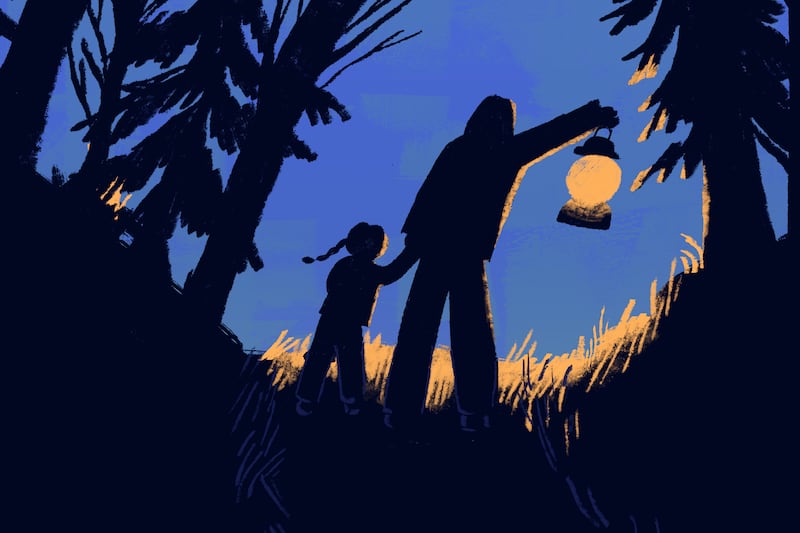
After surgery, my pain got so severe that I could barely retain consciousness for a few minutes at a time. My parents dragged a mattress into my room and slept on my floor so that I was never alone. We recognized I was sleeping in what might become my deathbed. One night, I remember my dad’s voice echoed: “When you can’t find the light, become the light.”
That’s it. That’s how Grammy beat cancer. That’s how I live a happy, fulfilling life regardless of pain, disappointment, grief or whatever else goes wrong. I become the light I cannot find.
Viktor Frankl, a Holocaust survivor, stated that survivors of the horrific Nazi concentration camps established a meaning beyond themselves. In “Man’s Search for Meaning,” Frankl notes that suffering brings meaning if and when the sufferer finds a deeper purpose, such as service.
Likewise, psychologist Martin Seligman found that meaning and service are key pillars of happiness. Sonja Lyubomirsky’s research on positive psychology exhibits a similar pattern: intentional gratitude, kindness and purpose-oriented living bring long-term happiness.
Being happy doesn’t mean you live a perfect life — it’s often the opposite. Happiness can be a matter of bringing good to a bad life. Rather than wallowing in self-pity, happy people live for something higher, express gratitude for small things, use past suffering to guide others and resist darkness with joy. To summarize Kierkegaard, the door to happiness opens outward.
Happiness is about who we choose to be. My shoulder injury still brings daily pain and requires extensive medical attention. I will never fully recover. However, even if I could go back and refuse to help my friend to avoid my own physical pain, I would not. I would still choose to serve.