

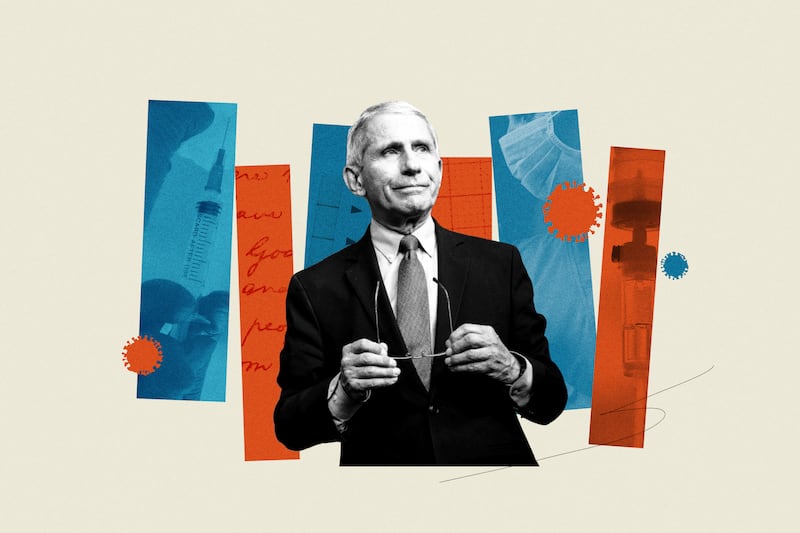

In advance of his questioning of Dr. Anthony Fauci during a contentious Senate committee meeting Wednesday, Sen. Rand Paul told reporters, “The goal is the truth.”
What transpired during the three-hour hearing, however, was more theater than truth-telling, disappointing Americans who want to learn more about the origins of the COVID-19 pandemic, and the government’s response, without bias born of partisan acrimony.
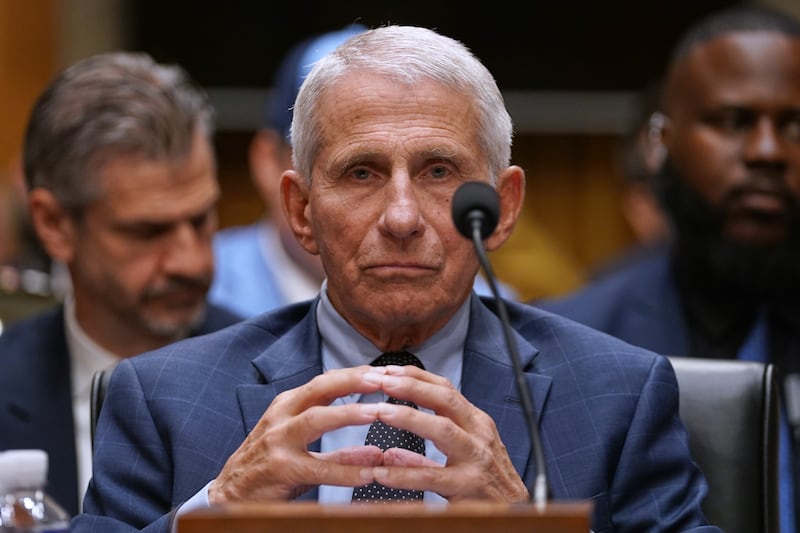
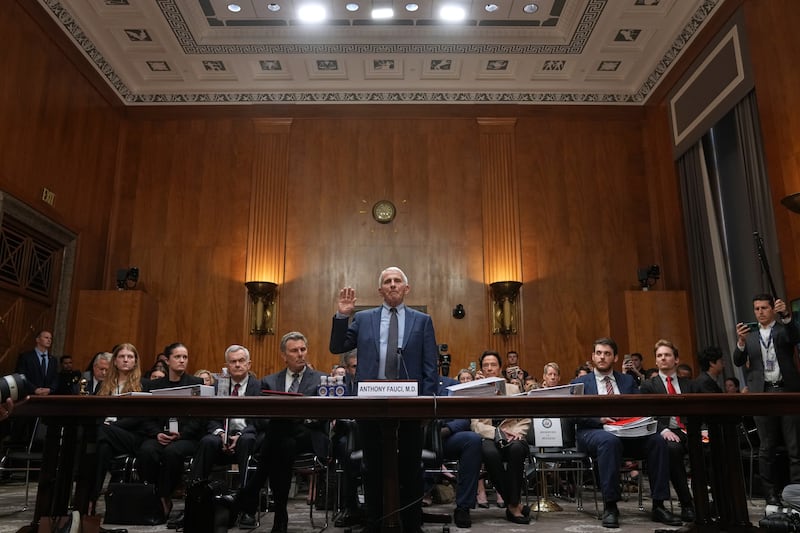
That acrimony was on display on both sides of the aisle, as Fauci, the former director of the National Institute of Allergy and Infectious Diseases, was compelled by subpoena to testify before the Senate Homeland Security Committee, chaired by Paul.
Fauci did not answer any questions posed to him Wednesday, saying more than 100 times, “On the advice of counsel, I respectfully decline to answer based upon my rights under the Fifth Amendment to the Constitution” — even when asked what color tie he was wearing.
Since then, Fauci has been portrayed as both a martyr and a criminal, and Americans are no closer to understanding why their lives were upended between March of 2020 and May 2023, when the World Health Organization said COVID-19 was no longer a global emergency.
Many are frustrated and angry about why truth is so hard to come by, and the events of this week haven’t helped. They don’t want to be told to move on, as Minnesota Gov. Tim Walz suggested on X this week in a post suggesting that the hearings were a diversion from other news.
“I just can’t believe we went through the biggest cultural transformation, maybe in the history of the country, and a few years later no one even wants to address it. We just want to pretend it never happened,” podcaster and author John Ziegler, an outspoken critic of America’s COVID response, told me.
To fully reckon with COVID, however, is like boiling the ocean because the anger isn’t just about Fauci. It’s also about Joe Biden, Donald Trump, the media, the face masks, the social distancing, the closed schools, the shuttered churches, the surfer and the paddle boarder arrests, the Zoom meetings, the vaccines and, of course, the deaths. It’s about fear and safety and liberty, and our interpretations of them, coded in red and blue.
Has the partisan divide around the pandemic made it more difficult to get to the truth?
Sen. John Fetterman, a Democrat from Pennsylvania, said as much at the hearing, saying that he initially saw theories that the coronavirus originated in a lab as “right-wing” but came to believe that this idea made sense.
“Maybe the truth might come from a side that’s different than you are, but I think we should be willing to pursue truth no matter where that may have emerged,” Fetterman said.
The Fauci divide
The partisan divide emerged early in the pandemic.
In July of 2020, YouGov asked Americans if they trusted Fauci and reported that most Americans did. That number was skewed heavily by Democrats, however. When looking at the numbers broken down by party affiliation, most Republicans did not trust Fauci. Thirty-eight percent of Republicans said they trusted Fauci “a lot” or “some,” compared to 79% of Democrats and 47% of independents.
That Republican distrust hardened over the years, as evidence emerged that some of the federal response was ineffective or damaging, particularly with regard to the development of children subjected to lengthy lockdowns. Some of the animosity toward Fauci comes from his dismissal of people who questioned his claims, including Fox News host Laura Ingraham, who attended the hearing and stood up along with others who said they had been “shamed” for being critical of COVID policies.

Last year, on the five-year anniversary of COVID emerging, Pew Research looked at attitudes surrounding the pandemic. While roughly equal numbers of Republicans and Democrats say they had gotten COVID and majorities of both said their lives had been impacted by the pandemic, Pew also reported “sharply partisan responses” with regard to how Americans feel about COVID and the response.
Republicans, for example, were more likely to say that COVID today is the equivalent of a cold or the flu, while Democrats say it is worse. Sixty percent of Democrats say “we’re not taking COVID-19 seriously enough now,” compared with 20% of Republicans. And most Republicans said they probably would not get the latest vaccine, while most Democrats said that they would.
Indeed, one of the videos that circulated among conservatives on social media this week showed Fauci and other officials going door to door, trying to convince people to get a COVID vaccine, and a young man explaining why he wouldn’t.
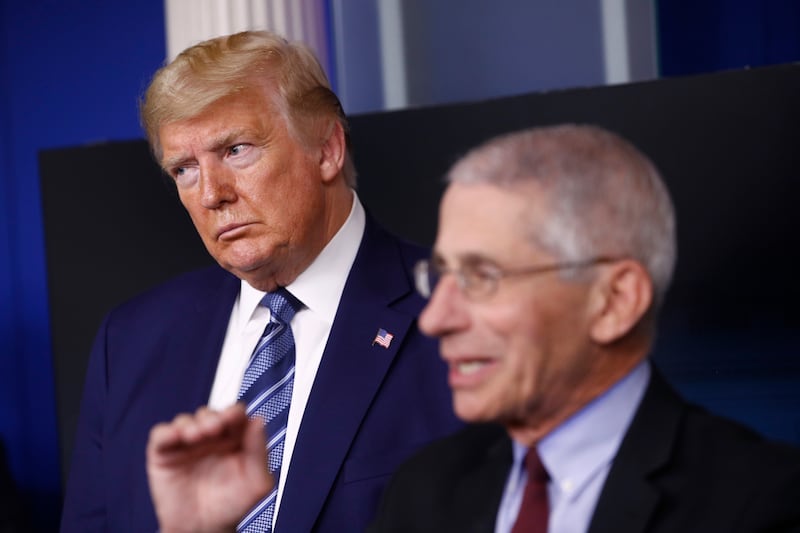
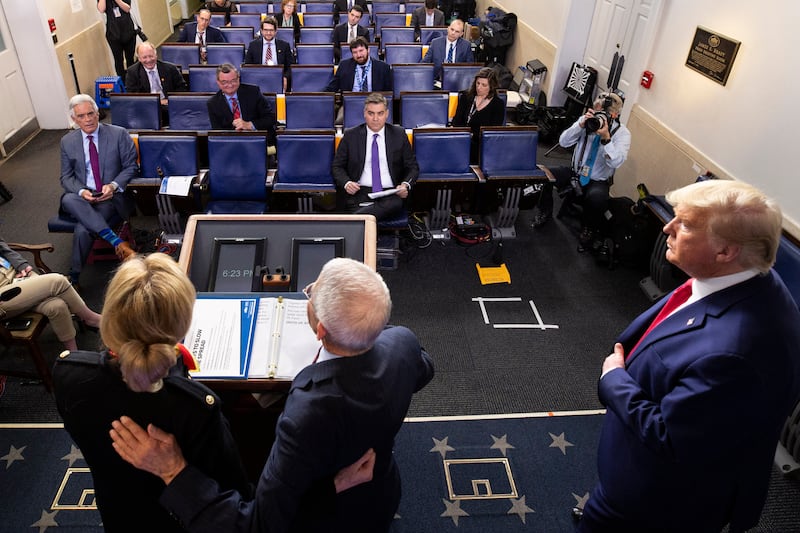
But early on, resistance to lockdowns and vaccines was tempered with widespread affection for Fauci, who stood next to Trump at news conferences and made headlines of his own for raising his hand to his face when the president made reference to the “Deep State Department.”
Ziegler, who believes Trump’s COVID response was the worst part of his presidency, said he watched Fauci during those TV appearances in 2020 and realized a bond was being created between Fauci and the public. “The audience was desperate for a security blanket, and Fauci becomes the security blanket.”
That led to the fame and adulation that Fauci wrote about his journal.

Trump, Ziegler said, “abdicated control of his presidency to Dr. Fauci,” and in doing so, helped drive division even among Trump supporters who normally would have been inclined to oppose lockdowns en masse, but trusted what the president was doing. The mixed messaging at the time is evident in the Fauci journals that Paul released, he said.
“I think Trump has many strengths, and his No. 1 strength is, he understands the media, he understands celebrity, better than any other president in our history. But when it mattered most, those superpowers deserted him.”
He added: “He did not see the Trojan horse coming through the gates of his reelection campaign, and inside the Trojan horse was Odysseus, and it was Dr. Fauci.”
That said, Ziegler is not among those calling for Fauci’s prosecution. “If he committed some crime and it can be proven, I’m not saying he shouldn’t be punished for that,” he said. But, “As soon as you say ‘Fauci should go to jail’ the other side completely tunes you out, in my opinion. They think you’re a right-wing loon.”
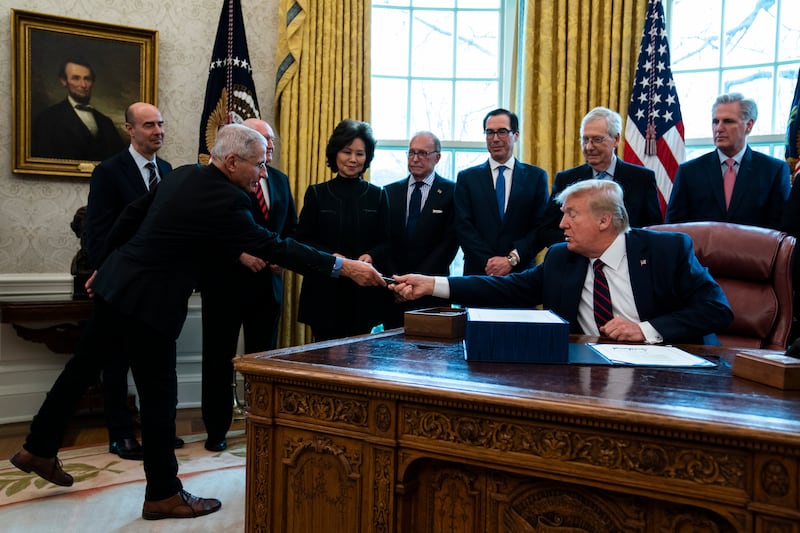
It bears noting that on their last days in office — Trump in 2021 and Biden in 2025 — both presidents did something for Fauci: Biden gave Fauci a pardon, Trump gave him an award, despite their often tense relationship.
The pardon shields Fauci from federal prosecution for actions taken during his government service between Jan 1, 2014 and January 19, 2025, the date the pardon was signed.
The making of a martyr
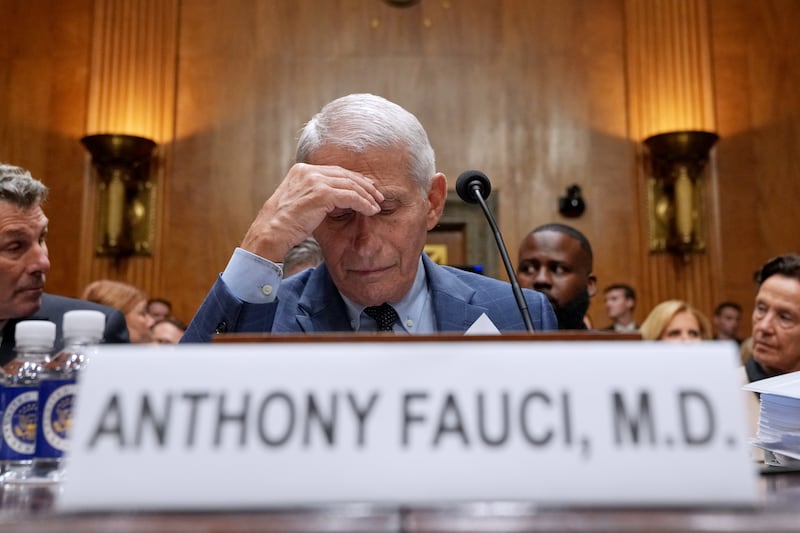
In The Atlantic this week, Katherine J. Wu detailed Fauci’s five-decade career in public health, writing, “For decades, he has been one of the nation’s best-known and most-respected scientists.”
One infectious disease expert told her, Fauci “saved more lives, created more amazing infrastructures for developing research opportunities, cured more people, provided health care to more people both in the United States and abroad, probably, than any single scientist in his lifetime.”
But, Wu writes, “If Fauci was the patron saint of all that was good about public health, he was also demonized for all of its failings. By the fall of 2020, the apolitical persona that Fauci had cultivated over nearly half a century had started to come apart.”
He was under the spotlight as he had never before been, and was being castigated both for policies he advocated for, and those that he hadn’t. And he had, Wu writes, “a penchant for control” that was “coupled with a sizable ego.”
The journal released by Paul last week led to a frenzy of Fauci bashing, both online and at the Senate hearing.
The diary, which USA Today reported “was typed on government computers from December 2019 to December 2022,” was obtained under subpoena and its release was no doubt deeply embarrassing for Fauci; he said in brief remarks at the start of the hearing that he believed the release was “aimed at embarrassing and intimidating me.”
Trump also participated in the pile on, posting to Truth Social a video of Fauci throwing out a wildly off-course first pitch in July of 2020.
The glee which Trump and others have shown in response to the skewering of Fauci this week, however, stands in stark contrast to the sober reckoning that Paul and other critics of Fauci insist that they want. There has also been a backlash that has brought a wide range of other people to Fauci’s defense.
TMZ founder Harvey Levin, for example, made a rare public statement on YouTube, saying, “Watching Anthony Fauci before a congressional committee take the Fifth Amendment is just one of the most heartbreaking things I have seen in government.”
While saying he had “problems with the way CDC handled COVID,” Levin called the hearing a witch hunt and said Fauci had been an excellent public servant.
Similarly, Marc Lipsitch, a professor of medicine and biology at Stanford University, told me in an email, “While I have had some disagreements in the past with Dr. Fauci’s decisions, I think there is no benefit to the American people and much harm to science and to the incentives for public service in this kind of persecution of him, not to mention the cruelty to him as an individual.”
Lipsitch, a member of the nonpartisan Covid Crisis Group that formed in 2021 to assess the U.S. pandemic response, also said he was disappointed “in the unseriousness of much of the reporting about his private reflections on his fame rather than on the questions of what the diaries reveal about his evolving understanding of the situation at the time.”
The reckoning that never was
Two years after its formation, the Covid Crisis Group — led by Philip Zelikow, who previously headed up the 9/11 Commission — released a book containing its findings. In “Lessons from the Covid War,” the authors expressed the same sort of feelings that many ordinary Americans have.
“The members of our group are angry. They are angry because they feel that good Americans, all over the country, were let down by ineffective institutions, a slow and uneven initial response, shoddy defenses, and inadequate leadership. We came away from many of our discussions consistently impressed with the ingenuity and dedication of people all over the country, and beyond. That is why so many of us are so frustrated. Americans improvised to fight this war, usually doing the best they could. They had to struggle with systems that made success hard and failure easy,” the authors wrote.
But the opening to the book also throws up a big red partisan stop sign when the authors write that Trump was a “comorbidity” of the pandemic — meaning, a condition that made things worse.
Like saying “Fauci should go to jail,” that’s a line that stands to alienate many Trump supporters from the start, which shows how difficult it is to assess the pandemic response without stepping on toes.
But many believe we must make the effort anyway.
In a widely shared posting on X the day of the hearing, author, futurist and Democrat Jamie Metzl said he believes COVID originated in a lab and that Fauci should not have argued against this theory at the beginning of the pandemic.
But, Metzl added, “accountability is not the same as vilification. Dr. Fauci has devoted his career to public health, and his work has helped save millions of lives around the world. He does not deserve the abuse and partisan attacks directed at him in today’s Senate hearing. He does deserve, like every official involved in the pandemic response, rigorous scrutiny of decisions that may have been mistaken.”
Metzl elaborated on this post in a Newsweek essay in which he called for a national, bipartisan commission to determine what went wrong and who should be held accountable. The Senate’s inquiry, which now includes a vote on holding Fauci in contempt, will not accomplish that. “Getting to the bottom of how this catastrophe began is not about relitigating the past, but about doing everything possible to prevent an even worse pandemic in the future,” he wrote, in the piece, entitled, “We still don’t know how Covid began. That should terrify us.”
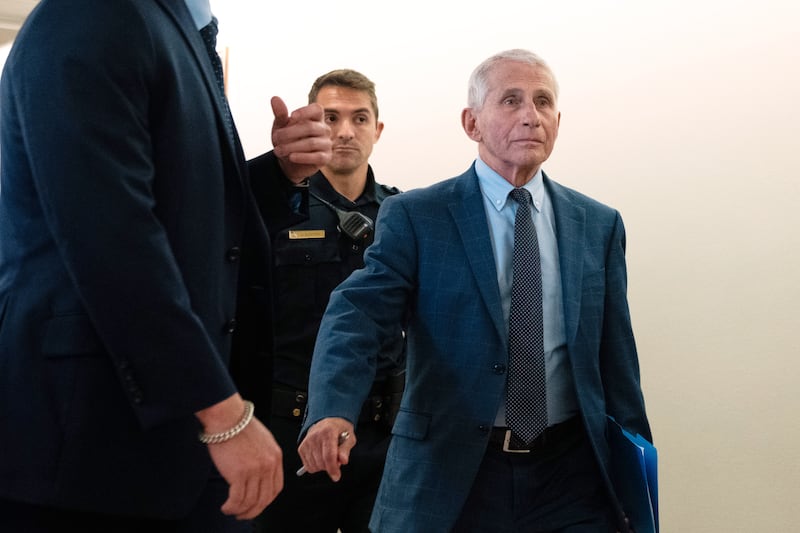
A calm, reasoned, nonpartisan approach to such an inquiry would not include invectives that have been hurled at Fauci this week — words like “evil,” “psychopath” and “coward” — but would include the testimony of people who believed they were helped by the vaccine, as well as those who believed they were harmed.
As Hugh Hewitt wrote, “We can all hold two thoughts” — one being that Fauci was the wrong man to be the face of the pandemic, and the other being gratitude for the vaccines, and the medical professionals and public officials “who did not overreact but did smart things.”
Meanwhile, with the Florida attorney general, a Republican, announcing an investigation of Fauci, the 85-year-old will not be able to retire from the public eye anytime soon.
And Ziegler, who critiques the media and comments on current events on his podcast “The Death of Journalism,” doesn’t expect a different approach to emerge because of the fractured climate of both politics and the media.
“We’re not going to get any sort of closure or great understanding or accountability because we live in these different political silos,” he said. “In the left-wing world, Fauci can take the Fifth and he becomes the victim somehow. In the right-wing world, he takes the Fifth, and it’s proof that he’s guilty and belongs in jail.”
,