

During the beginning of November, I was on the busy streets of D.C., walking the International Mall on arguably the most anxiety-producing day our country faced this year: Election Day. Vendors were posted on corners throughout the capital city selling political merchandise, however one candidate dominated the streets prior to election night.
Vice President Kamala Harris-themed merchandise led the streets of the nation’s capital, a city known for its Democratic allegiance. According to Ballotpedia, the District of Columbia is the only non-state with three electoral votes, a status granted through the 23rd Amendment in 1961. Since then, D.C. has been a Democratic stronghold, never once awarding an electoral vote to a Republican candidate.
As Election Day commenced, Harris T-shirts, buttons, banners and bags were displayed with pride across the city. I took time to speak with vendors about their experiences selling Harris merchandise, curious to know how demand had been throughout the day.
I also wondered, where was all the Trump gear?
Antonio Cabbagestaok, a street vendor stationed across from the National Museum of African American History and Culture in downtown D.C., displayed an array of Harris-themed merchandise. His stand was stocked with flags, hats, T-shirts, pins, bags and bracelets, all in support of the former presidential candidate.
Cabbagestaok sold political merchandise in the last election and did “pretty well.” His initial push to get his business up and running came after President Joe Biden endorsed Harris for the 2024 election. Once he saw who she was running against, he went all in, dedicating his stand to selling merchandise in support of Harris.
When asked if he had any Trump merchandise available, he replied that he had some left over from the last election. “I did bring it out one time because someone asked me about it,” Cabbagestaok said. “Don’t get me wrong, I’m a Kamala fan, but I’m also a businessman.”
One of the main reasons he didn’t display Trump merchandise at his stand is because he’s selling in Washington, D.C. “They really don’t want to see Donald Trump,” he said. “They want to see Harris, so I’m going to give the people what they want.”
Beatrice, another street vendor, was one of the few stands offering both Harris and Trump merchandise midway through Election Day. She told me she had been selling items for both candidates over the past four months, with customers from each party stopping by her stand, but one candidate’s merchandise was far more profitable than the other.
“Yes, I have both, but for Kamala Harris I have many,” Beatrice said. “Kamala Harris items sell more, they sell better for me than Trump.”

The post-election shift
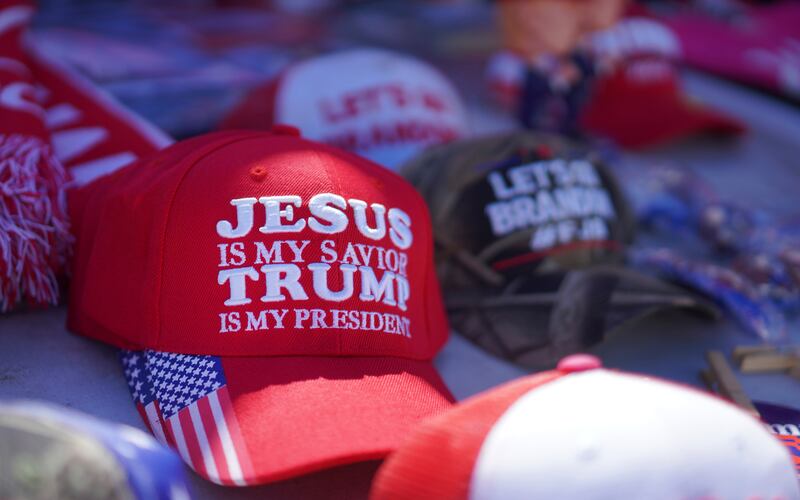
The irony was evident as vendors quickly shifted their business strategy the day after the election results came in. Walking around D.C., Trump inauguration shirts were on display, and stands filled with Trump merchandise appeared on the streets, showing that, like Cabbagestaok, other vendors consider business above party.
After scrolling through the web, it’s clear that Harris-Walz merchandise are widely still available post-election, on sites like Etsy and Amazon, with T-shirts, hats and other items up for sale. This month has evidently been a hot one for political merch, with post-election reviews rolling in from recent purchasers.
President-elect Donald Trump gear is growing with new merchandise selections post-election. From Christmas sweaters to new slogans celebrating the win, Trump merch continues to expand.
The history of political merchandise
Political merchandise reflects a long tradition of using apparel and items to communicate ideological beliefs. According to the Board of Decorators website, one of the earliest instances of wearable political messaging appeared with the Suffragettes’ “Votes for Women” sashes in the early 20th century. However, it wasn’t until the 1940s that T-shirts began to carry political slogans.
In 1948, Thomas E. Dewey’s presidential campaign introduced one of the first T-shirt slogans with “Dew-It-With-Dewey,” according to the Board of Decorators website. Although Dewey ultimately lost to President Harry S. Truman, the political slogan T-shirt had made its debut.
In the 1960s, advancements in printing technology, combined with a counterculture driven by younger generations, led to a revolution in self-expression through visual statements. The printed tee quickly became a powerful tool for promoting political movements, turning everyday clothing into wearable activism. Figures like Andy Warhol used political imagery in his pop politics, popularizing the idea of fashion as a platform for political and cultural expression.
A survey by EverythingBranded found that 36% of Americans planned to buy political merchandise to support their candidate, with 77% wearing it proudly and 70% hoping to sway others. Nearly 75% see these purchases as donations, and 68% believe this could impact the most recent election’s outcome.
Modern-day political merchandise in elections
Today, political merchandise serves the same purpose: to push a movement, add a catchy slogan and ultimately help win an election.
Following Taylor Swift’s endorsement, Kamala Harris’ campaign embraced the trend by creating political friendship bracelets, which brought in $1 million in support, according to The Philadelphia Inquirer.
In 2016, the Independent described Trump’s “Make America Great Again” slogan hats as “arguably the most well-known political clothing of modern times.” Today, the campaign continues to sell millions of these iconic red hats, symbolizing a staple in American political merchandise.
As the nation processes this election season, it’s clear that political merchandise continues to reflect both personal views, political expression and the entrepreneurial spirit.