

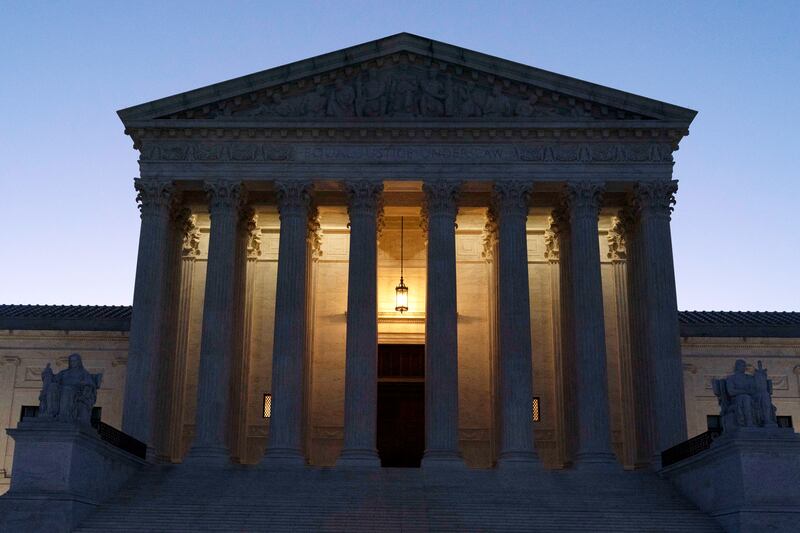

Porn and privacy were in front of the Supreme Court Wednesday when the justices heard oral arguments about Texas' age verification law for pornography sites.
The court is weighing whether the law infringes on adult porn viewers' First Amendment rights by forcing them to identify themselves before gaining access to sensitive material.
Texas and other states with similar age check rules say the government’s compelling interest in keeping children away from porn justifies the potential privacy issues, per The Associated Press.
Here are three takeaways from Wednesday’s debate.
It’s safety vs. free speech
During oral arguments, the Supreme Court appeared torn about how to keep kids safe and protect free speech at the same time.
Justices expressed support for Texas' effort to keep young people from viewing pornography, but they also expressed sympathy for the view that age checks interfere with the rights of adult porn viewers.
While some Supreme Court experts believe a majority of justices will end up siding with Texas officials and upholding the age verification policy, others say the case is too close to call.
“After more than two hours of debate on Wednesday, it was not clear whether a majority of the justices were ready to uphold the lower court’s ruling,” wrote Amy Howe for SCOTUSblog.
It’s a whole new world
One reason why the justices are torn over what to do is that they feel past legal standards are difficult to apply to the current media environment.
At various points in oral arguments, justices emphasized how rapidly the internet has changed, as well as how difficult it now is to prevent kids from accessing sensitive materials.
Justice Amy Coney Barrett, who has teenaged children, said she knows from personal experience that it’s “difficult to keep up with” and trust content-filtering software, per SCOTUSblog.
Similarly, Justice Samuel Alito said few parents are more tech-savvy than their kids, meaning that many struggle to anticipate when and where young people will come in contact with porn.
Chief Justice John Roberts seemed to echo Texas officials' clam that age verification laws are a sensible step in a world where old safety measures no longer work, The Associated Press reported.
The Supreme Court may extend the battle rather than resolving it
Although Wednesday’s debate centered on broad questions about free speech, safety and privacy, the court’s eventual ruling in the case may focus on a much narrower one: Did the lower court approach the case the right way?
The justices could send the case back to the 5th Circuit and ask it to apply a higher level of legal scrutiny. That would be a partial — potentially temporary — victory for opponents of the age checks, since the lower court could very well apply strict scrutiny and once again uphold the law.
The Supreme Court’s decision is expected by the end of June.