



- Trump tax bill leads to projected $300 million decrease in state income tax revenue.
- Gov. Cox prioritizes $25 million in budget to finish construction of homeless campus.
- Cox not proposing income tax cut like the ones he supported for five years in a row.
Utah Gov. Spencer Cox told legislative leadership on Tuesday his top spending priority for 2026 is to complete the state’s proposed homeless services campus, which has garnered national attention amid record levels of people living on the streets.
Finding the money for the construction and ongoing operations of a 16-acre, 1,300-bed facility near the Salt Lake City International Airport, however, could be complicated by a reduction in state tax revenue caused by President Donald Trump’s “big, beautiful bill.”
Federal tax deductions included in the bill exempted some Utah taxpayers, mostly businesses, from paying taxes on portions of their income, meaning Utah will receive approximately $300 million less than anticipated in income taxes next year.
But state officials believe Utah’s approach to homelessness, diverging from previous housing-first experiments by prioritizing public safety and mandatory treatment, is the “perfect project” for Trump’s revised federal grant programs, Cox said on Wednesday.
As Cox and lawmakers navigate budget demands with decreased revenue, it appears that the Trump administration could play the decisive role in whether Utah can fully fund its most ambitious attempt yet to address the problem of chronic homelessness.
“We’ve left people struggling for far too long,” Cox told the Deseret News Editorial Board on Tuesday. “This is an opportunity to help people who desperately need help, and it’s an opportunity to make our parks and public places safe for families and kids.”

Why the tight budget year?
Cox publicly announced his budget recommendations for fiscal year 2027 on Wednesday. The package, crafted in deliberation with lawmakers, totals $30.7 billion, coming in at $100 million less than the budget approved by the Legislature in the 2025 general session.
This would mark the end of a budget-growing streak for the Beehive State. Cox called his team’s proposal a “very responsible and austere budget,” and said they were “making cuts everywhere,” including by not requesting any new state funding for executive branch positions.
The tight budget dynamics are due to tax provisions in the One Big Beautiful Bill Act, which was passed by Congress along party lines in July. The bill implemented income tax deductions, including for business research and development, and the cost of business property depreciation.
These policies translated into big shifts for most states who base their income tax formulas on the federal tax rate. When deductions are created at the federal level, these “conformity states” automatically have less income they can tax unless they “decouple” from federal policy.
This could mean the end of another streak for Cox: The governor will not propose an income tax cut like the ones he supported for the past five years in a row, he said. He will, however, push for a $2.5 million expansion of the child tax credit to extend the benefit to more families with children under 3 years old.
Will Utah qualify for federal grants?
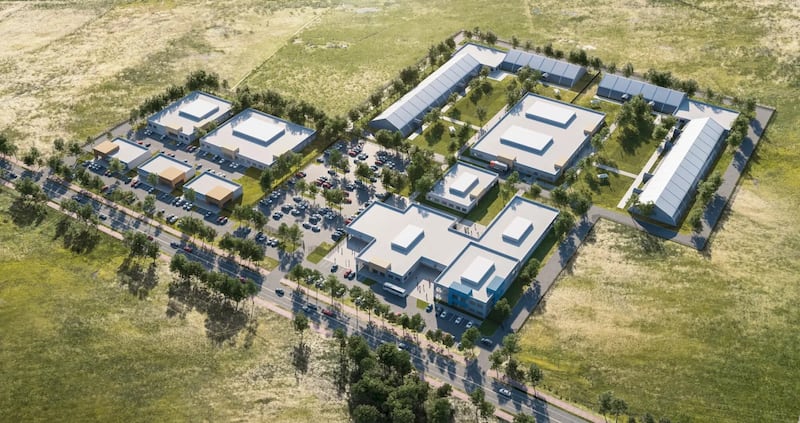
Where Cox will pressure lawmakers to spend is on homelessness, he said. His budget includes a one-time $25 million request to help build the state’s “central campus,” which will add to last year’s $25 million that was used mostly to find and purchase land, according to state officials.
Cox is also asking for an additional $5 million for fiscal year 2027, and $20 million in ongoing money after that, to support the annual costs of running the shelter, which is intended to service homeless “high utilizers,” or repeat criminal offenders who may require involuntary commitment to become sober.
Cox’s requests will not cover the full costs of the campus, which is expected to cost $75 million to build and at least $30 million a year to operate. Municipalities and private donors will be expected to pick up the rest of the tab, as they have done with similar projects in Nevada, Texas and Florida, Cox said.
But unlike these states, Utah state government has a particular interest in investing in a Salt Lake City homeless shelter because it is the capital city, the vast majority of homelessness is disproportionately located there and it will be home to the 2034 Olympics in less than a decade, Cox said.
“Homelessness isn’t just a Salt Lake City problem. It’s a Utah problem,” Cox said. “It’s a way for everyone to participate in the solution because they’re not burdened with what they would otherwise be burdened with, the resources are here. So I think we have an obligation to help where we can with that.”
In addition to relying on generous donations from the private sector, the governor’s office is hoping to cash in on a recent Trump executive order that prioritized grant programs, like Continuum of Care, for states that crack down on illicit drug use and urban camping — which Utah has done.
Cox is confident Utah’s campus fits Trump’s vision of elevating long-term recovery over low-barrier housing. However, the state has not made much progress toward securing a grant from the Department of Housing and Urban Development because of the government shutdown ending in November, Cox said.
“The current administration has made it clear that they’re interested in models like Utah’s and so we’re hoping that we can get some additional funding there,” Cox said. “And we think we’ll be able to.”
Will Cox take on local zoning laws?
The governor’s top goals for his second term — of incentivizing the construction of 35,000 starter homes and paving the way for Utah energy production to double — were not represented in his budget recommendations because these are policy problems that already have private funding available, Cox said.
On housing, Cox said he is looking for more ways to encourage cities to zone for at least some smaller, more affordable lots without having to pass a statewide zoning preemption. But he admitted that the scores of innovative bills passed by the Legislature in recent years have not had the desired effect.
“We’ve made progress, not nearly as much as I had hoped for,” Cox said. “Still a long ways to go.”
In the first two years of Cox’s housing initiative, the state added 8,000 starter homes. To reach his goal, that will need to become 10,000 homes a year starting in 2026, Cox said. But regulatory stumbling blocks at the local level have prevented large developments from reaching the market, Cox said.
Cox wants lawmakers to consider housing policies to remove liabilities around building condominiums, and to free up surplus state land for development. But Cox said if municipalities aren’t willing to make the needed sacrifices, then he is also willing to look at preempting local zoning laws.
Other pieces of Cox’s budget recommendations that lawmakers will debate during the 2026 legislative session include an additional $50 million for safety improvements to K-12 schools, $3.4 million for enhanced law enforcement on college campuses and $5 million to help conserve water for the Great Salt Lake.